 Mount Vernon
 Why Window Replacement Works Differently in Blanchard
Blanchard sits in that stretch of Skagit County where the terrain does a lot of the talking — wooded hillsides, close proximity to the water, and weather that rolls in off the Sound with more force than it has by the time it reaches drier pockets further inland. Homes here take on a specific combination of stress that a lot of general contractor advice doesn't account for: salt-tinged air, wind-driven rain that hits window assemblies at an angle instead of straight down, and heavy tree cover that keeps siding and trim damp and shaded for long stretches of the year. None of that is dramatic on its own. It's the accumulation, year after year, that eventually shows up as soft trim, fogged glass, and windows that won't latch the way they used to.
Window replacement here isn't just a cosmetic upgrade or an energy-bill fix, though it helps with both. Done right, it's a chance to correct whatever the original installation got wrong and build in protection against the specific conditions Blanchard homes actually face, rather than a generic install that would work fine in a dry inland neighborhood but underperforms this close to the water.
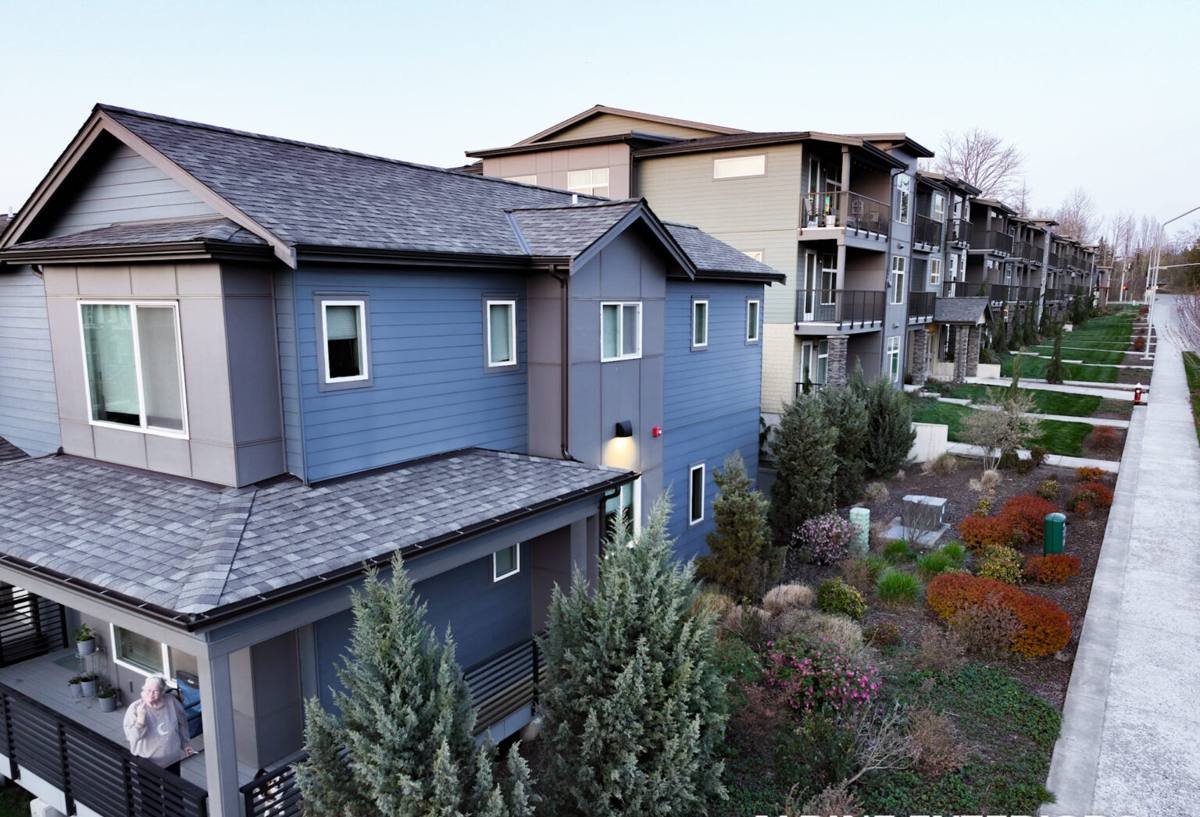
What Salt Air, Rain, and Moss Actually Do to Your Windows
Salt Air and Metal Components
Airborne salt is corrosive to unprotected metal — window balances, hinges, screen frames, and cheaper hardware finishes all wear faster in a coastal-influenced climate than they would inland. It's usually slow and easy to miss until a window that used to open smoothly starts sticking or a lock mechanism gets stiff or pitted.
Driving, Wind-Driven Rain
Storms coming off the water don't just fall — they push. Wind-driven rain gets forced sideways and upward into gaps that a straight-down rain would never reach, which means flashing details and sealant joints that would be adequate in a calmer microclimate can fail here. Water finds its way behind trim, into the wall cavity, and down into framing long before anyone notices a stain on the interior sill.
Moss, Shade, and Trapped Moisture
Blanchard's tree cover is part of what makes the area appealing, but it also means less direct sun on siding and window trim, longer drying times after rain, and moss and algae that take hold on north-facing walls and horizontal trim surfaces. Moss holds moisture against wood and caulking, which accelerates rot exactly where a window's weakest points already are — the sill and the bottom corners of the frame.
Signs a Blanchard Home Needs New Windows
Most window failure is gradual, so it helps to know what to actually check for rather than waiting for a window to visibly fail.
- Soft or spongy wood at the sill, jamb, or trim when pressed with a finger
- Fogging or a permanent haze between panes on double-pane windows (a sign the seal has failed)
- Windows that are hard to open, close, or lock, or that no longer latch flush
- Visible gaps between the frame and siding, or caulking that has cracked, shrunk, or pulled away
- Moss or dark streaking on the trim or wall just below or beside a window
- A noticeable draft near the window even when it's fully closed
- Condensation forming on the inside of the glass regularly, beyond normal seasonal humidity
- Peeling paint or bubbling finish on interior sills, which often points to moisture getting in from outside
Choosing Window Materials for a Marine, Rainy Climate
There's no single "best" window material for every home, but some perform more predictably than others in a climate that combines salt exposure, sustained moisture, and shade. Here's how the common options compare for a setting like Blanchard.
| Material | Moisture & Salt Performance | Maintenance | Typical Lifespan |
|---|---|---|---|
| Vinyl | Good — won't rot or corrode; seams and hardware quality vary by manufacturer | Low | Roughly 20–30 years |
| Fiberglass | Very good — dimensionally stable, resists warping in wet/dry cycles | Low | Roughly 30–40+ years |
| Wood-clad | Attractive but the most sensitive to sustained moisture if cladding or seals are compromised | Higher — needs monitoring at joints and sills | Roughly 20–30 years with upkeep |
| Aluminum | Corrosion-resistant coatings help, but bare or poorly finished aluminum is vulnerable to salt air over time | Moderate | Varies widely by finish quality |
Our standard is to steer homeowners toward materials and hardware finishes that hold up to this specific mix of salt air and moisture without babysitting, rather than whatever happens to be cheapest on a spec sheet. That's a maintenance-and-longevity call, not a knock on any one product — it's about matching the window to what Blanchard actually throws at it.
What a Correct Installation Actually Involves
Flashing and Weatherproofing
The window itself is often not where a job goes wrong — the flashing and moisture barrier detailing around it is. A correct install includes a sloped sill pan so any water that does get past the window drains back out instead of pooling, properly lapped flashing tape integrated with the home's existing weather-resistant barrier, and sealant used at the right joints — not as a substitute for proper flashing, which is a shortcut that fails quietly and shows up as rot two or three years later.
Insulation and Air Sealing
The gap between the window frame and the rough opening needs to be filled with an appropriate low-expansion foam or backer rod and sealant, not stuffed with fiberglass insulation alone, which does little to stop air movement and nothing to stop bulk water.
Fitting to the Opening
Older homes settle, and rough openings are rarely perfectly square by the time a window is due for replacement. Correct installation means shimming and leveling to the actual opening, not just the window's own frame, so it operates smoothly and seals evenly on all four sides — a detail that matters more in older Skagit County housing stock than it does in new construction.
Our Window Replacement Process for Blanchard Homes
- On-site assessment — we look at existing window condition, framing and sill health, sun/shade exposure, and any moisture damage already present before recommending anything.
- Product selection — we walk through material, glass, and hardware options suited to the home's specific exposure, with honest tradeoffs explained, not a one-size pitch.
- Precise measurement — every opening is measured individually; older homes rarely have perfectly matching window sizes even within the same wall.
- Installation day — old windows are removed, framing is inspected and repaired if needed, new flashing and moisture barrier detailing is installed, and the new window is set, shimmed, insulated, and sealed.
- Finish work — interior and exterior trim is reinstalled or replaced, caulking lines are clean, and hardware is tested for smooth operation.
- Walkthrough and cleanup — we confirm every window opens, closes, and locks correctly before we consider the job done, and the site is cleaned up, including old window disposal.
What Affects the Cost of Window Replacement Here
Every home is different, so exact numbers only come from a walkthrough, but the same handful of factors drive most of the cost variation we see on Blanchard-area jobs.
| Factor | Why It Matters Here | Relative Cost Impact |
|---|---|---|
| Number and size of windows | Larger and more numerous openings mean more material and labor | High |
| Full-frame vs. insert replacement | Full-frame is needed when framing or flashing is compromised — common where moisture has been an issue | Medium–High |
| Framing or sill repair | Rot from long-term moisture exposure has to be repaired before a new window can be properly sealed | Variable |
| Material choice | Vinyl, fiberglass, and wood-clad differ in upfront cost and long-term maintenance | Medium |
| Access and site conditions | Steep, wooded, or limited-access lots can add labor time | Low–Medium |
| Trim and finish work | Matching existing trim profiles or repainting adds scope | Low–Medium |
Why Hiring a Crew That Already Works in Blanchard Matters
A contractor based near Mount Vernon who regularly works Skagit County's coastal and wooded pockets already knows what to expect before the first window is even pulled — where moisture damage tends to hide, which flashing details actually hold up to wind-driven rain instead of just meeting code on paper, and how to work around tree-shaded, limited-access sites without it turning into a change order. That experience shows up in fewer surprises mid-project and a warranty that means something, because the crew backing it is local enough to come back and stand behind the work if a question ever comes up.
It also matters for permitting and inspection — Skagit County requirements and local building conventions are second nature to a crew that works here regularly, rather than something looked up for the first time on a job.
If your windows in Blanchard are showing their age — sticking, fogging, drafting, or just letting more of the weather in than they used to — we're happy to take a look and give you a straightforward, no-pressure estimate. Use the form below to get started.