 Mount Vernon
 Why West Mount Vernon Roofs Age Differently
Roofs in West Mount Vernon deal with a specific combination of stresses that roofs in drier parts of the state never see. The neighborhood sits close enough to Puget Sound and the Skagit River delta that salt-laden air is a regular visitor, and it sits under a weather pattern that delivers long stretches of driving rain from fall through spring. Add in the shaded, damp conditions that let moss colonize a roof year-round, and you have a recipe for granule loss, hidden leaks, and flashing failures that show up years before they would on a roof in a drier climate.
None of this means every roof in the area needs replacing. Most of the calls we get for roof repair in West Mount Vernon are for problems that are fixable if they're caught and addressed correctly — but "correctly" matters more here than in most places, because a patch job that doesn't account for wind-driven rain or persistent moisture will fail again within a season or two.
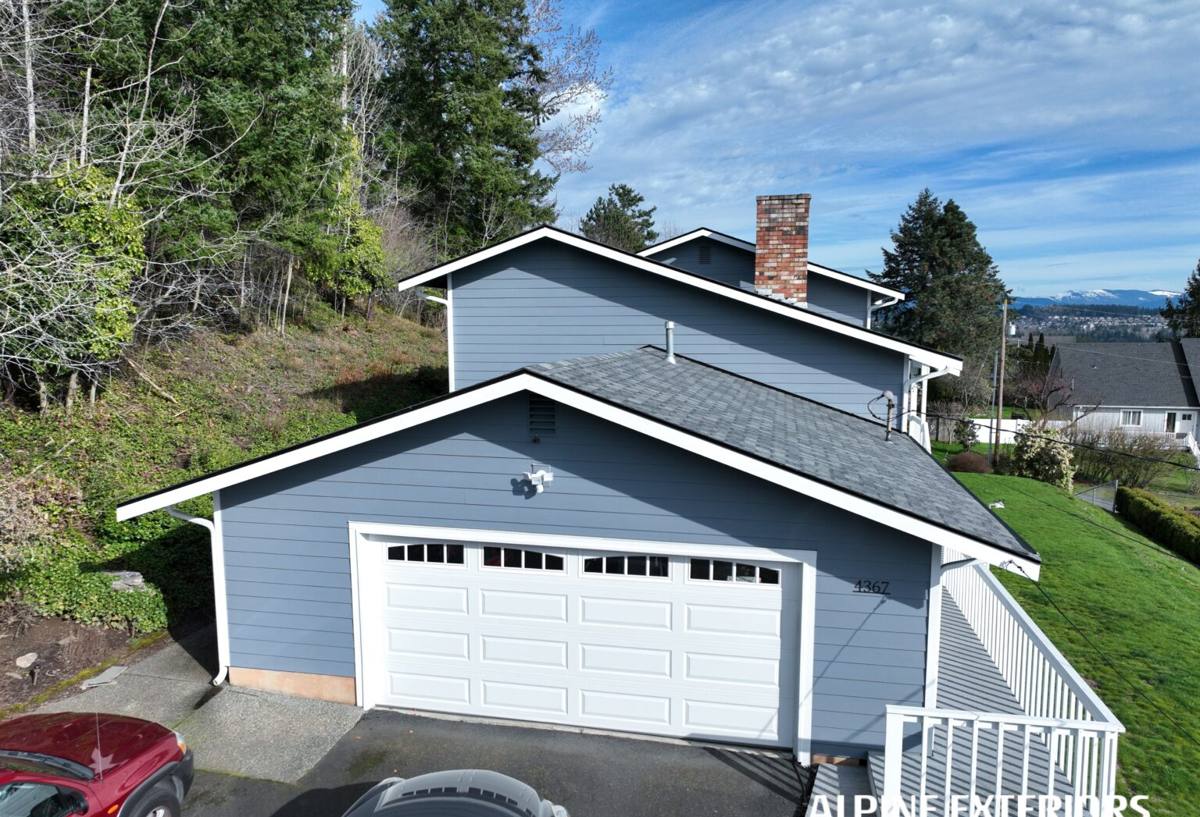
Signs You Need Roof Repair, Not a Full Replacement
A lot of homeowners assume any roof problem means a new roof. In our experience, that's rarely true if the roof is less than 20-25 years old and the deck underneath is still sound. Here's what typically points to a repair rather than a tear-off:
- A handful of missing, cracked, or lifted shingles after a windstorm
- A localized leak around a chimney, skylight, vent pipe, or valley — while the rest of the field shingles are intact
- Moss buildup that's causing shingle lift but hasn't yet worked its way under the mat
- Flashing that's rusted, separated, or was installed incorrectly on a previous job
- Gutter or edge damage that's letting water back up under the first course of shingles
- Isolated soft spots in the decking found during an inspection, not spread across the whole roof
If instead you're seeing widespread granule loss, multiple soft spots, daylight through the decking in the attic, or shingles that are brittle and curling across large sections, that's usually a replacement conversation — and a straight answer about that is part of an honest inspection.
Why Waiting Costs More Here Than Elsewhere
In a drier climate, a small roof leak might sit for a season without doing much damage. In West Mount Vernon, a small leak that goes unaddressed through a wet Skagit County winter can soak insulation, stain ceilings, and start rot in framing within a few months — because the moisture never really gets a chance to dry out between storms. That's the main reason we push for repairs to happen promptly rather than "on the list for next summer."
What a Correct Roof Repair Actually Involves
A repair that holds up here isn't just swapping a shingle for a shingle. It requires understanding how water is actually moving on that specific roof. A few things we always check, regardless of what the customer called about:
Underlayment condition, not just the surface
Shingles are the visible layer, but the underlayment underneath is what actually keeps a roof dry when a shingle fails or wind drives rain sideways. If underlayment is old, brittle, or was installed with gaps, replacing shingles on top of it is a temporary fix at best.
Flashing details
Most leaks we find in this area trace back to flashing — around chimneys, skylights, dormers, and roof-to-wall transitions — rather than the shingle field itself. Flashing has to be layered correctly with the underlayment (not just caulked over the top) to actually shed water instead of trapping it.
Ventilation and moisture balance
A roof that traps moisture from the inside — from poor attic ventilation — will develop rot and moss faster than one that can breathe. Part of a real repair assessment includes checking whether the attic is venting properly, because fixing the outside without addressing the inside just delays the next problem.
Matching materials correctly
Shingle color and profile change over the years, and mismatched patches stand out and can behave differently in wind and rain than the surrounding material. We match as closely as possible and are upfront when an exact match isn't available.
Moss, Algae, and the Damp-Season Cycle
Moss is more than a cosmetic issue in this part of Skagit County. Once moss establishes on a shingle, its root structure lifts the shingle tabs, which breaks the seal that keeps wind-driven rain out. Left long enough, moss holds moisture directly against the roofing material through the wettest months of the year, accelerating granule loss and shortening the life of an otherwise healthy roof.
A proper repair visit in this area usually includes:
- Manual moss removal (not pressure washing, which can drive water under shingles and strip granules)
- Treatment to slow regrowth
- A check for zinc or copper strips at the ridge, which help suppress moss between cleanings
- An honest look at tree cover and shade, since heavy shade is the biggest driver of how fast moss comes back
We're straightforward with customers that moss control is an ongoing maintenance item in this climate, not a one-time fix — a roof under mature trees in a damp microclimate will need attention more often than one in full sun.
How Our Repair Process Works
We keep this simple and try not to waste a homeowner's time or money on unnecessary steps:
- Inspection: We get on the roof (or use a camera where access is limited) and check the full field, not just the spot you called about — a leak's entry point is often several feet from where it shows up on the ceiling.
- Honest diagnosis: We tell you what's actually wrong, what caused it, and whether it's a repair or a replacement situation. If it's borderline, we lay out both options with real trade-offs.
- Written estimate: Scope, materials, and price before any work starts. No surprise add-ons once we're on the roof.
- Repair: We fix the root cause, not just the symptom — meaning underlayment and flashing get addressed alongside any surface shingle work.
- Cleanup and check-in: We clear debris and walk you through what was done and what to watch for going forward.
What Roof Repair Typically Costs
Repair costs vary a lot based on scope and access, so treat this as a general guide rather than a quote:
| Type of Repair | Typical Scope | What Drives the Cost |
|---|---|---|
| Spot shingle repair | A few damaged or missing shingles | Roof pitch, access, material match |
| Flashing repair | Chimney, skylight, or valley flashing | Complexity of the transition, how much has to be opened up |
| Leak tracing and repair | Locating a hidden leak and fixing the source | Time to trace, extent of hidden damage found |
| Moss removal and treatment | Full roof cleaning plus preventive treatment | Roof size, moss severity, tree cover |
| Decking repair | Replacing rotted or soft sheathing | Square footage affected, framing condition underneath |
Most straightforward repairs are a same-day or next-day job. Anything involving decking replacement or extensive hidden water damage takes longer, since we won't close up a roof over a problem we haven't fully resolved.
DIY vs. Calling a Professional
We understand the instinct to handle a small roof issue yourself, and there are a few things a careful homeowner can reasonably do. But there's also a clear line where it stops being worth the risk:
- Reasonable to DIY: Clearing debris and leaves from valleys and gutters, visually checking for obvious storm damage from the ground with binoculars, keeping tree branches trimmed back from the roofline
- Better left to a pro: Walking a wet, moss-covered roof (a real fall risk in our climate), removing and replacing flashing, diagnosing the source of a leak that isn't obviously located, any repair involving decking or structural components
- Always call a pro for: Anything discovered after a windstorm, any sign of water intrusion inside the home, moss removal on steep pitches
Roofs here stay wet or damp for much of the year, and a mossy roof is genuinely slick — this is one home maintenance category where the safety math favors hiring it out.
Why Local Experience Matters for This Job
A repair crew that mostly works drier inland climates will sometimes underestimate what this area needs — using standard underlayment where a heavier-duty product would hold up better, or skipping ventilation checks that matter more here because of how much moisture the air carries. Working West Mount Vernon roofs regularly means knowing which flashing details tend to fail first in this specific weather pattern, which materials hold up against salt air over time, and how aggressive moss treatment needs to be block by block depending on tree cover and roof orientation.
It also means we're not guessing at permitting or code requirements for Mount Vernon and Skagit County — we know the process because we've been through it, which keeps a repair project from stalling on paperwork.
Keeping a Repaired Roof in Good Shape
After a repair, a little maintenance goes a long way toward not needing another repair call in a year:
- Have gutters cleared at least twice a year, more often if you're under conifers
- Schedule moss treatment on a cycle rather than waiting until it's visibly heavy
- After any significant windstorm, do a visual check from the ground for lifted or missing shingles
- Keep an eye on interior ceilings near chimneys and skylights for early staining, which shows up long before a leak is obvious from outside
If you're dealing with a leak, storm damage, or a roof that's just showing its age in West Mount Vernon, we're happy to take a look and give you a straight answer about what it needs. Fill out the form below for a free, no-pressure estimate.