 Mount Vernon
 Siding That Has to Work in West Mount Vernon's Climate
West Mount Vernon sits close enough to Puget Sound and the Skagit River delta that homes here deal with a specific mix of weather most inland Washington towns don't. Salt-laden air moves in off the water, rain comes sideways more often than straight down, and the region's cool, damp stretches from fall through spring give moss and algae months at a time to take hold on anything that stays wet. Add in wind-driven storms that push moisture into seams and laps, and you've got an environment that finds every weak point in a siding system within a few years, not a few decades.
That combination is exactly why we install James Hardie fiber cement and nothing else. It's not a preference — it's what holds up when the siding on a house is doing real work every single day, not just sitting there looking finished.
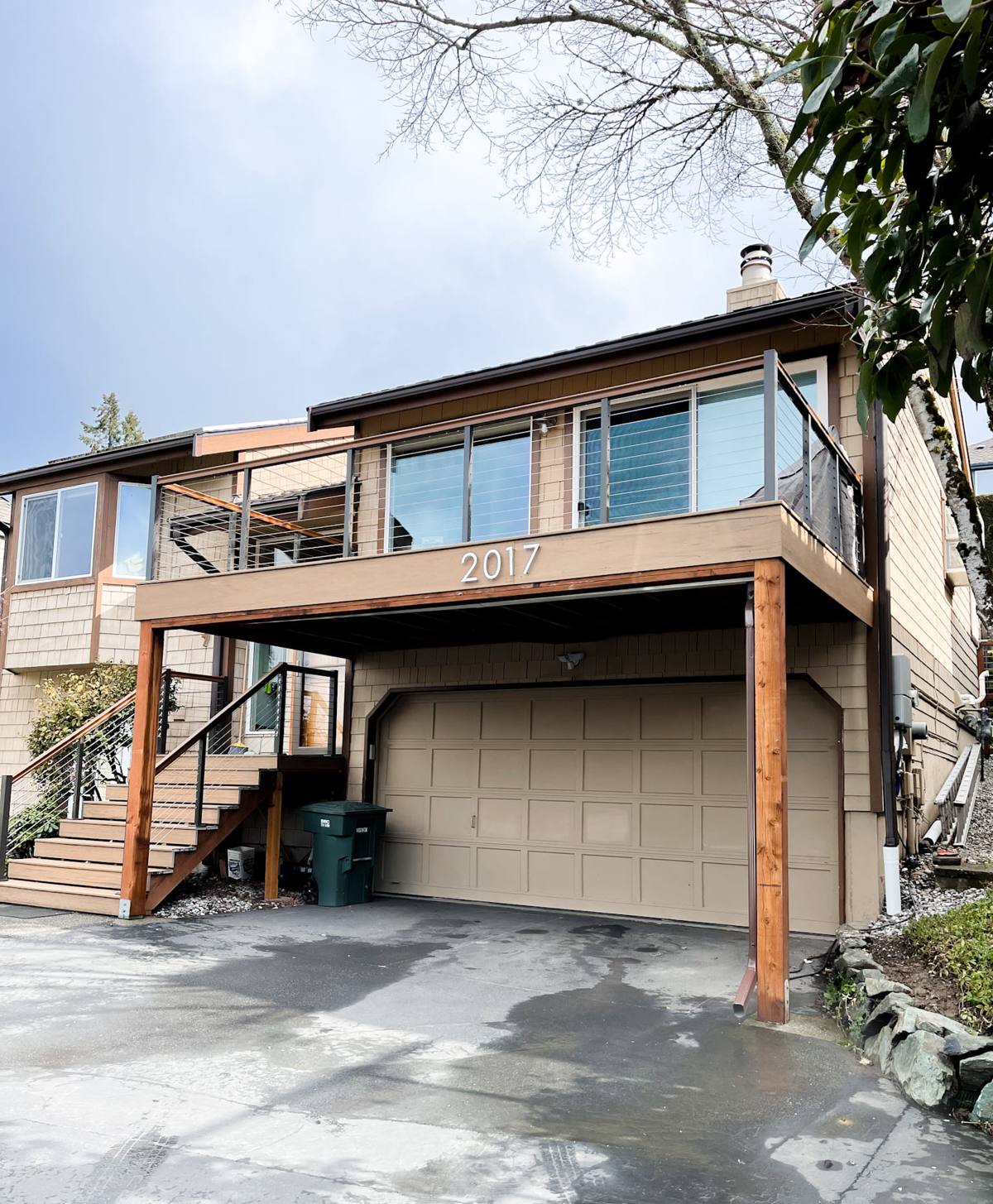
What Local Homes Actually Need From Their Siding
Before we talk about product lines and installation details, it helps to be specific about what "climate-appropriate siding" means for a house in this part of Skagit County.
Moisture management, not just moisture resistance
Driving rain doesn't just hit siding — it gets pushed into laps, around trim, and behind panels if the water-resistive barrier and flashing details aren't right. A siding material that swells, delaminates, or wicks water when it gets wet repeatedly will fail from the inside before it ever looks bad from the street. Fiber cement doesn't swell or rot, but the installation still has to keep bulk water out and let incidental moisture escape.
Salt air tolerance
Homes closer to the water and tidal flats around the Skagit delta see more airborne salt than homes further inland, even a few miles apart. Salt accelerates corrosion on fasteners and trim, and it degrades some coatings faster than manufacturers' standard testing accounts for. Material choice and fastener choice both matter here.
Moss and algae resistance
Northwest Washington's moss season isn't a month — it's most of the year in shaded, north-facing, or tree-covered areas, which describes a lot of West Mount Vernon lots. Siding that holds moisture at the surface, has porous or textured faces, or uses paint that chalks and loses adhesion over time will green up faster and need more frequent cleaning and repainting.
Why We Standardized on James Hardie
We used to get asked why we don't offer vinyl, LP SmartSide, or other fiber cement brands alongside Hardie. The honest answer is that once we started tracking which siding held up on the specific houses we service — houses dealing with this same salt air, rain, and moss exposure — the pattern was clear enough that carrying multiple product lines stopped making sense.
- Non-combustible fiber cement — made primarily of cement, sand, and cellulose fiber, so it doesn't burn, warp from heat, or provide fuel the way wood-based or foam-backed products can.
- Engineered for wet climates — Hardie's HZ10 product line is specifically formulated for regions like the Pacific Northwest that see prolonged moisture exposure, as opposed to a one-size-fits-all national product.
- ColorPlus factory finish — a baked-on finish applied under controlled conditions, which holds color and resists fading and chalking far better than field-applied paint, and cuts down the touch-up cycle that moss and mildew make worse.
- Doesn't rot or delaminate — fiber cement doesn't have the wood content that lets moisture-driven rot start, and it doesn't have the layered wafer construction that some engineered wood sidings rely on.
- Strong transferable warranty — backed by a manufacturer with decades of track record in exactly this kind of climate, not a regional or newer entrant still building that history.
We're not going to tell you every other product on the market is worthless — some of them are reasonable choices in the right climate and budget. But for what West Mount Vernon homes are exposed to, we stopped seeing a good enough reason to install anything else.
What a Correct James Hardie Installation Involves
The product only performs as well as the installation. A lot of the failures we see on Hardie siding elsewhere aren't product failures — they're installation shortcuts that matter more in a wet climate than a dry one.
Water-resistive barrier and flashing first
Before a single piece of siding goes up, the house needs a properly lapped weather-resistive barrier, correctly integrated window and door flashing, and flashing at every horizontal transition — roof lines, decks, trim boards. This is the layer that actually keeps driving rain out of the wall assembly; the siding is the second line of defense, not the only one.
Proper clearances and gaps
Hardie's install specs call for clearance from grade, roof lines, decks, and other siding materials, plus gaps at butt joints and around penetrations that get sealed correctly. Skip these and you create spots where water sits against the material or gets trapped behind it — exactly the conditions that cause problems down the line, moss included.
Fastener selection
In a salt-air environment, fastener corrosion resistance isn't optional. We use fasteners rated for the exposure this area actually sees, not just whatever's fastest to run.
Correct nailing pattern and blind-nailing where called for
Over-driven or under-driven fasteners, wrong nail placement, and face-nailing where blind-nailing is specified all shorten the life of the installation and can void manufacturer warranty coverage.
Caulking and sealant at the right joints only
Sealant belongs at specific transitions, not smeared across every seam as a substitute for proper flashing. Over-caulking traps moisture as often as it keeps it out.
Comparing Approaches: What Changes the Outcome
| Factor | Why It Matters Here |
|---|---|
| Product line | HZ10 formulation is built for high-moisture, humid climates like Skagit County rather than a generic national spec |
| Fastener material | Salt air accelerates corrosion on standard fasteners faster than inland installs |
| WRB and flashing detail | Driving rain gets pushed into laps and trim; the barrier behind the siding does most of the real waterproofing work |
| Finish | ColorPlus factory finish resists the fading and chalking that field-applied paint suffers under year-round damp conditions |
| Site conditions (shade, tree cover) | Determines how aggressive a moss-prevention approach needs to be — gutters, overhangs, and siding placement all factor in |
How Our Process Works
- On-site assessment — we look at your home's actual exposure: how close to water, how much shade and tree cover, current siding condition, and any moisture damage already present.
- Product and color selection — we walk through the relevant Hardie product line and ColorPlus color options for your home's exposure level.
- Detailed proposal — scope, materials, and a realistic timeline, with the flashing and moisture-management details spelled out, not just "siding replacement."
- Prep and tear-off — removing old siding and inspecting sheathing for hidden moisture damage before anything new goes up.
- Barrier, flashing, and install — done to Hardie's published installation specs, with attention to clearances, fastener choice, and joint treatment.
- Final walkthrough — checking finish, caulking, and trim details before we call the job done.
What to Check Before You Sign With Anyone for This Job
- Do they install to Hardie's published fastening and clearance specs, or do they eyeball it?
- Do they address flashing and water-resistive barrier detail specifically, or just talk about the siding itself?
- Do they know the difference between HZ5 and HZ10 product lines and which one applies to your exposure?
- Can they explain their fastener choice for a salt-air environment?
- Do they carry manufacturer certification that keeps your warranty intact?
- Will they put the scope of work in writing, including prep and flashing steps, not just square footage and color?
Why Local Experience Matters for This Job Specifically
Siding installation isn't identical from region to region, and it isn't even identical across Skagit County. A crew that mostly works drier inland areas doesn't build the same instincts around flashing details, moss-prone shade patterns, and fastener corrosion that a crew working West Mount Vernon and the surrounding Skagit Valley develops over repeated jobs in this exact exposure. We've seen which details actually cause callbacks here — not in a lab, not in a national spec sheet, but on houses a few miles from the ones we're bidding on. That's the difference between siding that's technically installed correctly and siding that's installed correctly for this climate.
Maintenance Expectations After Installation
Even the right product installed the right way still needs basic upkeep in this climate. Realistic expectations:
- Periodic gentle washing to keep moss and algae from establishing, especially on shaded or north-facing walls
- Keeping gutters clear so overflow doesn't run down siding faces repeatedly
- Trimming back vegetation that keeps siding damp and shaded longer than necessary
- Visual check of caulked joints every couple of years, since sealant has a shorter service life than the siding itself
None of this is unusual maintenance — it's the same kind of upkeep any exterior surface needs in a wet coastal climate. The difference with a correctly installed Hardie system is that you're maintaining the finish, not fighting rot, delamination, or warranty gaps.
If you're weighing a siding replacement or repair in West Mount Vernon, we're glad to come take a look and give you a straightforward, no-pressure estimate — what your home's exposure actually calls for, what it would cost, and what the process would look like.