 Mount Vernon
 Siding Built for the Way Kulshan Ridge Actually Weathers
Homes in the Kulshan Ridge area of Mount Vernon sit in one of the more demanding microclimates in Skagit County. You're close enough to Puget Sound and the tidal flats to pick up salt-laden air, exposed enough to catch driving rain off the marine layer, and shaded enough in spots to grow moss on anything that holds moisture for more than a day or two. None of that is unusual for this part of Washington, but it adds up fast on a house. Siding that isn't built for this combination doesn't fail all at once — it fails gradually, in ways that are easy to miss until a repaint or a repair bill forces the issue.
When we replace siding on a Kulshan Ridge home, we're not just swapping old boards for new ones. We're correcting whatever let moisture, salt, or organic growth get a foothold in the first place, and installing a product system that's engineered to resist all three going forward.
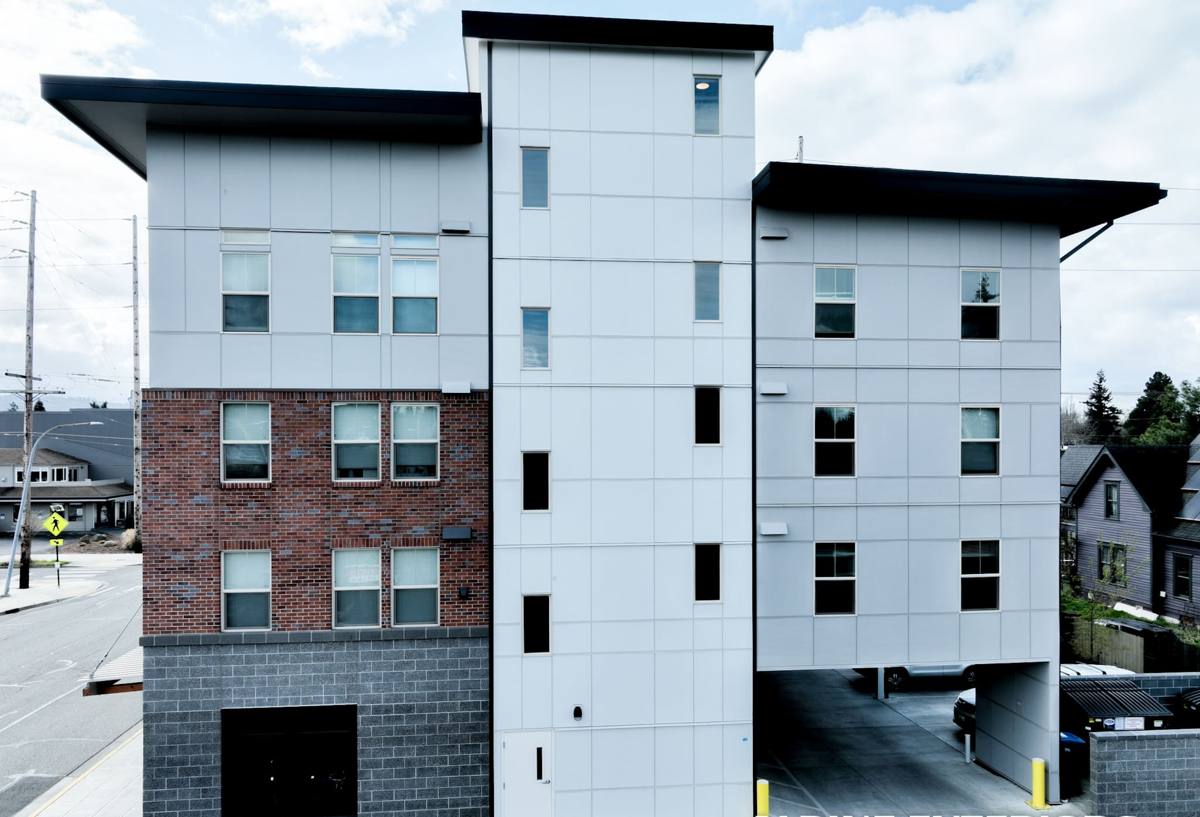
What This Climate Does to Siding Over Time
Salt air and coastal moisture
Airborne salt is corrosive to fasteners and hard on paint film. Over years, it accelerates the breakdown of caulking and finish coatings, especially on the sides of a house that face open exposure. Siding that relies on a surface-applied paint job — rather than a factory-cured finish — tends to chalk, fade, and lose adhesion faster here than it would inland.
Driving rain and wind-driven wetting
Skagit County gets its share of storms that push rain sideways, not just down. That matters because siding systems differ enormously in how they handle wind-driven rain: how well the laps shed water, how the product behaves if water does get behind it, and whether the material itself swells, wicks, or delaminates when it stays wet.
Moss and prolonged dampness
Shaded elevations, tree cover, and our long wet season all favor moss and algae growth. Beyond the cosmetic issue, sustained dampness held against a wall assembly is what causes rot in wood-based products and accelerates coating failure on painted surfaces. Siding that dries out quickly between rain events holds up dramatically better than siding that stays damp.
Why We Only Install James Hardie Fiber Cement
We've made a deliberate decision not to install vinyl, LP SmartSide, primed spruce, cedar, or other fiber cement brands like Cemplank or Allura. That's not a marketing position — it's a standard we hold because of what we've seen these products do (and not do) in exactly this climate.
- Vinyl can warp and become brittle with temperature swings, and its seams give wind-driven rain more opportunities to work behind the panel.
- Wood-based products (LP SmartSide, primed spruce, cedar) are organic materials at their core — even with treatments and coatings, sustained moisture and moss growth are exactly the conditions that shorten their service life.
- Other fiber cement brands may share the same base material as James Hardie, but factory finish quality, warranty structure, and product engineering for specific climates vary a lot between manufacturers.
James Hardie's fiber cement is non-combustible, dimensionally stable, and — critically for this area — built in product lines engineered for specific climate zones, including the wet Pacific Northwest (HZ5 designation). The ColorPlus factory finish is baked on under controlled conditions, which holds up to UV and salt exposure far better than a field-applied paint job, and it carries a real transferable warranty backed by the manufacturer.
What a Correct Siding Replacement Actually Involves
Replacing siding is not just a cladding swap. Done right, it's an opportunity to fix the water management details that determine whether the new siding lasts 10 years or 40.
Tear-off and inspection
We remove the old siding down to the sheathing and inspect for rot, soft spots, and existing moisture damage — common around window heads, deck ledgers, and lower wall sections where splashback and grade proximity are issues. Anything compromised gets repaired or replaced before new material goes up.
Weather-resistive barrier and flashing
A correctly lapped, sealed weather-resistive barrier and properly integrated flashing at every window, door, and penetration is what actually keeps driving rain out of the wall assembly. This is the step that gets rushed on lower-quality jobs, and it's the step that matters most in a wind-driven-rain climate like ours.
Rainscreen or furred installation where it counts
On elevations with heavy shade or limited drying potential, a furred-out rainscreen gap behind the siding gives any moisture that does get in a path to drain and dry, rather than sitting against the wall. This is one of the most effective upgrades against moss-related staining and long-term dampness.
Manufacturer-spec fastening and clearances
James Hardie siding has specific fastening patterns, minimum clearances from grade, decks, and roof lines, and caulking requirements. Installed off-spec, even the best product can trap water or fail to perform as warrantied. Installed to spec, it's a system engineered to shed this climate's worst.
| Factor | What It Affects | Why It Matters Here |
|---|---|---|
| Rainscreen gap | Drying potential behind siding | Speeds drying between our frequent rain events |
| Factory finish (ColorPlus) | Fade, chalking, coating life | Outlasts field paint under salt air and UV |
| Flashing detail at openings | Wind-driven rain intrusion | Directly addresses our driving-rain exposure |
| Fastener spec and material | Corrosion resistance | Salt air accelerates fastener breakdown if under-spec'd |
| HZ5 climate-engineered product | Moisture resistance of the substrate itself | Built specifically for wet Pacific Northwest exposure |
Our Process for Kulshan Ridge Jobs
- On-site assessment: we walk the exterior, check exposure by elevation, and look for existing moisture or moss issues before quoting anything.
- Scope and product selection: we recommend the James Hardie profile, plank width, and ColorPlus color that fits the home and its exposure — shaded, damp-prone elevations sometimes call for different detailing than sun-exposed ones.
- Tear-off, inspection, and repair: old siding comes off, sheathing gets inspected, and any rot or damage is repaired before anything new goes up.
- Water management install: barrier, flashing, and rainscreen furring (where called for) go in first, correctly lapped and sealed.
- Siding install to manufacturer spec: fastening, clearances, and caulking follow James Hardie's published requirements, not shortcuts.
- Final walkthrough: we go over the finished job with you before we consider it done.
Why Hiring a Crew That Already Works Kulshan Ridge Matters
A siding crew that works around Mount Vernon regularly already knows which elevations in this kind of neighborhood take the worst wind-driven rain, where moss builds up fastest, and how salt air tends to show up first — usually in fastener corrosion or finish breakdown on the exposed side of a house before anywhere else. That local pattern recognition changes how we scope a job: where we push for a rainscreen gap, where flashing needs extra attention, and which elevations are worth a closer look during tear-off even if they don't look bad from the ground.
It also means we're not guessing at permitting, typical lot conditions, or how homes in this area were originally built — details that matter when we're deciding how much of the existing wall assembly needs correcting versus just re-cladding.
What to Check Before You Hire Anyone for This Job
- Do they install a climate-engineered product line, or a one-size-fits-all siding regardless of exposure?
- Will they inspect and repair sheathing and framing before installing new siding, not just cover over existing damage?
- Do they include a rainscreen or furring detail on shaded, damp-prone elevations?
- Can they explain their flashing approach at windows, doors, and roof lines in plain terms?
- Is the warranty backed by the manufacturer and transferable if you sell the home?
- Do they have experience specifically in Skagit County's wet, coastal-influenced climate?
What Homeowners in This Area Should Budget For
Cost on a siding replacement depends on square footage, the number of stories, how much trim and detail work is involved, and how much repair the sheathing needs once the old siding comes off. Homes with existing moisture damage — often found on shaded or heavily exposed elevations — cost more to correct properly than homes where the sheathing is sound. We won't give a number without seeing the house, but we will always tell you honestly what we find once we open the walls up, and we won't recommend covering over a problem instead of fixing it.
If you're weighing a siding replacement in Kulshan Ridge or anywhere else in Mount Vernon, we're happy to take a look and give you a straight, no-pressure estimate — fill out the form below to get started.