 Mount Vernon
 Conway's Siding Climate Is Its Own Animal
Conway sits low in the Skagit River delta, close enough to Skagit Bay and Puget Sound that salt-laden air is a real factor on exterior materials, not just a coastal talking point. Add in the wind-driven rain that comes through the valley off the Sound, heavy tree cover and fog that keeps north- and west-facing walls damp for days at a stretch, and a moss season that in this part of Skagit County can run eight or nine months a year, and you have one of the tougher siding environments in our service area. Homes here don't fail because the siding was ugly. They fail because moisture got behind it, salt air ate at fasteners and trim, or moss held water against the wall long enough to rot the sheathing underneath.
That's the lens we use for every Conway siding replacement: not "what looks good going up" but "what's still doing its job in fifteen years when it's been rained on, salted, and shaded half the year."
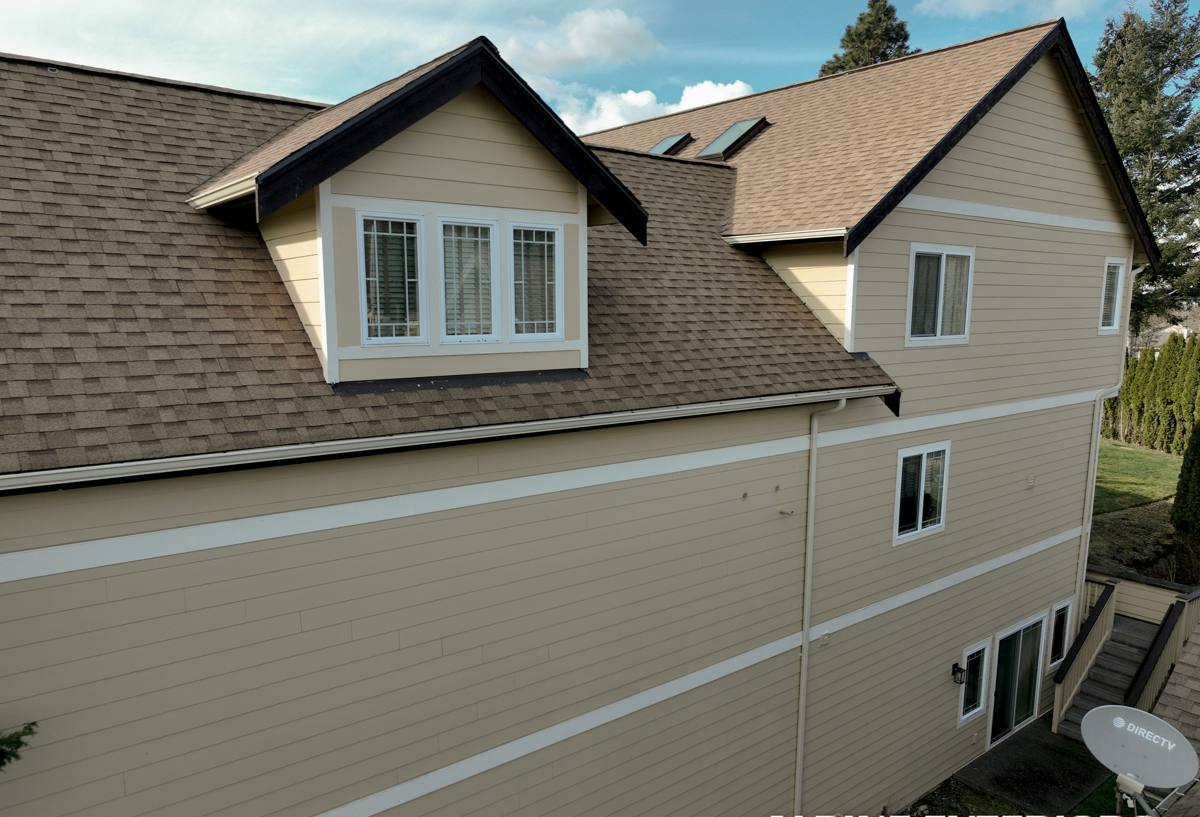
What Salt Air, Rain, and Moss Actually Do to Siding
Salt Air
Proximity to tidal water means airborne salt settles on exterior surfaces, especially on the windward sides of a home. Salt is corrosive to exposed metal fasteners, flashing, and trim, and it accelerates the breakdown of paint films and caulk. Siding that relies on field-applied paint is especially vulnerable here — every recoat cycle is a chance for the finish to fail faster than it would inland.
Driving Rain
Wind off the Sound doesn't just fall straight down, it drives rain sideways into wall assemblies, seams, and butt joints. If the water-resistive barrier, flashing, and drainage plane behind the siding aren't detailed correctly, that rain finds its way to the sheathing. Siding is the first line of defense, but it's not the only one — the assembly behind it matters just as much.
Moss and Persistent Dampness
Shaded walls and slow-drying conditions let moss and algae establish on siding surfaces that don't shed water quickly or dry out between rains. Moss holds moisture against the surface far longer than an open, well-drained wall would, and over years that constant dampness works its way into seams, fastener holes, and any spot where the surface finish has started to fail.
Signs a Conway Home Needs Siding Replacement
- Soft or spongy spots when you press on the siding, especially near the bottom courses or below windows
- Persistent green or black staining that pressure washing only removes temporarily
- Paint that's peeling, bubbling, or chalking heavily on the walls facing the Sound or prevailing wind
- Visible gaps, warping, or buckling at seams and butt joints
- Rust streaks below fasteners or trim pieces
- A musty smell in interior rooms along an exterior wall
- Siding that's original to a home built more than 20-25 years ago and has never been replaced
Any one of these on its own might just mean a repair. Several together, especially on the sides of the house that take the worst weather, usually means the underlying wall assembly has been compromised and a full replacement is the honest recommendation.
What a Correct Siding Replacement Involves Here
Replacing siding in Conway isn't just pulling off old boards and nailing up new ones. Given the moisture load this area sees, the assembly behind the siding is where most future failures actually get prevented.
Tear-Off and Sheathing Inspection
Once the old siding comes off, we inspect the sheathing for rot, soft spots, and existing water damage. This is the point where problems that have been hidden for years finally show themselves, and it's far cheaper to address them now than to cover them back up and deal with them later.
Water-Resistive Barrier and Flashing
A new, continuous water-resistive barrier goes down correctly lapped, with proper flashing at every window, door, penetration, and roof-to-wall intersection. In a driving-rain climate, flashing details at these transition points matter more than almost anything else in the job.
Drainage and Ventilation
Where the wall assembly and budget allow, a drainage gap behind the siding lets any incidental moisture drain and the wall dry out rather than trapping water against the back of the panels. This matters more on shaded, slow-drying walls than it does on a south-facing wall that bakes dry between storms.
Fastening and Joint Detailing
Fastener type, spacing, and placement follow the manufacturer's published specifications for this climate zone — not shortcuts. Butt joints and seams are detailed to shed water rather than trap it, and caulking is used the way the manufacturer intends, not as a substitute for correct flashing.
Trim and Accessories
Corner boards, trim, and accessories get the same climate treatment as the field siding. Mismatched materials at trim locations are a common source of early failure on coastal Skagit County homes, so we keep the whole envelope consistent.
Our Process for a Conway Project
- On-site inspection — we walk the exterior, check for existing moisture damage, and identify which walls take the worst exposure from wind, rain, and shade.
- Scope and proposal — a written scope covering tear-off, sheathing repair allowances if needed, water management details, siding line and color, trim, and timeline.
- Material staging — factory-finished panels and trim arrive ready to install, which limits the amount of on-site cutting, painting, and exposed raw edges.
- Installation to manufacturer spec — sheathing repair, WRB, flashing, drainage detailing, and fastening all done to the published installation instructions for this climate zone.
- Final walkthrough — we go over the finished work with the homeowner, address punch-list items, and register the manufacturer's warranty.
Why We Only Install James Hardie Fiber Cement
We don't offer vinyl, LP SmartSide, primed spruce, cedar, or other fiber cement brands, and in a climate like Conway's that's a deliberate professional standard, not a marketing line.
Vinyl expands and contracts more than fiber cement, and its seams and J-channels give salt-laden, wind-driven rain more opportunities to work behind the surface over time. Wood products — cedar and primed spruce alike — are organic material in a climate that stays damp for most of the year; even with diligent maintenance, they're more susceptible to moisture absorption, rot, and the kind of moss growth we see constantly in this area. LP SmartSide is an engineered wood product with a real track record of its own, but it still relies on wood strand substrate and edge sealing holding up perfectly, year after year, in exactly the wet conditions that stress engineered wood the most.
James Hardie fiber cement is non-combustible, doesn't absorb and swell with moisture the way wood-based products can, and comes from the factory with a ColorPlus finish that's baked on and warrantied against fading and peeling — which matters a great deal when the alternative is a field-applied paint job trying to survive salt air and eight months of damp shade. Hardie's HZ product lines are engineered by climate zone, and this region falls into the HZ5 zone, built for exactly the moisture exposure Conway sees. The company backs it with a strong transferable warranty, which is worth something on a coastal Skagit County property that may change hands down the road.
Material Comparison for This Climate
| Material | Moisture/Rot Resistance | Salt Air Durability | Moss Resistance | Maintenance |
|---|---|---|---|---|
| James Hardie fiber cement | High — cement-based, doesn't absorb and swell | High — factory finish resists salt-driven paint failure | Good with proper drainage detailing | Low — occasional wash, no repainting cycle |
| Vinyl | Moderate — seams and channels can trap moisture | Moderate — can chalk and become brittle over time | Moderate | Low, but limited repair options if damaged |
| Cedar / primed spruce | Low to moderate — organic material, absorbs moisture | Low — finish stress accelerates in salt air | Low — prone to moss and mildew in shade | High — regular repainting/sealing required |
| LP SmartSide | Moderate — engineered wood, edge-sealing dependent | Moderate | Moderate | Moderate — finish maintenance over time |
Why Hiring a Crew That Already Works Conway Matters
Conway is a small community, and its housing stock, lot conditions, and permitting requirements aren't identical to Mount Vernon proper or the rest of Skagit County. A crew that regularly works this specific area already understands which walls on a typical Conway property take the worst exposure, how local soil and drainage conditions around low-lying delta properties affect a home's moisture load, and what Skagit County's permitting and inspection process looks like for exterior work. That familiarity shows up in fewer surprises during tear-off, fewer callbacks, and a job that's scoped accurately the first time rather than re-scoped mid-project once hidden damage turns up.
It also means faster response if a warranty question or minor issue comes up after the job is done — you're not waiting on a crew that has to drive in from well outside the area and relearn the site conditions from scratch.
Cost Factors for a Conway Siding Replacement
Every home is different, but the line items that most affect price on a Conway project tend to be the same handful of factors:
| Factor | Why It Affects Cost |
|---|---|
| Extent of hidden sheathing damage | Rot found during tear-off requires repair before new siding can go on correctly |
| Home size and wall complexity | More corners, dormers, and trim details mean more labor and material cutting |
| Siding profile and trim selection | Lap width, trim style, and accessory choices affect material cost |
| Access and site conditions | Tight lots, landscaping, or limited equipment access add labor time |
| Existing drainage and flashing condition | Bringing water management up to spec may add scope beyond just the siding itself |
Get a Straight Answer for Your Conway Home
If you're seeing moss buildup that won't quit, paint failure on the walls that face the Sound, or soft spots that make you wonder what's happening behind the siding, it's worth having someone take an honest look before winter's wet season sets back in. We'll walk the exterior, tell you what we actually find, and put together a straightforward scope and estimate — no pressure, no upsell on products we don't stand behind. Fill out the form below to get started.