 Mount Vernon
 Siding Repair Built for Kulshan Ridge Conditions
Homes in Kulshan Ridge take a different kind of beating than a house twenty minutes inland. This part of Mount Vernon sits inside Skagit County's marine-influenced weather pattern — moist air moving in off Puget Sound and the Salish Sea, wind-driven rain that hits siding sideways instead of straight down, and a wet season that stretches long enough for moss and algae to get a real foothold on north- and west-facing walls before summer ever dries things out. None of that is exotic or rare. It's just consistent, and consistency is what wears siding down over years, not any single storm.
Siding repair here isn't just patching a crack or swapping a damaged board. It's diagnosing why that board failed in the first place — because on a lot of Kulshan Ridge homes, the failure point is moisture that got behind the siding, not damage to the face of it. Fix the visible symptom without addressing the moisture path, and the same spot fails again in a season or two.
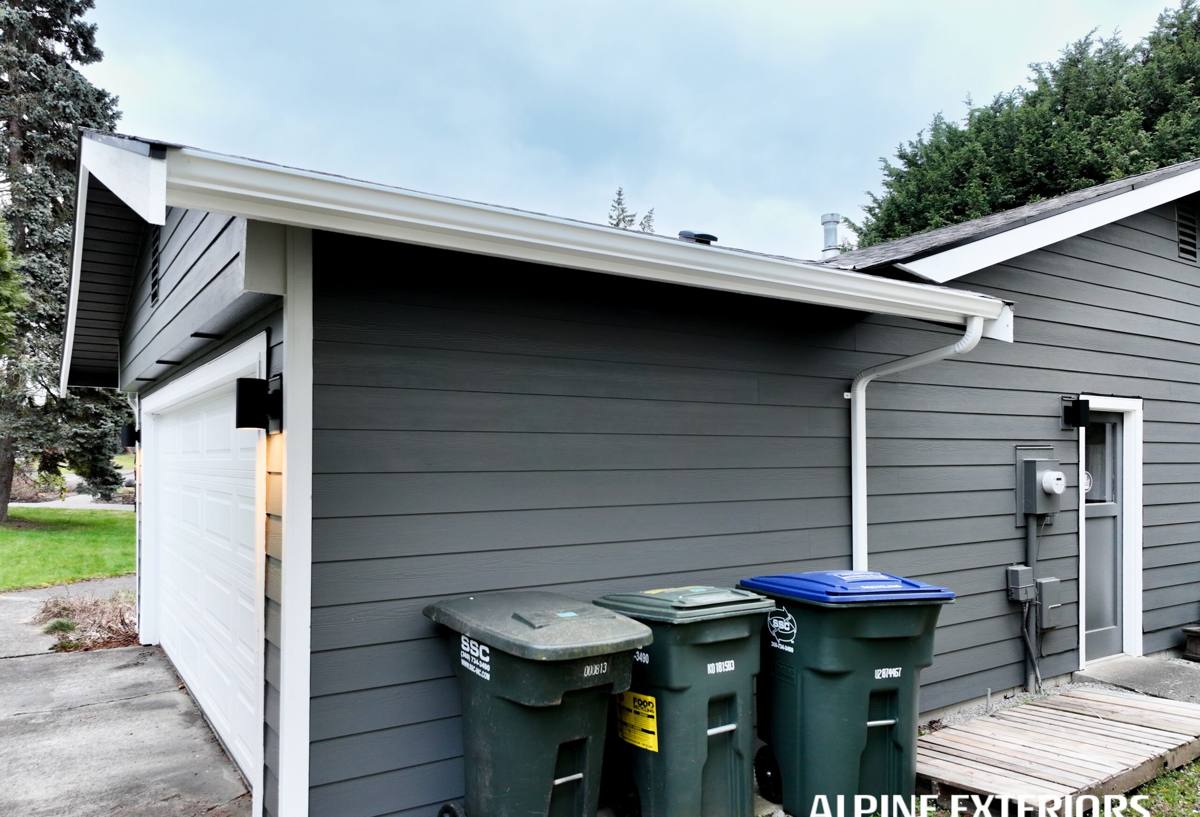
What Salt Air and Driving Rain Actually Do to Siding
Salt Air's Slow Corrosion
Proximity to the Sound means airborne salt settles on exterior surfaces over time. On its own, salt doesn't rot wood or fiber cement — but it accelerates corrosion on fasteners, flashing, and trim hardware. Once a nail head or a piece of Z-flashing starts corroding, it stops doing its job of keeping water out, and that's when siding starts to fail from the inside.
Driving Rain and Wind-Driven Moisture
Straight-down rain is easy for siding to shed. Wind-driven rain is not — it gets pushed sideways and even slightly upward at laps, seams, and penetrations (hose bibs, vents, light fixtures). Over years of repeated wind events, these are the spots where caulking fails first, seams open a hair, and water starts finding its way behind the cladding.
The Long Moss Season
Shaded, north-facing, and tree-adjacent walls in Kulshan Ridge stay damp far longer than south-facing walls. That extended dampness is exactly what moss and algae need to establish. Beyond looking bad, a mat of moss holds moisture directly against the siding surface for weeks at a time — which is a problem for any wood-based product and a maintenance headache even for materials that resist rot.
Signs a Kulshan Ridge Home Needs Siding Repair
- Soft or spongy spots when you press on the siding, especially near the bottom courses or below windows
- Visible gaps or separation at seams, corners, or where siding meets trim
- Paint that's bubbling, peeling, or failing faster on one side of the house than the others
- Persistent moss or dark staining that keeps returning after cleaning
- Warped, cupped, or bowed boards — a common sign of moisture trapped behind the material
- Visible daylight or drafts from inside near siding seams or penetrations
- Rust streaks running down from nail heads or fasteners
- Higher-than-expected heating bills, which can point to compromised siding letting conditioned air escape
What a Correct Repair Actually Involves
A repair that holds up in this climate has to go further than the damaged board itself. Our process on Kulshan Ridge homes typically includes:
1. Diagnosing the Water Path
Before anything gets replaced, we find out how water got in. That means checking flashing at windows and rooflines, looking at caulk joints, and inspecting the house wrap or building paper behind the removed section. Replacing a board without fixing the entry point just delays the next repair.
2. Checking for Hidden Damage
Once siding is pulled back, we look at the sheathing underneath. If moisture has been getting in for a while, the sheathing itself may be soft or delaminating, which needs to be addressed before new siding goes back on — otherwise you're fastening good material to a bad substrate.
3. Correcting Flashing and Drainage Details
This is the step that gets skipped in a lot of quick patch jobs. Proper kick-out flashing, correctly lapped house wrap, and a drainage gap behind the siding matter more in a wet climate like ours than almost anywhere else in the country. We fix these details as part of the repair, not as an afterthought.
4. Matching and Installing the Replacement
For homes already sided in James Hardie fiber cement, we match the existing profile and, where possible, the factory ColorPlus finish so the repair doesn't stand out as a patch. Fasteners, clearances, and caulking are all installed to manufacturer spec — details that directly affect how long the repair lasts in wind-driven rain.
Repair vs. Replacement: How We Help You Decide
Not every damaged section needs a full re-side, but sometimes patch repair is throwing money at a house that needs a bigger conversation. Here's how we think through it with homeowners:
| Situation | Likely Path | Why |
|---|---|---|
| Isolated damage (one board, one wall section), rest of siding sound | Targeted repair | Underlying material and flashing are still in good shape elsewhere |
| Repeated failures in the same area after past patches | Repair plus flashing correction | A recurring problem usually means the water path was never fixed, not the material |
| Widespread soft spots, warping, or moisture damage across multiple walls | Full or partial re-side | Patchwork on a system-wide moisture problem rarely holds |
| Siding is original wood, vinyl, or an aging composite nearing end of life | Replacement conversation | Repairing old material buys limited time; replacement resets the clock with a better-suited product |
| Cosmetic moss/algae staining only, material underneath is sound | Cleaning, not repair | No structural or moisture issue — just a maintenance item |
Why We Only Repair and Install James Hardie Fiber Cement
When a repair calls for new material — or when a homeowner decides the smarter move is replacing a section or a whole elevation — we use James Hardie fiber cement, and only James Hardie. It's non-combustible, engineered specifically for wet, moderate climates through Hardie's HZ10 product line, and finished at the factory with ColorPlus technology, which resists the fading and peeling that repeated Skagit County rain cycles cause on field-painted materials. That matters directly for repair work: a factory finish gives us a much better shot at matching color on a patched section than trying to hand-match paint years after the original installation.
We don't install LP SmartSide, vinyl, Cemplank, Allura, or primed wood siding, and we're upfront about why: those products each have real strengths, but the moisture behavior, seam sensitivity, or long-term maintenance burden they carry doesn't hold up as well against this specific climate — salt air, wind-driven rain, and long stretches of damp shade. Standardizing on one product means our crews are deeply familiar with its installation requirements, its warranty terms, and how it behaves over time, rather than juggling different repair methods for five different materials.
Why a Crew That Works Kulshan Ridge Matters
Siding repair is a job where local knowledge shows up in the results, not just the sales pitch. A crew that regularly works Kulshan Ridge and the surrounding Mount Vernon area already knows which wall orientations tend to fail first, how the local wind pattern drives rain into seams, and where moss takes hold fastest. That means less time spent diagnosing from scratch and a repair that accounts for conditions specific to this neighborhood, not generic best practices pulled from a drier climate.
It also means accountability. A contractor working the same streets year after year has a reason to make sure a repair actually lasts — not just look finished on the day the crew leaves.
What to Ask Before Hiring for Siding Repair
- Will you inspect what's behind the siding, or just replace the visible damaged piece?
- Do you check and correct flashing and drainage details as part of the repair?
- Can you match the existing siding profile and finish closely?
- What warranty applies to the repair itself, separate from the material warranty?
- Have you worked on homes in this neighborhood or similar coastal-influenced areas before?
Maintaining Repaired Siding in This Climate
Once a repair is done right, a little seasonal attention keeps it that way. Rinse off moss and algae buildup before it mats down and holds moisture against the surface. Keep an eye on caulk joints around windows, doors, and penetrations — these are the first place wind-driven rain finds a way in, and re-caulking is far cheaper than the repair that follows if it's ignored. Trim back vegetation that shades walls and keeps them damp longer than necessary. None of this is expensive or time-consuming, but skipping it is how a five-year-old repair turns into a ten-year-old problem.
If you're dealing with damaged, soft, or failing siding on a Kulshan Ridge home, we're glad to take a look and give you a straight answer on what it needs — repair, a bigger fix, or just monitoring. The estimate is free, there's no pressure, and you'll get a clear explanation of what we find and why.