 Mount Vernon
 Siding Installation for Riverside Homes in Mount Vernon
Riverside sits close enough to the Skagit River that homes here deal with a slightly different moisture profile than a house a mile away on higher, more open ground. River-adjacent lots tend to hold humidity longer after a storm passes, tree cover along the water keeps walls shaded for more of the day, and the general Skagit County mix of salt air, driving rain, and a long moss season lands on top of that baseline dampness rather than instead of it. None of that makes siding installation in Riverside dramatically different from the rest of Mount Vernon, but it does change which details matter most, and it's exactly the kind of thing a generic national installation spec doesn't account for.
This page is about siding installation specifically — the material, the process, and the installation details that hold up in a river-valley microclimate like this one. We install James Hardie fiber cement siding exclusively, and we treat installation quality as seriously as the material choice itself, because a good product installed to a loose standard still fails early.
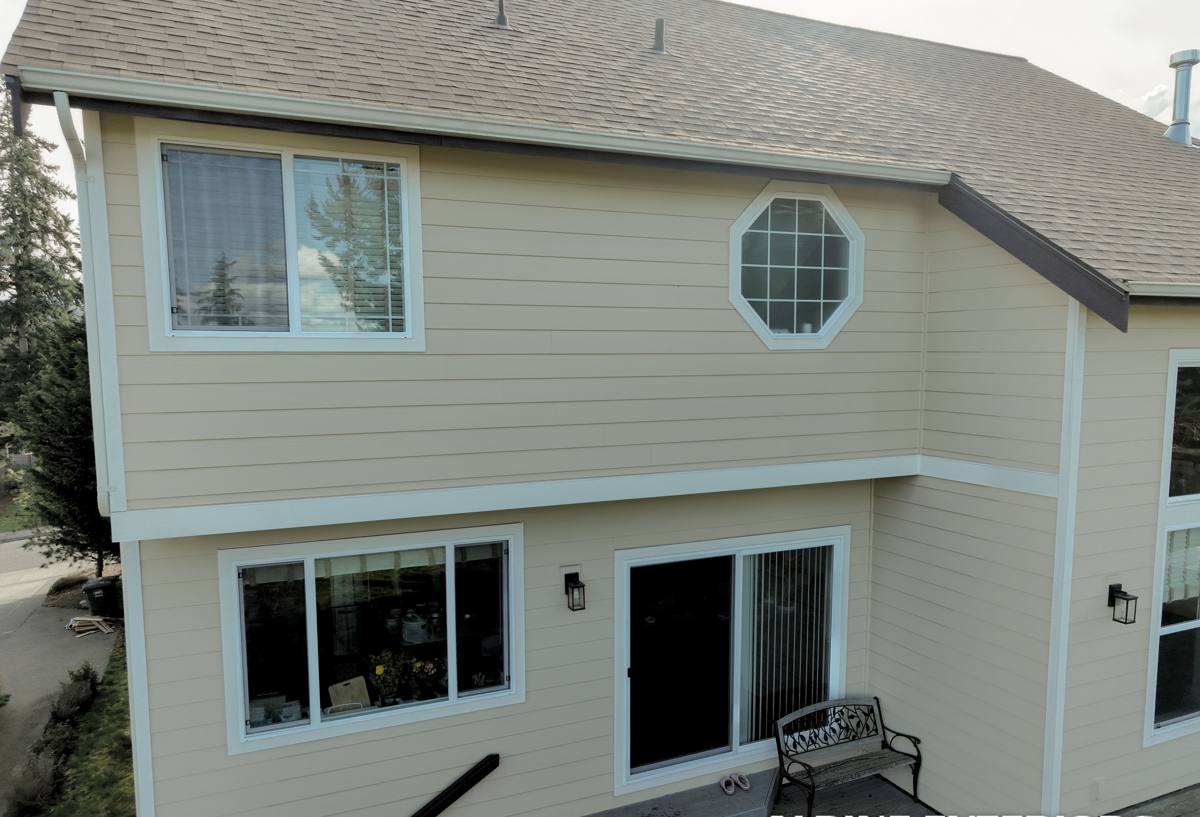
What Riverside's Microclimate Asks of a Siding Installation
Shade and Sustained Moisture
Homes closer to the river frequently sit under more tree cover, or simply catch less direct sun through the day than a house on an open, south-facing lot elsewhere in Mount Vernon. Less sun means walls stay wet longer after rain, which is precisely the condition moss and mildew need to establish. An installation that doesn't account for which walls will stay shaded and damp longest is missing one of the more important variables on a Riverside job.
Driving Rain Off Open Water
Like the rest of Skagit County, Riverside gets wind-driven rain that moves sideways into wall assemblies rather than falling straight down onto a roof. Combined with the river corridor's tendency to funnel wind along certain approaches, some wall faces in Riverside take a more direct, sustained soaking during storms than others on the same lot. Flashing and joint details have to be sized to that reality, not to an average rainfall figure.
Salt Air and Fastener Life
Salt-laden air moving up from Skagit Bay and the broader Puget Sound system reaches inland across the valley, Riverside included, and it accelerates corrosion in fasteners, flashing, and lower-grade trim hardware. Over years, that corrosion is one of the quieter ways an otherwise decent siding job starts to fail at the seams and fastener points first, well before the field of the siding shows any obvious wear.
What a Correct Siding Installation Involves
Riverside homeowners are usually shopping for a "siding job," but the actual work breaks down into a series of specific steps, and skipping or rushing any one of them is where premature failures start. A correct installation is not just nailing boards to a wall — it's a layered system where each component depends on the one under it being done right.
Weather-Resistive Barrier and Sheathing
Before any siding goes up, the wall's weather-resistive barrier has to be intact, properly lapped, and free of gaps or tears. On tear-off jobs, this is also the point where hidden moisture damage to sheathing gets found — and on a shaded, river-adjacent lot, we look at this step more carefully than we would on a dry, open-exposure home, because sustained dampness behind older siding is more common here.
Flashing at Every Penetration
Windows, doors, hose bibs, light fixtures, and any other wall penetration need integrated flashing, not just a bead of caulk over the gap. Caulk is a maintenance item that degrades; flashing is a permanent water-management detail. On Riverside's shadier walls, where moisture sits longer, a caulk-only approach at penetrations is one of the fastest ways a job looks fine for a year or two and then starts leaking.
Fastening Pattern and Clearances
James Hardie specifies fastening patterns and spacing by product line and by local wind exposure, along with minimum clearances from grade, roof lines, decks, and patios. Getting the bottom clearance right matters more on lots where soil stays damp longer, since a board sitting too close to wet ground or mulch is inviting moisture wicking regardless of how good the siding itself is.
Joint and Seam Treatment
Every horizontal and vertical joint is a place water can find its way behind the siding if it isn't treated correctly. We vary joint treatment somewhat based on a wall's actual sun exposure — a south-facing wall that dries out quickly after rain can tolerate slightly different detailing than a shaded, north-facing wall that stays damp for days, and Riverside has more of the latter than most parts of Mount Vernon.
Our Siding Installation Process
The steps below are consistent across every siding installation we do, though the amount of time spent on each one depends on what we find once the old siding comes off.
- On-site assessment: We walk the property, look at sun and shade exposure wall by wall, check existing siding and trim condition, and note any signs of past moisture intrusion before quoting the job.
- Tear-off and substrate inspection: Old siding comes off and the sheathing underneath gets inspected for rot, soft spots, or trapped moisture — common findings on shaded, longer-damp walls near the river.
- Substrate repair: Any damaged sheathing or framing gets repaired or replaced before new siding goes up. Installing new siding over compromised substrate just hides a problem rather than fixing it.
- Weather barrier and flashing installation: A new or repaired weather-resistive barrier goes on, with flashing integrated at every window, door, and penetration.
- Hardie siding installation: Siding goes up to manufacturer fastening specs, with clearances and joint treatment adjusted for each wall's actual exposure.
- Trim, caulking, and touch-up: Trim is fitted and finished, seams are sealed where specified, and any factory-finish touch-up is color-matched rather than field-painted over.
- Final walkthrough: We go over the finished job with the homeowner, point out anything worth knowing for future maintenance, and clean up the site.
Why James Hardie Fiber Cement Is the Only Product We Install
We install James Hardie fiber cement siding exclusively — not vinyl, not LP SmartSide, not Cemplank, Allura, primed spruce, or cedar. That's a professional standard built on what we've consistently seen hold up in this exact climate versus what doesn't. Fiber cement has no organic core for moisture to work into, it doesn't feed moss and mildew growth the way wood-based products can, and Hardie's climate-engineered HZ product lines are built specifically for regions with sustained moisture exposure like this one, rather than a single generic formulation sold nationwide. The factory-applied ColorPlus finish is baked on under controlled conditions, which holds up longer against fading and moisture than a field-applied paint job managed on a maintenance schedule. It's a higher upfront investment than some alternatives, and we think that trade-off is worth it for a wall that's going to sit in a shaded, damp Riverside microclimate for decades.
Cost Factors for a Riverside Siding Installation
| Factor | What It Affects | Why It Matters in Riverside |
|---|---|---|
| Substrate condition at tear-off | Repair scope before new siding goes up | Shaded, longer-damp walls near the river more often reveal hidden moisture damage |
| Wall exposure and shade | Flashing and joint treatment detail | Tree-covered and north-facing walls need more careful moisture detailing |
| Home size and trim complexity | Material and labor total | More corners and penetrations mean more flashing points to detail correctly |
| Siding profile and color | Material cost and finish longevity | Factory-finished ColorPlus color holds up longer against sustained damp exposure |
| Site access | Labor and staging time | Tree-lined, river-adjacent lots can be tighter to stage equipment on than open lots |
We don't quote off a price sheet, because none of these factors are the same from one Riverside property to the next. A walkthrough and honest look at the existing siding and substrate is what an accurate number actually requires.
Why a Crew That Already Works in Riverside Matters
Siding installation quality comes down to hundreds of small decisions — which walls need extra flashing attention, how close to grade a board can safely sit, how joint treatment should shift based on shade. A crew that has installed siding on other homes in this same river-adjacent part of Mount Vernon has already made those calls repeatedly on lots with similar sun exposure, tree cover, and moisture patterns. That's a different level of judgment than a crew applying a one-size-fits-all national spec to a neighborhood they've never worked in before. It also means we're a known, reachable local business if a warranty question or a flashing detail needs a second look years after the job is done, rather than a crew that worked the area once and moved on.
Maintaining a New Hardie Installation in Riverside
A correctly installed Hardie system needs relatively little upkeep, but "little" isn't "none," especially on shaded, moss-prone walls near the river.
- Rinse siding periodically, focusing on shaded or north-facing walls where moss and mildew establish first
- Keep gutters clear so overflow isn't running down the siding face or pooling near the bottom clearance
- Trim back tree branches and shrubs holding moisture against the wall or blocking sun and airflow
- Watch caulked joints and touch-up points for cracking or gaps and have them re-sealed before they become entry points
- Have any visible impact damage or loose trim repaired promptly rather than letting it sit through a wet season
Getting a Siding Estimate for Your Riverside Home
If your Riverside home needs new siding, a repair, or just an honest look at what condition the existing siding and substrate are really in, we're happy to come take a look. Reach out using the form below for a free, no-pressure estimate — we'll walk the property, explain what we find, and give you a straight answer about what the job actually involves.