 Mount Vernon
 Board & Batten in Sedro-Woolley: A Look That Has to Work as Hard as It Looks Good
Board and batten has a strong following in Sedro-Woolley and the surrounding Skagit County valley — it fits everything from restored farmhouses along the river flats to newer builds on the wooded rises toward the foothills. The vertical lines read as clean, tall, and a little more custom than lap siding, which is part of why we get asked about it so often out here. But board and batten is not just a style choice. The way it's built — the number of seams, the way water is supposed to shed off those seams, the ventilation behind the boards — determines whether it still looks sharp in fifteen years or starts telling on itself in five.
This page is specifically about board and batten for homes in and around Sedro-Woolley, not a general national writeup. The climate here is a real design input, not a footnote, and it changes what "correct installation" actually means.
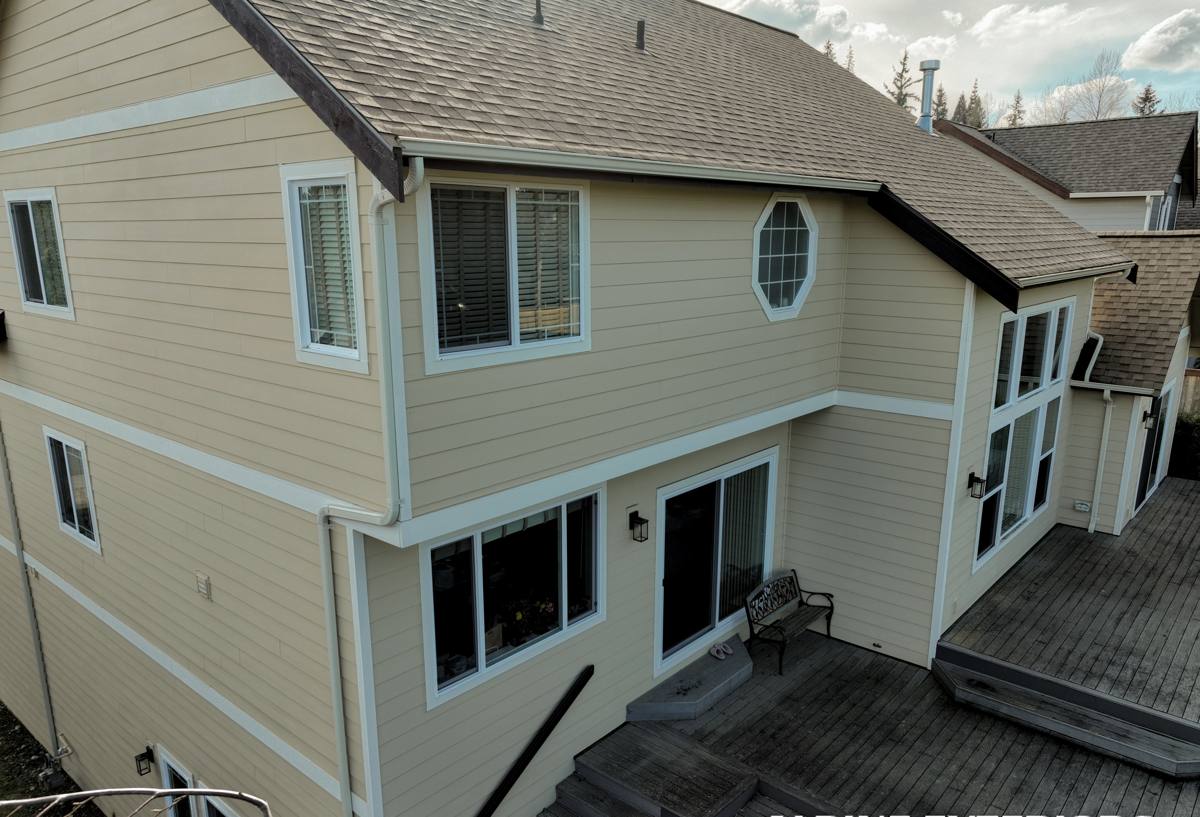
What Skagit County's Climate Does to a Board & Batten Wall
Sedro-Woolley sits inland from the salt water of Skagit Bay and Puget Sound, but the marine influence still reaches this far up the valley — enough moisture and airborne salt content to matter for exterior materials over the long haul, especially on homes with more open exposure. Add three more factors specific to this part of Washington:
- Driving rain. Fall and winter storms here don't just fall straight down — wind-driven rain gets pushed sideways into wall assemblies, which is exactly the condition board and batten's vertical seams are most vulnerable to if they weren't detailed correctly.
- A long moss and algae season. Between the tree cover common around Sedro-Woolley and the extended wet months, north-facing and shaded walls stay damp for long stretches. Anything porous or slow to dry becomes a growth surface.
- Temperature swings between summer and winter. Not extreme by national standards, but enough seasonal movement to open up poorly sealed joints and loosen fasteners over years of expansion and contraction.
None of that makes board and batten a bad choice for a Sedro-Woolley home. It makes the substrate and the installation details the whole ballgame.
Why the Vertical Seams Are the Real Risk Point
A lap siding wall sheds water downward across overlapping horizontal boards — gravity does most of the work. Board and batten relies on the battens (the narrow vertical strips) to cover the seams between the wider boards, so water is meant to run down the face rather than get pushed sideways into the joint. If those seams are caulked instead of properly lapped and back-flashed, or if the boards behind the battens aren't rated for direct wet exposure, driving rain off the Skagit valley will eventually find its way in — usually starting at the bottom courses and around window and door returns.
Why We Only Install This in James Hardie Fiber Cement
We don't install board and batten in primed wood, cedar, LP SmartSide, or vinyl vertical panel. That's a standing company policy, not a sales pitch for this one job. Here's the honest reasoning as it applies specifically to a vertical-seam profile in this climate:
- Primed wood and cedar can look beautiful, but board and batten multiplies the number of exposed edges and seams, and end grain is where wood siding fails first. In a moss-prone, high-rainfall climate like Skagit County, that maintenance burden shows up fast.
- LP SmartSide is an engineered wood product with a resin-treated strand core. It performs reasonably in moderate climates, but it's still wood-based, meaning cut edges and joints need diligent sealing and repainting on a schedule homeowners have to actually keep up with.
- Vinyl vertical panel is low-maintenance in the sense that it doesn't rot, but it's a thin, flexible plastic product that can warp, fade, and crack under UV and temperature cycling, and it doesn't hold paint if a homeowner ever wants to change the color.
James Hardie fiber cement is cement, sand, and cellulose fiber — it doesn't have grain to rot along, it's non-combustible, and Hardie's HZ5 product line is engineered for the Pacific Northwest's freeze-thaw and moisture cycle specifically. Combined with the ColorPlus factory finish, it gives us a board and batten wall we're comfortable standing behind on a fifteen-plus year warranty in a climate that punishes shortcuts.
What a Correct Board & Batten Installation Actually Involves
The finished look can hide a lot of differences underneath. A correctly built board and batten wall in this climate includes:
Rainscreen Gap Behind the Boards
A furring strip or drainage wrap system creates a small air gap between the siding and the weather-resistive barrier. That gap lets any moisture that does get behind the boards drain and dry instead of sitting against the sheathing — critical during Sedro-Woolley's long wet season.
Correct Board Overlap and Batten Coverage
Battens need enough width and fastening to stay tight to the substrate over decades of seasonal movement, and the underlying boards need to be sized and spaced so the battens fully bridge the seam with margin — not just enough to look right on installation day.
Flashing at Every Horizontal Interruption
Anywhere a board and batten wall meets a window, door, deck ledger, or roofline, there needs to be step or head flashing that directs water back out, not a bead of caulk asked to do a flashing detail's job. Caulk is a maintenance item; flashing is permanent.
Fastener Placement Per Manufacturer Spec
James Hardie publishes exact nailing patterns and clearances for its board and batten systems. Fastening too close to an edge, into a stud that isn't there, or with the wrong nail type is one of the most common causes of a "premature" siding failure — and it's invisible once the wall is closed up, which is exactly why the crew's habits matter more than the brochure.
Our Process for a Sedro-Woolley Board & Batten Project
- On-site assessment. We look at sun exposure, tree cover, drainage around the foundation, and the current wall assembly before we ever talk product or price.
- Substrate and moisture check. If the existing wall has hidden rot or moisture issues — more common on shaded, tree-covered lots typical around Sedro-Woolley — we address that before new siding goes on, not after.
- Rainscreen and weather barrier install. This is the layer nobody sees and nobody asks about, and it's the layer that determines how the wall performs in year ten.
- James Hardie board and batten installation to manufacturer fastening and flashing specifications, with attention to every window, door, and roofline transition.
- Final walkthrough covering what maintenance actually looks like for this siding in this climate, and what's covered under the Hardie warranty.
Board & Batten Material Comparison
| Material | Moisture Behavior | Maintenance in This Climate | Typical Lifespan |
|---|---|---|---|
| James Hardie Fiber Cement | Dimensionally stable; doesn't absorb and swell like wood | Occasional wash; factory finish resists moss staining longer | 30+ years with correct install |
| Primed Wood / Cedar | Absorbs moisture at seams and end grain; prone to swelling | Repainting and caulk renewal on a recurring schedule | 10–20 years before major repaint/repair |
| LP SmartSide | Engineered wood core; sensitive to unsealed cut edges | Edge sealing and repainting on manufacturer schedule | 20–25 years with diligent upkeep |
| Vinyl Vertical Panel | Doesn't absorb water but can trap it behind panels | Low upkeep but can warp, fade, or crack over time | 15–25 years, appearance fades sooner |
Maintenance Checklist for Board & Batten Homes in Skagit County
Even the right material benefits from a little seasonal attention. For homeowners in Sedro-Woolley, we recommend:
- Rinse shaded or north-facing walls once or twice a year to slow moss and algae buildup before it takes hold.
- Keep gutters clear so overflow doesn't run down the wall face near seams and battens.
- Trim back tree limbs and shrubs that keep a wall section damp and shaded longer than the rest of the house.
- Check caulking at window and door trim annually — even with proper flashing, sealant is a wear item.
- Walk the base of the walls after major storms to check for splashback staining or standing water near the foundation line.
Why Hiring a Crew That Already Works in Sedro-Woolley Matters
Board and batten installation isn't uniform across Washington. A crew used to drier east-side conditions may not default to a rainscreen gap or the flashing discipline that a wetter, moss-heavy Skagit County lot actually needs. A crew that already works Sedro-Woolley and Mount Vernon knows which lots hold moisture longer, which exposures take the worst of the driving rain off the valley, and how to detail a wall so it's still performing — not just still standing — well past the warranty date. That local pattern recognition is worth as much as the product spec sheet.
Get a Straight Answer for Your Home
If you're considering board and batten for a home in Sedro-Woolley, we're happy to walk the property, look at your current siding condition, and give you a straightforward, no-pressure estimate — including an honest read on whether board and batten is the right profile for your specific exposure before we talk numbers.