 Mount Vernon
 Why Sedro-Woolley Roofs Wear Differently Than the Brochures Suggest
Sedro-Woolley sits up the Skagit Valley, ringed by fir and cedar and close enough to the foothills that the weather rolling off the Puget Sound and Skagit Bay tends to stall and dump before it ever reaches the mountains. That means more total rain days, longer stretches of low-angle drizzle, and roofs that rarely get a full dry-out between storms. Add the tree canopy that gives so many Sedro-Woolley properties their shade and privacy, and you get roofs that hold moisture, grow moss, and shed granules faster than the same shingle would on a roof out in the open, sun-exposed part of the county.
The salt-tinged marine air that moves up the valley from the Sound plays a smaller role here than it does closer to the water, but it's still part of the mix — it adds to the general moisture load and speeds up corrosion on exposed metal fasteners and flashing over the decades a roof is expected to last. None of this is dramatic on its own. It's cumulative. A roof that would go twenty-five years in a drier, more open part of the state might start showing real trouble at eighteen or twenty here, and the failure points are usually the same handful of things: moss lifting shingle edges, valleys and flashing that never fully dry out, and attic ventilation that can't keep pace with the humidity.
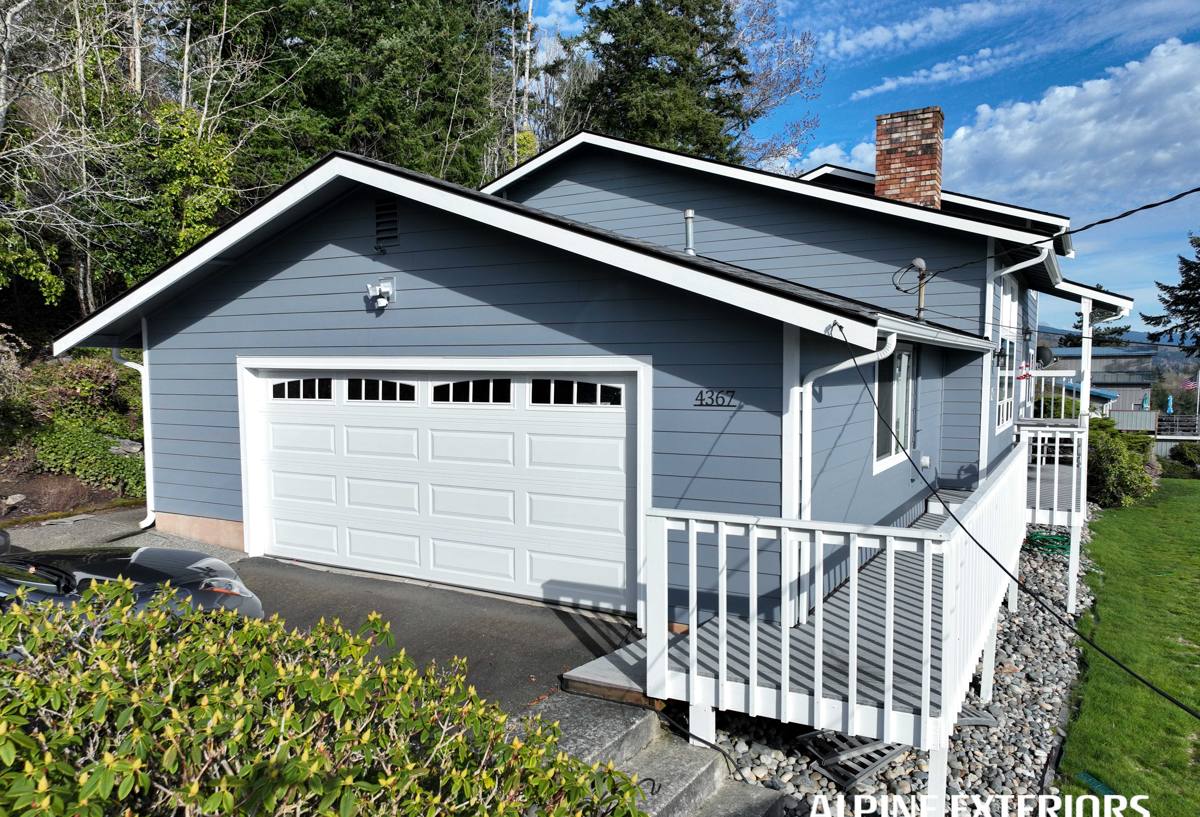
Signs a Sedro-Woolley Roof Has Reached Replacement, Not Repair
Most roofs don't fail all at once — they send signals for a year or two first. Knowing which signals mean "patch it" versus "replace it" saves homeowners from either overspending on a roof that's still fine or underspending on one that's already past the point of economical repair.
- Granules collecting in gutters and downspouts in noticeable amounts, especially after a windy rain
- Moss or dark streaking that keeps coming back within months of cleaning, on a roof more than fifteen years old
- Shingle edges curling, cupping, or lifting, particularly on north-facing slopes that stay shaded and damp
- Soft spots, sagging, or a spongy feel when walked (a sign the decking underneath is compromised)
- Daylight visible through the attic roof boards, or water staining on attic framing after storms
- Flashing around chimneys, vents, and skylights that's rusted, cracked, or was never properly step-flashed
One or two of these, isolated to a small area, can often be repaired. Several of them together — or any sign of decking damage — usually means the roof system as a whole is past the point where patching makes financial sense.
What a Correct Roof Replacement Actually Involves
Tear-Off and Deck Inspection
A proper replacement starts with full tear-off down to the decking, not an overlay. Overlaying a new roof on top of an old one traps whatever moisture and moss growth is already in the system and voids most manufacturer warranties outright. Once the old roofing is off, the decking gets inspected board by board. In a wet climate like Skagit County's, it's common to find soft or delaminated plywood or sheathing around valleys, chimneys, and eaves — areas that see the most standing water and the least airflow. Any compromised decking gets replaced before anything new goes down; skipping this step is the single most common reason a "new" roof fails early.
Underlayment and Flashing
In a region with this much sustained rain, the underlayment matters as much as the shingle on top of it. A synthetic, water-resistant underlayment — with self-adhered ice-and-water membrane at valleys, eaves, and roof penetrations — gives the roof a real second line of defense if wind-driven rain ever gets under the surface layer. Flashing around chimneys, skylights, and sidewalls should be new, properly step-flashed and counter-flashed, not caulked over old metal. Caulk is a maintenance item, not a flashing strategy.
Ventilation
An under-ventilated attic in a wet climate is one of the fastest ways to shorten a new roof's life. Balanced intake at the eaves and exhaust at the ridge lets moist attic air escape instead of condensing on the underside of the decking, which is exactly the kind of hidden rot that turns into a sagging roof a decade before it should. Any roof replacement worth doing includes a real look at whether the home's current ventilation is adequate, not just a like-for-like swap of vents that were undersized to begin with.
Choosing a Roofing Material for the Skagit Valley Climate
There's no single "best" roofing material — there's a best fit for a given home's slope, tree exposure, budget, and how long the owner plans to stay. Here's how the common options stack up for a shaded, damp, moss-prone town like Sedro-Woolley.
| Material | Typical Lifespan Here | Moss & Moisture Behavior | Relative Cost | Best Fit |
|---|---|---|---|---|
| Architectural asphalt shingle | 20–30 years | Good with proper ventilation; algae-resistant granules help but don't eliminate moss on shaded slopes | $ | Most homes; best value-to-performance balance |
| 3-tab asphalt shingle | 15–20 years | Thinner profile sheds less water efficiently; moss and curling show up sooner | $ | Budget-driven projects, rentals |
| Standing seam metal | 40–50+ years | Excellent — smooth, non-porous surface resists moss and sheds water fast | $$$ | Owners planning to stay long-term or wanting minimal maintenance |
| Composite/synthetic shingle | 30–40 years | Good moisture resistance; performance varies by manufacturer and installation care | $$ | Homes wanting a shingle look with longer service life |
We don't push every homeowner toward the most expensive option on this list. Metal roofing genuinely performs best against moss and standing moisture, but it's a bigger up-front investment and not every budget or roof style calls for it. A well-installed architectural shingle system, with correct ventilation and flashing, is a legitimate long-term choice for the great majority of Sedro-Woolley homes — the installation quality matters more than the brand name on the wrapper.
Our Process, Start to Finish
- On-site inspection. We walk the roof and the attic, not just look from the ground, and check decking condition, ventilation, flashing points, and moss/moisture patterns specific to the property's tree cover and slope exposure.
- Written estimate. A clear scope and price before any work starts — what's being torn off, what decking replacement is budgeted for, what underlayment and flashing details are included, and the material options that make sense for that roof.
- Scheduling around the weather. Skagit County's wet stretches mean timing matters. We plan tear-off and dry-in in a way that minimizes how long any section of decking sits exposed.
- Tear-off and deck repair. Full removal of the old roofing, inspection and replacement of any compromised decking, disposal handled as part of the job.
- Underlayment, flashing, and ventilation install. The parts that don't show but determine how long the roof actually lasts.
- Final installation and cleanup. New roofing installed to manufacturer spec, site swept for nails and debris, magnetic sweep of the yard where needed.
- Walkthrough. We go over what was done, what the warranty covers, and what basic upkeep (gutter clearing, occasional moss treatment) keeps it performing.
Why a Crew That Already Works Sedro-Woolley Matters
Roofing crews that mostly work drier, more open parts of the state don't always price or plan for the realities of a shaded, high-rainfall town like this one. A crew that regularly works Sedro-Woolley and the surrounding Skagit County area already knows which slopes tend to hold moss, how much ventilation a typical local attic actually needs versus what's on the spec sheet, and how to sequence a tear-off around a valley that rarely gives you three dry days in a row. That local pattern recognition is the difference between a roof that's technically installed to code and one that's actually built for how this area's weather behaves year-round.
There's also a practical side: local permitting and inspection processes, knowing which suppliers can get materials out to the valley without delay, and being reachable if a question comes up two years after the install — not just during the sales process.
Keeping a New Roof Performing in This Climate
A correctly installed roof still needs a small amount of upkeep in a climate this wet. None of it is complicated, but skipping it shortens the life of even a well-built roof.
- Clear gutters and downspouts at least twice a year — clogged gutters back water up under the eave edge
- Have overhanging branches trimmed back where they shade the roof and keep it from drying out between rains
- Address moss at the first sign of regrowth rather than letting it establish under shingle edges
- Check attic ventilation isn't blocked by insulation or storage after any attic work
- Have flashing points (chimney, skylights, sidewalls) visually checked every couple of years, not just after a leak shows up
Moss removal is worth a word on its own: pressure washing a roof is one of the fastest ways to strip granules and shorten a shingle roof's life. Moss should be treated and gently brushed or allowed to die back and wash off naturally, not blasted off.
What Drives the Cost of a Roof Replacement
Every estimate is specific to the roof, but the same handful of factors move the price up or down on most Sedro-Woolley jobs: the total roof area and number of stories, the pitch (steeper roofs take longer and need more safety setup), the number of valleys, penetrations, and flashing points, whether decking replacement turns out to be needed once tear-off starts, and the material chosen. A simple, single-story roof with few penetrations will cost meaningfully less than a steep, cut-up roofline with multiple chimneys and skylights, even at the same square footage. We walk through these factors on-site so the number in the estimate reflects the actual roof, not a generic square-footage guess.
If you're weighing whether it's time to repair or replace, or just want an honest read on where a Sedro-Woolley roof stands, we're happy to come take a look. The estimate is free, there's no pressure attached to it, and you'll get a straight answer either way — use the form below to get one scheduled.