 Mount Vernon
 Why Anacortes Roofs Wear Differently
Anacortes sits out on Fidalgo Island, surrounded by saltwater and exposed to weather that comes straight off the water. That's a different environment than a roof faces a few miles inland in Mount Vernon or elsewhere in Skagit County. Salt-laden marine air accelerates corrosion on anything metal — fasteners, flashing, gutter hangers, pipe boots — long before it would fail on a drier, more sheltered roof. Wind off the Sound and the Strait of Juan de Fuca drives rain sideways and up under shingle edges and flashing laps that were never designed to shed water from that angle. And the combination of shade from mature evergreens, morning marine fog, and a wet season that stretches from fall into spring gives moss and algae months at a time to take hold.
None of that means an Anacortes roof is doomed to fail early. It means repairs have to account for causes, not just symptoms. A patch that would hold up fine on a dry, inland roof can fail within a season out here if it doesn't account for wind-driven moisture and ongoing moss pressure. That's the lens we bring to every repair call in this area.
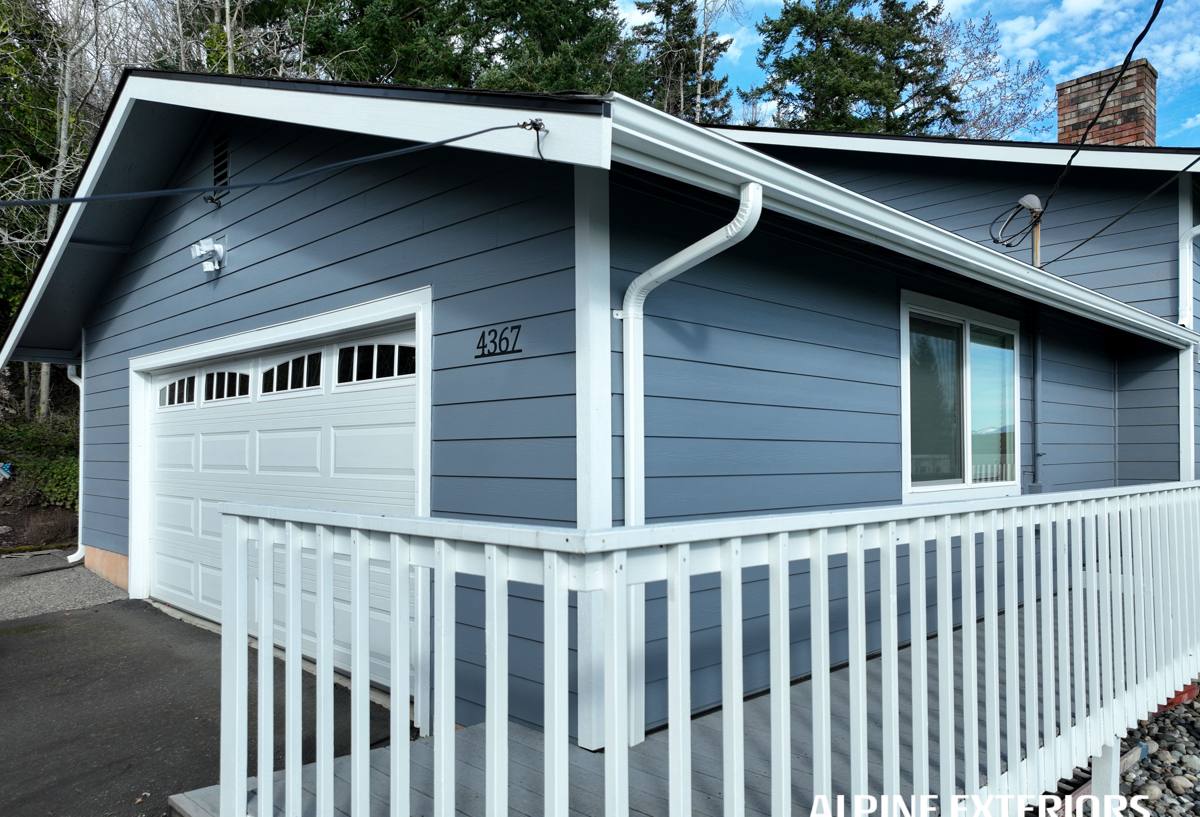
Signs Your Roof Needs Repair, Not a Full Tear-Off
Most roofs give warning signs well before a leak shows up on the ceiling. Catching them early is almost always the difference between a repair bill and a replacement bill. Watch for:
- Shingles that are lifted, curled, cracked, or missing after a windstorm
- Granules collecting in gutters or at downspout outlets, which signals shingle wear
- Thick moss mats, especially on north-facing slopes or under tree cover
- Rusted, lifted, or gapped flashing around chimneys, skylights, and roof-to-wall junctions
- Cracked or dried-out rubber pipe boots at plumbing vents
- Brown or yellow ceiling stains, even faint ones that come and go with rain
- Sagging in a valley or along a ridge line
Any one of these on its own is usually a repair, not a replacement. It's when several show up together — or when a roof has already had multiple patch jobs — that a full replacement conversation makes sense.
What a Correct Repair Actually Involves
A roof repair that actually solves the problem starts with figuring out where water is really getting in, which is often not directly above the stain on your ceiling. Water travels along rafters, decking, and underlayment before it shows itself indoors, so a repair done right traces that path before any material gets replaced.
A proper repair generally includes:
- A full inspection of the affected area and the surrounding roof plane, not just the spot that's visibly damaged
- Checking the roof decking underneath for soft spots or rot once shingles are pulled back
- Replacing damaged underlayment, not just the shingles on top of it
- Re-flashing, rather than just re-caulking, at chimneys, vents, and wall intersections where most leaks actually originate
- Matching replacement shingles or panels as closely as possible to the existing roof
- Confirming the fix under real conditions — checking after the next rain, not just visually at hand-off
Skipping the decking check is the most common shortcut in a rushed repair, and it's the one that costs homeowners the most later, since rot that isn't addressed keeps spreading under new shingles.
Common Roofing Materials on Anacortes Homes
What a repair involves changes depending on what's on the roof. Here's how the materials we see most often around Anacortes hold up and what repairing each one actually requires.
| Material | How It Handles Salt Air & Moisture | Repair Considerations |
|---|---|---|
| Composition (asphalt) shingle | Generally holds up well; metal fasteners and flashing are the weak point over time | Matching shingle color/style gets harder as a roof ages and the product line changes |
| Cedar shake/shingle | Attractive but holds moisture longer in shaded, humid spots — more prone to moss and rot | Requires careful spot replacement of individual shakes to avoid disturbing surrounding courses |
| Metal (standing seam or panel) | Durable but fasteners and cut edges are vulnerable to salt-air corrosion if not properly coated | Repairs need corrosion-resistant fasteners and sealants rated for coastal exposure |
| Flat or low-slope membrane | Ponding water and debris buildup are the main risks, worsened by moss and needle litter | Seams and penetrations need close inspection; patch material must match the existing membrane |
Whatever is on your roof now, our standard is to repair with materials built for this climate rather than whatever is cheapest to source, since a repair that fails again in a year isn't actually a repair.
Moss, Algae, and the Long Wet Season
Why Moss Takes Hold Here
Moss needs shade, moisture, and time — and Skagit County's wet season, combined with tree-covered lots common around Anacortes, provides all three for months on end. Moss doesn't just sit on top of shingles; it lifts edges as it grows, holds water against the roof surface, and works its way into seams, which is exactly the kind of slow damage that turns into a leak by the following winter.
Removing Moss Without Damaging the Roof
Pressure washing strips protective granules off asphalt shingles and can split cedar, so we don't use it for moss removal. A proper approach uses low-pressure rinsing, manual removal of heavy mats, and treatments that kill moss without harming the roofing material or your landscaping below. Zinc or copper strips installed near the ridge can help slow regrowth on future repairs, since rainwater carrying trace metal ions across the roof surface makes it a poor environment for moss to re-establish.
Timing matters too — moss removal and repair work go smoothest during drier stretches, and rushing it on a wet, slick roof is both a safety risk and a good way to loosen shingles that were otherwise fine.
Salt Air and Metal Components
The metal on your roof — nails, flashing, gutter hardware, pipe boots — takes the brunt of coastal exposure. Standard fasteners can start showing rust streaks and weakening well before the shingles around them are due for replacement. When we repair a roof in Anacortes, we treat the fasteners and flashing as part of the job, not an afterthought, because a new shingle held down with a corroding nail just means a repeat visit.
Our standard for coastal repairs is to use corrosion-resistant fasteners and flashing rated for marine exposure, even when it costs a bit more than the standard hardware used further inland. It's a small line item compared to the cost of redoing the same repair in a few years.
Our Roof Repair Process
Here's what to expect when you call us for a roof repair in Anacortes:
- Inspection. We get on the roof (weather permitting) and check the full plane around the reported issue, not just the one spot.
- Honest diagnosis. We tell you what's actually causing the problem, what it will take to fix it, and whether a repair or a broader fix makes more sense.
- Written estimate. Clear scope and price before any work starts — no surprise add-ons once we're up there.
- Scheduled repair. We work around Skagit County's weather windows to do the job dry whenever possible, since wet-weather patches don't seal as reliably.
- Cleanup. Old material, nails, and debris go with us — we don't leave a work site for you to clean up.
We're straightforward about what we find. If a repair will genuinely solve the problem, we say so. If the roof has reached the point where repairs are just delaying an inevitable replacement, we'll tell you that too.
Repair or Replace? Weighing the Cost Factors
This is one of the most common questions we get, and the honest answer is "it depends" — but it depends on specific, knowable factors, not guesswork.
| Factor | Leans Toward Repair | Leans Toward Replacement |
|---|---|---|
| Roof age | Well within expected lifespan for the material | At or past the material's typical service life |
| Extent of damage | Isolated to one area or one cause (a single flashing failure, storm damage) | Widespread across multiple slopes or several past repairs in different spots |
| Decking condition | Solid, dry decking found once shingles are pulled back | Soft or rotted decking discovered during inspection |
| Moss/algae history | First significant occurrence, addressed early | Recurring moss damage that's already compromised multiple areas |
| Repair history | First or second repair on this roof | Third or more patch job on the same roof |
Broadly, a straightforward, isolated repair on a healthy roof is usually a modest cost measured in a few hundred to low thousands of dollars depending on scope, while a full replacement is a much larger investment. We'll walk you through exactly where your roof falls before you commit to either path.
Why a Crew That Already Works Anacortes Matters
Roofing crews that mostly work drier, inland jobs don't always think about salt-air corrosion, wind-driven rain angles, or moss timing the way a crew that works this coastline regularly does. We've done repair work on Anacortes homes enough to know which failure points show up first out here — the flashing that fails before the shingles do, the north-facing slope that always moss over first, the pipe boot that cracks a season or two earlier than it would inland.
Being local also means being reachable. After a windstorm or a heavy rain event, having a contractor who already knows your roof and can get back out to you quickly matters more than it seems like it will — until you need it.
A Quick Checklist Before You Call
- Note when you first noticed the leak or damage, and whether it tracks with a specific storm
- Check your attic (if accessible) for staining, dampness, or daylight coming through
- Take photos of any visible exterior damage from the ground — skip climbing on a wet or mossy roof yourself
- Check gutters and downspouts for granule buildup or moss debris
- Have a rough idea of your roof's age and material if you know it
If you're dealing with a leak, moss buildup, storm damage, or just want an honest read on where your roof stands, we're happy to take a look. Reach out for a free, no-pressure estimate using the form below.