 Mount Vernon
 Why Anacortes Roofs Wear Differently Than Roofs Inland
Anacortes sits out on Fidalgo Island, surrounded by saltwater on three sides, and that location changes what a roof deals with compared to a home just a few miles inland in Mount Vernon or Burlington. Salt-laden air corrodes exposed metal faster, onshore wind drives rain sideways into laps and flashings that would stay dry in a calmer setting, and the combination of shade, moisture, and mild temperatures gives moss an unusually long growing season. None of this means a roof in Anacortes needs to be exotic — it means the materials and details have to be chosen and installed with those specific stresses in mind, not just picked from a catalog.
A roof designed for a dry inland climate, installed here without adjustment, tends to show its age early: streaking and moss growth within the first few years, rusted fasteners and flashing well before the shingles themselves fail, and leaks that trace back to wind-driven rain finding a gap that would never have been tested in a less exposed spot. Getting a new roof right in Anacortes starts with respecting that difference.
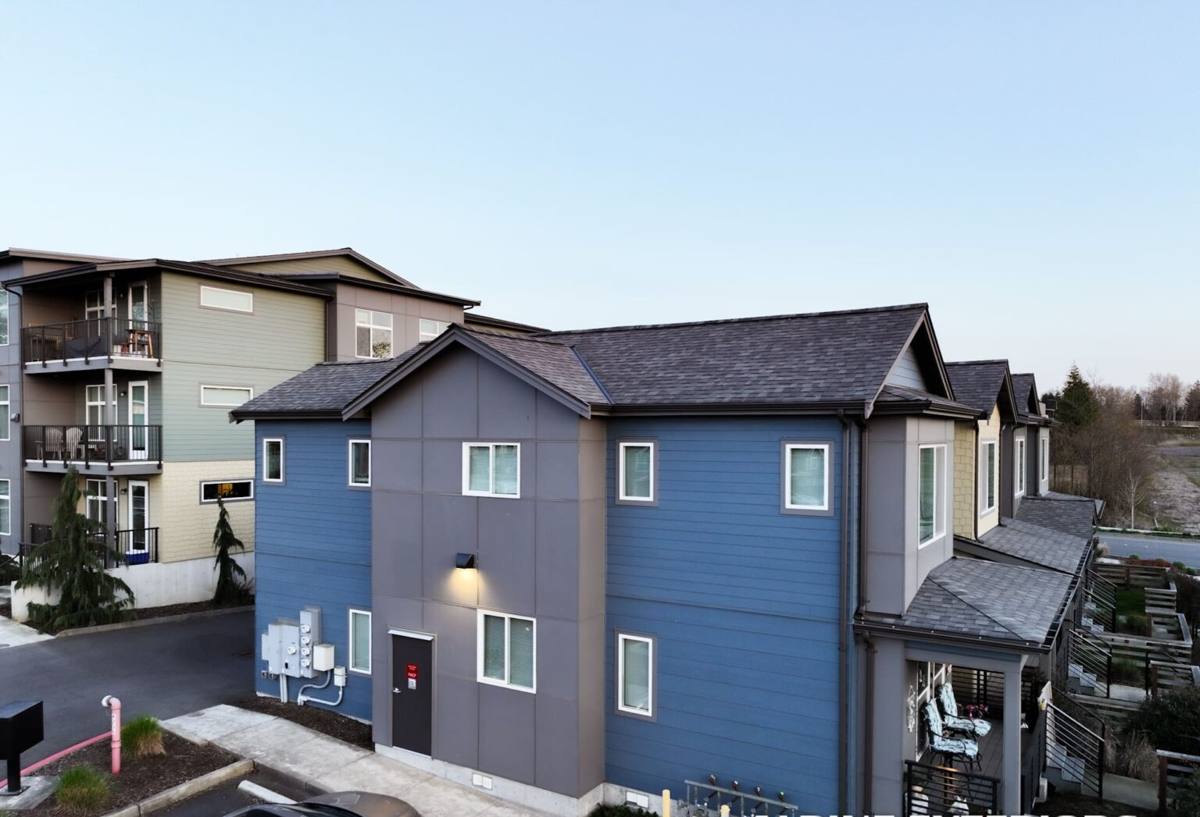
What Salt Air, Rain, and Moss Actually Do to a Roof
Salt Air and Metal Components
Every roof has metal in it somewhere — flashing at valleys, chimneys, and walls; drip edge; nail heads; vent stacks. Standard galvanized fasteners and lower-grade flashing can start showing surface rust within a few years this close to the water. Once a fastener head corrodes and shrinks, it loses its grip on the shingle, and that's how small leaks start in places that look fine from the ground.
Driving Rain and Wind
Storms coming off the water don't always fall straight down. Wind pushes rain sideways and upward under shingle edges, around chimneys, and into any flashing lap that's marginal. A roof built for a calmer climate might rely on shingle overlap alone to shed water; here, that's not enough on its own — every penetration and transition needs to be sealed and lapped as if wind-driven rain is the normal case, because on this island it often is.
Moss and Sustained Moisture
Skagit County's mild, wet winters and shaded lots (especially under fir and cedar canopy common around Anacortes) give moss a long window to establish itself, longer than it gets in drier or sunnier parts of the county. Moss doesn't just look bad — it holds moisture against the shingle surface, works its way under tabs as it grows, and can lift shingle edges enough for water to get underneath. A roof with poor airflow or north-facing shade will grow moss faster than one with good ventilation and sun exposure, regardless of how new the shingles are.
Choosing Roofing Materials for a Marine Environment
There's no single "best" roofing material for every Anacortes home — it depends on the roof's pitch, the home's style, budget, and how much long-term maintenance the owner wants to take on. What matters is understanding the trade-offs specific to this climate before deciding.
| Material | Performance Near Saltwater | Moss Resistance | Maintenance Burden |
|---|---|---|---|
| Architectural asphalt shingle | Good, when paired with corrosion-resistant flashing and fasteners | Moderate — benefits from zinc/copper strips | Low to moderate |
| Standing seam metal | Excellent if properly coated and detailed; avoid mixing incompatible metals | High — sheds moss naturally | Low |
| Cedar shake | Traditional look, but needs vigilant maintenance in wet, salty air | Low without regular treatment | High |
| Synthetic/composite shingle | Good, stable in coastal humidity | Moderate to high depending on product | Low |
We're honest with homeowners about why we lean toward architectural asphalt and standing seam metal for most Anacortes re-roofs: both hold up predictably in salt air when the fasteners and flashing are matched correctly, and both give us more control over sealing wind-driven rain out of every transition. Cedar shake can be a beautiful choice, but on an exposed, salt-air site it demands a maintenance commitment most homeowners underestimate — that's a trade-off we'll walk through honestly rather than talk anyone out of a look they want.
What a Correct New Roof Installation Actually Involves
A roof is a system, not a single layer of shingles. Skipping or shortcutting any part of that system is exactly how a roof that looks fine on installation day fails early in this climate.
- Full tear-off to the deck — so we can inspect the sheathing itself, not just cover over what's already there.
- Deck repair or replacement — any soft, delaminated, or water-stained plywood gets replaced before anything new goes down.
- Ice-and-water shield at vulnerable zones — valleys, eaves, and around penetrations, where wind-driven rain is most likely to find a way in.
- Synthetic underlayment across the full deck — a continuous secondary barrier under the shingles.
- Corrosion-resistant flashing and fasteners — matched to this environment, not generic hardware store galvanized.
- Proper intake and exhaust ventilation — balanced airflow through the attic, not just vents added wherever it's convenient.
- Zinc or copper strips at the ridge — an ongoing, low-effort deterrent against moss regrowth.
- Final inspection of every penetration — plumbing vents, chimney flashing, skylights — the places most leaks actually originate.
Ventilation and Moisture Control: The Part Homeowners Don't See
Some of the most important decisions on a re-roof happen where nobody looks after the job is done. Attic ventilation controls how much moisture builds up under the roof deck from everyday living — showers, cooking, laundry — and in a climate as consistently damp as Skagit County's, an under-ventilated attic can lead to condensation on the underside of the deck, which rots sheathing and feeds mold from the inside, independent of whatever is happening on the shingle surface above.
Balanced ventilation means enough intake at the eaves and enough exhaust at the ridge, sized to the attic's square footage, so air actually moves through rather than getting trapped in the middle. On many older Anacortes homes we open up, we find ventilation that was undersized or blocked by insulation, which explains premature shingle aging or musty attic smells that had nothing to do with the roof surface itself. Addressing this at the time of a re-roof is far cheaper than tearing into a finished roof later to fix it.
Our Installation Process
- On-site inspection and estimate — we look at the existing roof, attic ventilation, and any problem areas before quoting anything, and put the findings and options in writing.
- Material selection — we walk through the trade-offs for your specific roof (pitch, exposure, budget) rather than defaulting to one product.
- Scheduling around weather — we plan installation windows with Skagit County's rain patterns in mind so the deck isn't left exposed longer than necessary.
- Tear-off and deck inspection — old roofing comes off completely, and we photograph and discuss any deck damage before repairing it.
- Underlayment, flashing, and ventilation install — the system layers go down in the sequence that actually sheds wind-driven rain, not just what's fastest.
- Shingle or panel installation — installed to manufacturer specification, which matters for warranty coverage as much as performance.
- Site cleanup and magnetic sweep — nails and debris cleared from the yard and driveway before we consider the job finished.
- Final walkthrough — we go over the finished roof and ventilation with the homeowner and answer questions before closing out the job.
Cost Factors for a New Roof in Anacortes
Roofing costs vary by roof size, pitch, complexity (number of valleys, penetrations, and chimneys), material choice, and how much deck repair is needed once the old roofing comes off. Broad ranges only — every roof is different, which is why we quote after an actual inspection rather than over the phone.
| Factor | Why It Moves the Price |
|---|---|
| Roof size and pitch | More square footage and steeper pitches mean more material and labor time |
| Number of valleys and penetrations | Each one needs individual flashing and sealing, adding labor |
| Deck condition | Rotted or soft sheathing found at tear-off requires replacement before installation continues |
| Material choice | Architectural shingle, metal, and cedar carry different material and labor costs |
| Ventilation upgrades | Adding or correcting intake/exhaust venting is often bundled into a re-roof for efficiency |
| Access and site conditions | Steep lots, limited driveway access, or tall trees near the roof can affect setup and disposal costs |
When to Replace vs. Repair, and the Best Time to Install
Not every roof problem means a full replacement. Isolated flashing leaks, a handful of damaged shingles after a storm, or moss buildup on an otherwise sound roof can often be addressed with a repair and a cleaning. A full replacement makes more sense when the shingles are broadly past their service life, when granule loss is widespread, when there's recurring leaking in multiple spots, or when the decking itself is compromised. We'll always tell you honestly which situation you're in rather than push a replacement a repair would solve.
As for timing, drier stretches in late spring through early fall are the most efficient window for installation in Skagit County, simply because tear-off-to-dry-in time is shorter with less rain risk. That said, roofing does get done here through the wetter months when a roof can't wait — it just requires more careful sequencing and weather-watching to keep the open deck protected.
Why a Crew That Already Works in Anacortes Matters
A roofing crew that mostly works drier, inland jobs and occasionally takes one out on the island doesn't build the same instincts as a crew that's regularly up on Anacortes roofs. Knowing which flashing and fastener grades actually hold up against salt air over years, not just on installation day, comes from having gone back and seen how earlier work aged. The same goes for reading a specific roof's moss risk based on its shade pattern and orientation, or knowing which local weather windows are reliable enough to start a tear-off. That familiarity doesn't show up on a quote, but it shows up in how the roof performs five and ten years out.
Questions Worth Asking Before You Sign a Roofing Contract
Before committing to any roofing company, it's worth confirming a few things directly: what fastener and flashing materials they use and why, whether tear-off to the deck is included or if they ever recommend overlaying old roofing, how they handle deck repair pricing if rot is found mid-project, what ventilation assessment is included, and what the manufacturer's warranty actually covers versus what's marketed. A straight answer to each of those tells you more about the quality of the work than any brochure will.
If you're weighing a new roof for a home in Anacortes, we're glad to come take a look and give you a straightforward, no-pressure estimate — including an honest read on your ventilation, your current roof's remaining life, and which materials make sense for your specific site. Use the form below to get started.