 Mount Vernon
 Why Little Mountain Homes Wear Out Siding Differently
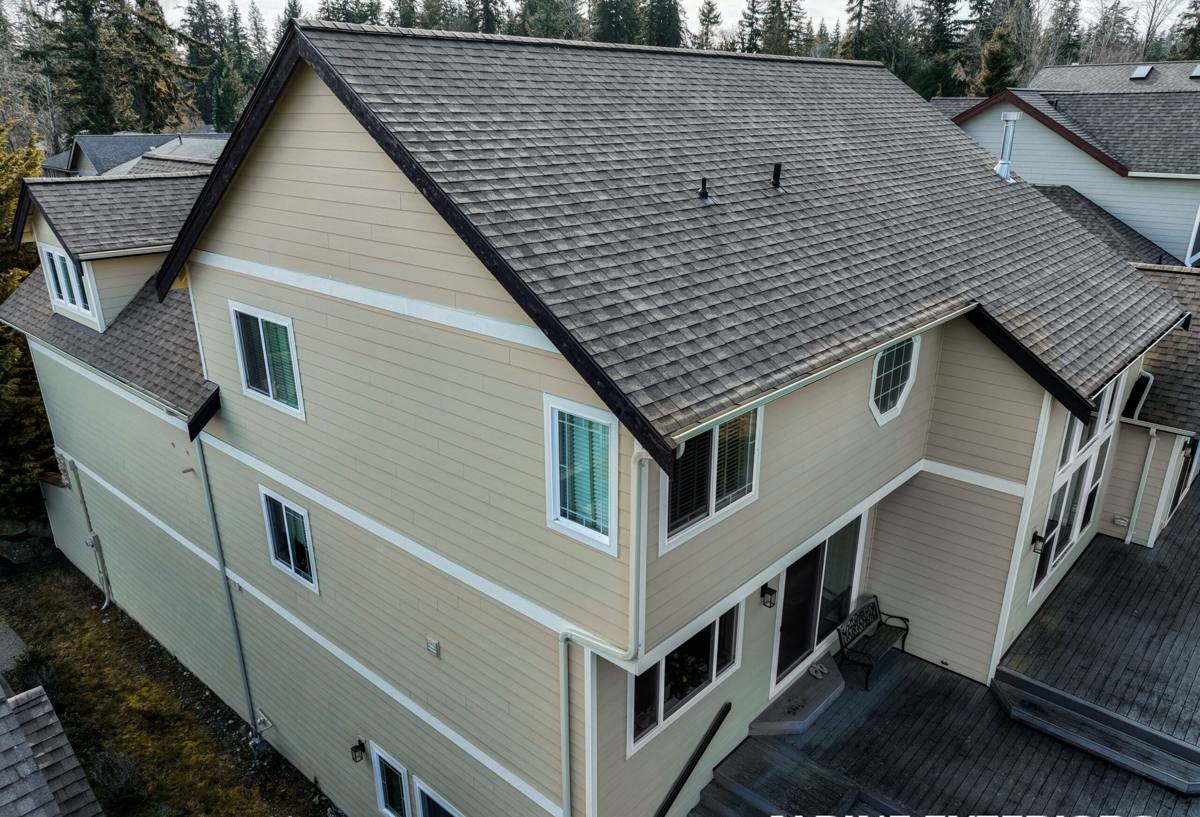
Little Mountain sits above much of the Skagit Valley floor, and that elevation and exposure change what siding has to deal with compared to a house tucked into a flatter, more sheltered part of Mount Vernon. Homes higher on the slope catch more wind-driven rain, more direct exposure to salt-laden air moving in off Puget Sound and the Skagit delta, and longer stretches of shade on north- and east-facing walls where moss and algae get a foothold and never quite let go. Lower-lying stretches near the base of the hill deal with a different problem: less air movement, more standing humidity, and siding that stays damp longer after a storm passes through.
Either way, the siding on a Little Mountain home is working harder than a spec sheet written for a dry climate assumes. Replacement here isn't just about swapping old material for new — it's about choosing a product and installation approach that actually holds up to what this hillside throws at it year after year.
What Local Conditions Actually Do to Siding
Salt Air and Coastal Moisture
Mount Vernon isn't oceanfront, but it's close enough to tidal water and the Skagit delta that salt-bearing air reaches homes on breezy days, especially on elevated, exposed lots. Salt accelerates corrosion on fasteners and trim, and it speeds the breakdown of paint films and caulk joints. Siding that isn't engineered to resist moisture intrusion at the plank level will show swelling, edge softening, or peeling paint years before it should.
Driving Rain
Skagit County rain rarely falls straight down. Wind pushes it sideways into walls, and elevated lots like those on Little Mountain get more of that wind exposure than sheltered valley homes. Driving rain finds every gap in flashing, every under-caulked seam, and every place where siding wasn't lapped correctly. Over time, water that gets behind the siding does more damage than water that just hits the face of it.
The Long Moss Season
Shaded, north-facing walls on this hillside can stay damp for months at a stretch during fall, winter, and spring. That's exactly the environment moss, algae, and mildew need. On porous or absorbent siding materials, that growth doesn't just sit on the surface — it holds moisture against the wall assembly and can contribute to slow, ongoing decay underneath.
What a Correct Siding Replacement Involves
Replacing siding well is mostly about what happens before the new siding goes up. The material matters, but the prep and the details around it are what determine whether a job lasts 10 years or 40.
- Full removal of old siding and a real inspection of the sheathing underneath for rot, soft spots, or existing water damage
- Repair or replacement of any compromised sheathing and framing before anything new goes on
- Installation of a code-compliant weather-resistive barrier, correctly lapped and sealed
- Proper flashing at every window, door, deck ledger, and roofline intersection — this is where most water intrusion actually starts
- Correct fastener spacing, type, and depth for the specific siding product, not a generic approach
- Rain-screen or drainage gap detailing where the product and wall assembly call for it
- Proper caulking and sealant at joints, with attention to which joints should be sealed and which should be left to drain
- A final walk-through covering trim, corners, and paint-line details before the crew leaves
Skip any one of these steps and the new siding can look fine for a season or two while the underlying problem builds. On a hillside lot catching wind-driven rain and long damp stretches, shortcuts show up faster than they would on a more sheltered property.
Why We Only Install James Hardie Fiber Cement
We install James Hardie siding exclusively — we don't install vinyl, LP SmartSide, Cemplank, Allura, primed spruce, or cedar. That's a deliberate standard, not a lack of options, and it comes directly out of what we've seen hold up in Skagit County conditions.
Vinyl softens, warps, and can crack in wind, and its seams and J-channels give driving rain more opportunities to get behind the wall. Wood products like cedar and primed spruce look good going up, but they need real maintenance discipline — recoating, caulk checks, moss treatment — to survive a climate with this much sustained moisture, and that upkeep often falls behind. Engineered wood products like LP SmartSide perform reasonably when installed and maintained to spec, but they're still wood-based, which means they're more sensitive to sustained moisture exposure than a fiber cement product. Other fiber cement brands, like Cemplank and Allura, are legitimate competitors to Hardie on paper, but we've standardized on one product line so we know exactly how it performs, exactly how to install it correctly, and exactly what its warranty covers — rather than juggling installation specs and warranty terms across several brands.
James Hardie fiber cement is non-combustible, doesn't support moss and algae growth the way wood-based products do, and holds paint and factory finish far longer under sun and moisture cycling. Its ColorPlus factory-applied finish is baked on and warranted separately from the substrate, which matters in a climate where sun exposure and driving rain both work against a painted surface. For a hillside property dealing with salt air, wind-driven rain, and a long moss season, that combination is what we want on a home we're putting our name behind.
Comparing Siding Options for a Little Mountain Home
| Factor | Vinyl | Wood / Engineered Wood | James Hardie Fiber Cement |
|---|---|---|---|
| Moisture resistance | Seams allow water intrusion | Moderate; needs upkeep to stay ahead of moisture | Engineered for moisture exposure |
| Moss/algae resistance | Surface growth possible | Prone to growth without regular treatment | Resists sustained moss and algae growth |
| Wind/impact durability | Can crack or blow off in high wind | Durable but dents/splits over time | Rigid, holds up to wind-driven debris |
| Fire resistance | Melts/deforms under heat | Combustible | Non-combustible |
| Maintenance | Low but limited repair options | Regular recoating/caulking required | Factory finish reduces repainting needs |
| Typical lifespan with proper install | 20-30 years | 15-25 years with diligent upkeep | 30-50+ years |
Our Process for Little Mountain Projects
Assessment
We start with a walk-around of the home, paying particular attention to sun exposure, wind exposure, and which walls are showing moss, staining, or early paint failure. On elevated Little Mountain lots, we're specifically checking which sides take the most wind-driven rain and which stay shaded and damp longest — that shapes both the flashing detail and, sometimes, product line selection within the Hardie system.
Removal and Inspection
Old siding comes off and we inspect the sheathing before anything else happens. This is the step that catches hidden water damage — the kind that's common on hillside homes where water has been finding its way behind siding for years without an obvious sign on the surface.
Repair, Wrap, and Flashing
Any damaged sheathing gets repaired or replaced. We install the weather-resistive barrier and flashing system correctly the first time, because this layer is what actually keeps water out — the siding itself is the second line of defense, not the first.
Installation to Manufacturer Spec
James Hardie siding gets installed to the manufacturer's fastening, clearance, and caulking specifications. That's what keeps the transferable warranty intact and what gives the siding its full expected lifespan in a wet, wind-exposed environment.
Final Inspection
We walk the finished job checking trim lines, corners, caulk joints, and paint touch-ups before calling it done.
Why a Crew That Already Works This Neighborhood Matters
Little Mountain isn't a huge area, but its microclimate is distinct enough from other parts of Mount Vernon that experience here actually counts for something. A crew that's worked this hillside knows which walls tend to hide moisture damage, how much wind exposure to plan flashing detail around, and how long the moss season really runs at this elevation compared to lower ground. That's not something you get from a general spec sheet — it's something you get from having done the work here before.
Hiring locally also means faster response if something needs a follow-up look after a storm, and a crew that's accountable to a reputation in a community where word travels between neighbors.
What to Ask Before Hiring for Siding Replacement
- Will you inspect and repair the sheathing before installing new siding, not just cover over it?
- What's your flashing detail at windows, doors, and rooflines?
- Are you installing to the manufacturer's specification so the warranty stays valid?
- Do you carry the proper licensing and insurance for exterior work in Skagit County?
- Can you explain, in plain terms, why you're recommending the specific product you're recommending?
Getting Started
If your Little Mountain home has siding showing moss staining, paint failure, soft spots, or visible gaps at trim and corners, it's worth having someone take a real look before those small issues turn into sheathing damage. We're happy to walk the property, explain what we're seeing, and put together a straightforward estimate — no pressure, no hard sell. Use the form below to get in touch and we'll set up a time to come take a look.