 Mount Vernon
 Why La Conner Siding Wears Differently
La Conner sits low, close to open water, and gets weather that inland Mount Vernon homes only see a mild version of. The combination of marine air off the Swinomish Channel and Padilla Bay, near-constant winter dampness, and long shaded moss seasons puts a specific kind of stress on exterior siding — one that shows up as different failure patterns than you'd find on a house ten miles inland in the Skagit Valley.
Salt-laden air accelerates corrosion on anything metal: nail heads, flashing, trim fasteners, even the staples holding old building paper together. Driving rain off the water pushes moisture sideways into joints and laps that would stay dry in a calmer climate. And because so many La Conner properties sit under tree cover or face north with limited sun exposure, moss and algae get a long runway to establish themselves on siding surfaces every fall through spring.
None of this means La Conner siding is doomed — it means repairs here have to account for water intrusion paths and material behavior that a generic "patch and paint" approach misses. That's the difference between a repair that lasts a season and one that lasts a decade.
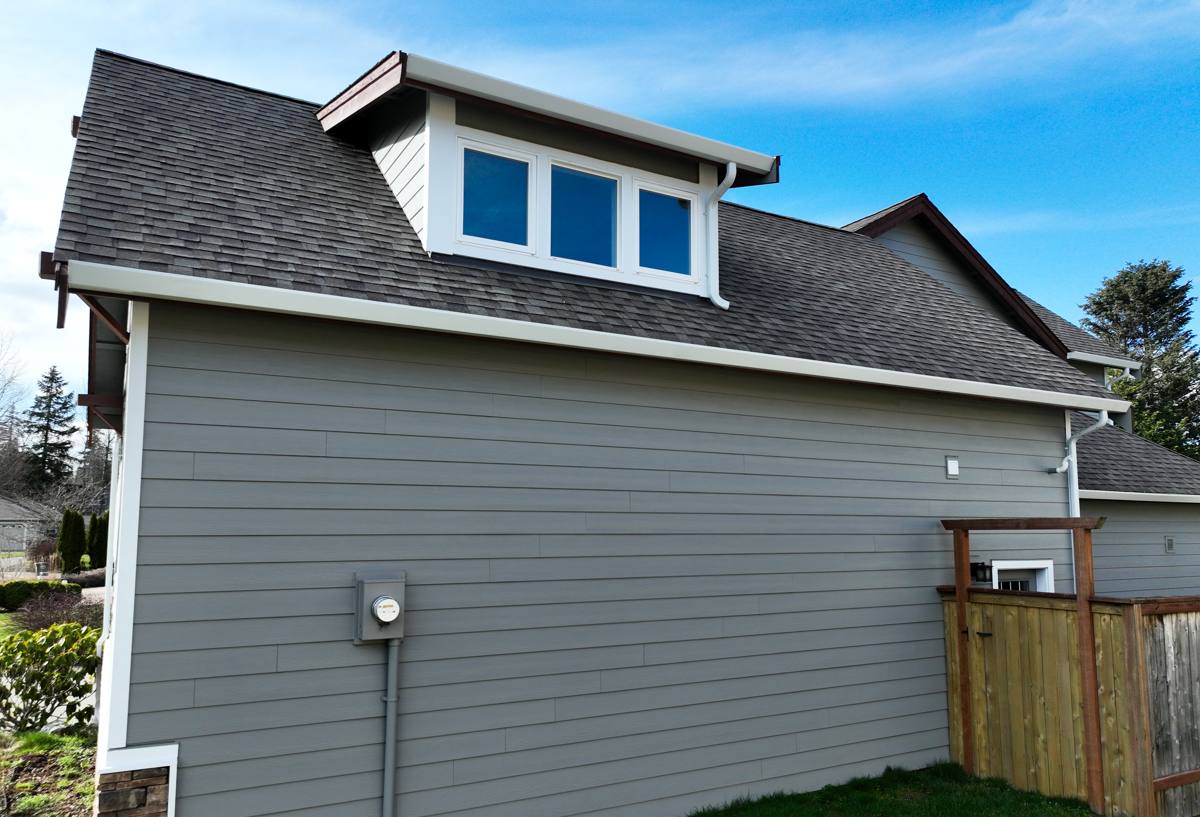
What Actually Causes Siding Damage in This Area
Moisture Intrusion at Joints and Laps
Most siding failures we find in this area don't start as one big problem — they start small, at a butt joint, a corner trim seam, or a spot where caulking has shrunk and pulled away. Driving rain finds that gap, gets behind the siding, and starts working on whatever's underneath: sheathing, house wrap, framing. By the time a homeowner notices staining or softness on the face of the siding, the damage is often already established behind it.
Moss, Algae, and Trapped Moisture
Moss itself doesn't eat siding, but it holds moisture against the surface far longer than open air would, and its root structure works into seams, laps, and any compromised paint or caulk. On wood-based and fiberboard products especially, that sustained dampness is what leads to swelling, delamination, and rot — not the moss directly, but what the moss enables.
Fastener and Flashing Corrosion
Salt air is hard on metal. Nail heads that weren't properly coated, flashing that's the wrong gauge or material, and trim fasteners all corrode faster this close to the water. Corroded fasteners lose their grip, siding starts to move in wind, and every bit of movement opens new pathways for water.
UV and Paint Film Breakdown
Even with more cloud cover than other parts of the state, UV exposure over years breaks down field-applied paint faster than factory-cured finishes. Once the paint film cracks or chalks, the substrate underneath — especially on primed wood or engineered wood products — is exposed to exactly the damp conditions this area specializes in.
What a Correct Repair Actually Involves
A repair that's just cosmetic — cutting out a bad board and nailing in a new one that matches the color — can look fine for a year and fail again because it never addressed the water path. Here's what we check before we call anything "repaired":
- What's the moisture source, and is it still active? Patching over an unresolved leak just delays the next failure.
- Is the sheathing or framing behind the damaged siding still sound, or has rot spread past the visible area?
- Is the house wrap or weather-resistive barrier intact where the repair is happening, or does it need to be cut back and replaced?
- Are the flashing details — window heads, butt joints, corner trim — actually shedding water, or just decorative?
- Does the replacement material match the existing siding's profile, reveal, and finish closely enough that the repair doesn't stand out?
Skipping any of these steps is how a $400 repair turns into a $4,000 repair two years later.
Repair vs. Replacement: How We Make the Call
Not every damaged section needs a full re-side, and we're not going to tell you it does. But there's a point where patch-repairing a house past its useful life just delays a bigger bill and keeps throwing money at a losing position. Here's roughly how we think about it:
| Situation | Usually Repair | Usually Replace |
|---|---|---|
| Damage location | Isolated area — one wall section, around one window, one corner | Damage spread across multiple walls or elevations |
| Underlying material condition | Sheathing and framing test dry and solid | Rot or soft sheathing found in multiple spots |
| Siding age | Well within expected lifespan, isolated failure | Original siding already near or past its service life |
| Material match | Same product/color still available or close enough | Discontinued product, no reasonable color match |
| Root cause | One-time or localized moisture source, now corrected | Systemic issue — poor original installation, no drainage plane |
We'll give you a straight answer on which bucket your house falls into, including when a repair genuinely is the right, most cost-effective call.
Why We Only Use James Hardie Fiber Cement for Repairs
When a repair calls for replacing a section of siding — not just recaulking or refastening what's there — we use James Hardie fiber cement. We don't stock or install vinyl, LP SmartSide, Cemplank, Allura, primed spruce, or cedar, and that's a deliberate standard, not a supply limitation.
In a climate like this one, the reasoning is straightforward. Fiber cement doesn't absorb water the way wood-based and engineered wood products can, so it doesn't swell, delaminate, or feed rot the way a moss-covered, moisture-trapped wood product eventually will. It's non-combustible. And Hardie's ColorPlus factory finish is baked on and warranted against fading and peeling in a way field-applied paint on a small repair patch simply can't match — which matters a lot when you're trying to blend a repaired section into siding installed years earlier.
We're not going to tell you every other product is worthless — vinyl is cheap and low-maintenance in mild climates, engineered wood has a real fan base for cost reasons, and cedar has genuine curb appeal. But for the specific job of surviving driving rain, salt air, and a long wet moss season without becoming a recurring repair, Hardie is what we're willing to stand behind and warranty our work on.
Matching Existing Siding
If your home was originally sided in something other than Hardie, we'll be upfront: an isolated repair section may need to transition materials or accept a slight difference, or in some cases the smarter move is planning toward a full re-side down the road rather than chasing an exact match on a discontinued product. We'll walk you through the honest trade-offs rather than promising an invisible patch we can't deliver.
Our Repair Process
- Inspection. We look at the visible damage plus everything around it — adjacent laps, trim, flashing, and anywhere else water could be entering that isn't obvious yet.
- Moisture and substrate check. We test the sheathing and framing behind the damaged area to see how far the problem actually extends before we quote anything.
- Honest scope and estimate. You get a clear explanation of what's damaged, why, what it'll take to fix it correctly, and what it would cost to address versus ignore.
- Repair execution. Damaged material and any compromised barrier are removed, the drainage plane and flashing are corrected, and new material is installed and detailed to shed water — not just fill a hole.
- Finish and match. Trim, caulking, and paint lines are finished to blend with the existing siding as closely as the situation allows.
Why a Crew That Already Works La Conner Matters
Siding repair here isn't the same trade as siding repair in a dry inland climate, and it shows in the details. A crew that regularly works this stretch of Skagit County already knows what to expect: how far moisture typically travels behind a failed joint in this rainfall pattern, which fastener and flashing choices actually hold up against salt air over years rather than months, and how aggressively moss needs to be addressed before it becomes a moisture problem rather than just a cosmetic one.
That local pattern recognition is what keeps a repair from being a guess. It's the difference between someone opening up a wall and being surprised by what they find, versus someone who already had a good idea what was back there before they made the first cut.
Between-Repair Maintenance Checklist
Whether we just repaired a section or your siding is holding up fine on its own, these habits meaningfully extend the time between repairs in this climate:
- Rinse moss and algae growth off siding surfaces at least once a year, ideally before the wet season sets in
- Keep gutters clear so overflow isn't running down siding faces during heavy rain
- Trim back vegetation and tree limbs that keep siding shaded and damp longer than necessary
- Walk the exterior annually and check caulking at joints, corners, and window trim for cracking or gaps
- Address small stains or soft spots right away — they're far cheaper to fix small than after a winter of rain gets into them
- Check exposed fasteners and trim metal periodically for early corrosion, especially on the sides of the house facing prevailing wind and water
Get an Honest Assessment
If you're seeing staining, soft spots, gaps at joints, or heavy moss buildup on your La Conner home's siding, it's worth having someone look at it before this winter's rain finds its way further in. We'll give you a straightforward read on what's actually happening, what it'll take to fix it right, and whether a targeted repair or a longer-term plan makes more sense for your house. Reach out for a free, no-pressure estimate using the form below.