 Mount Vernon
 Deck Replacement Built for La Conner's Climate
La Conner sits close to the Swinomish Channel and open water, and that changes what a deck goes through year to year compared to a deck fifteen miles inland. Salt-tinged air, wind-driven rain off the water, and long stretches of gray, damp weather all work on wood, fasteners, and framing in ways that add up faster than most homeowners expect. A deck that looks fine from a distance can be hiding soft framing, corroded hardware, or a moss layer that's been holding moisture against the boards for months at a time.
We're based in Mount Vernon and work throughout Skagit County, including La Conner, so we're not guessing at how local conditions affect a deck's lifespan — it's what we see on every job in this area. This page covers what a proper deck replacement involves here, what tends to fail first, and how we approach the work so it actually holds up.
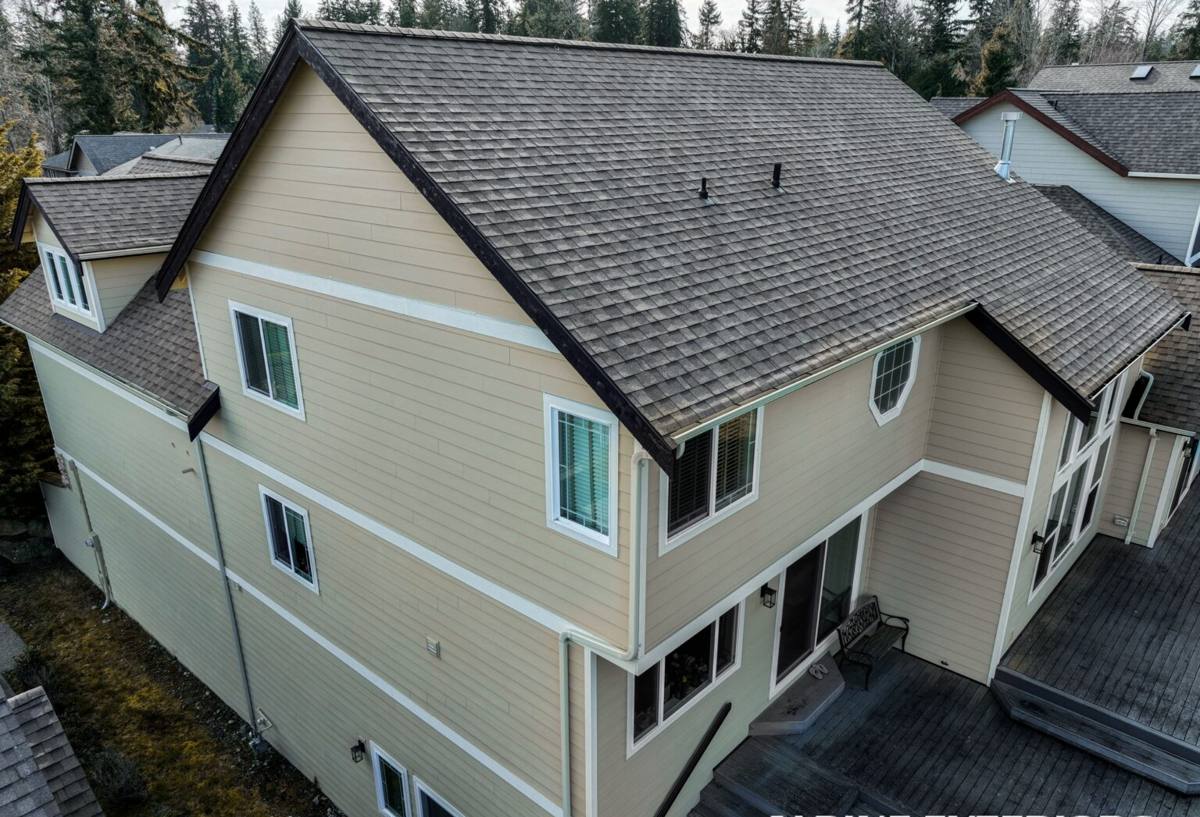
Why Decks Near La Conner Age Differently
Salt Air and Corrosion
Homes near the channel and open water get a steady low dose of salt in the air. Over time that accelerates corrosion on anything metal — nails, screws, joist hangers, bolts — even when the wood itself still looks okay. A deck can have structurally sound-looking boards sitting on hardware that's quietly rusting away underneath. This is one reason we don't judge a deck's condition from the surface alone.
Driving Rain and Moisture Intrusion
Storms coming off the water tend to drive rain sideways rather than straight down, which pushes moisture into places a deck wasn't necessarily built to shed water from — end grain, ledger board connections, and gaps around posts. Repeated wetting and drying is what breaks wood down from the inside, well before it looks bad from above.
The Long Moss Season
Skagit County's mild, wet winters and shaded lots around La Conner give moss and algae a long window to establish themselves on deck surfaces. Beyond looking bad, a moss layer holds water against the wood and makes boards slick and dangerous underfoot. Decks with heavy shade or tree cover tend to need replacement sooner than decks in full sun, all else being equal.
Signs Your Deck Needs Replacement, Not Just Repair
Not every problem deck needs to come out entirely — sometimes a repair genuinely is enough. But there's a point where patching individual boards is just delaying a bigger, more expensive failure. Here's what tells us a deck has crossed that line:
- Boards that feel soft, spongy, or flex noticeably when you walk on them
- Visible rust staining or corrosion around fasteners and joist hangers
- Railings that wobble or have any give when leaned on
- Gaps, dark staining, or soft wood where the deck ledger meets the house
- A persistent moss or algae film that comes back within weeks of cleaning
- Sagging or uneven sections that weren't part of the original design
- Multiple structural members (not just a board or two) showing rot
If you're only seeing one or two of these on a deck that's otherwise sound, a repair may be the right call. If you're seeing several at once, or the framing itself is affected, replacement is usually the more honest recommendation — and the one that avoids paying twice.
What a Correct Deck Replacement Involves
Substructure and Framing First
The part of a deck nobody sees is the part that matters most. A proper replacement starts with the ledger board connection, posts, beams, and joists — checking for rot, confirming proper flashing at the house connection, and making sure the structure is sized correctly for the deck's actual use. Reusing old framing to save money is a shortcut we won't take if it means building new decking on top of a compromised base.
Fasteners and Hardware
Given the salt air here, hardware choice isn't optional detail — it's one of the decisions that determines whether the deck lasts. We use fasteners and structural connectors rated for the exposure this area gets, not generic hardware that's fine in a drier inland climate but starts corroding within a few seasons near the water.
Decking Material Selection
This is where homeowner priorities matter most: budget, maintenance tolerance, and how much moss and moisture resistance you want built in. We'll walk through the honest trade-offs of each option rather than pushing whatever's easiest for us to install.
Railings and Code Compliance
Railings, guard heights, baluster spacing, and stair requirements are governed by building code, and older decks in this area were often built before current standards or without a permit at all. A replacement is the right time to bring these up to code properly, both for safety and so the work doesn't create problems at resale.
Decking Material Options for This Climate
There's no single "best" decking material — there's a best fit for your budget, your maintenance appetite, and how exposed the deck is to salt air and shade. Here's how the common options actually compare for a La Conner-area deck:
| Material | Moisture & Moss Resistance | Maintenance | Typical Lifespan |
|---|---|---|---|
| Pressure-treated wood | Fair — needs sealing to perform well | Annual cleaning and periodic staining/sealing | 10–15 years with upkeep |
| Cedar | Good natural resistance, but still organic | Regular cleaning and refinishing to hold color and resist moss | 15–20 years with upkeep |
| Composite decking | Very good — resists rot, but surface can still host moss/algae film | Periodic washing; no staining or sealing needed | 25+ years, varies by product |
| PVC/capped polymer | Excellent — fully synthetic, minimal moisture uptake | Occasional washing | 25+ years, varies by product |
We install a range of these depending on what fits your project. Composite and capped-polymer boards tend to be the better long-term fit for homes with heavy shade or close proximity to water, simply because they don't absorb moisture the way wood does — but wood still has a place for homeowners who want that look and are willing to keep up with maintenance. We'll be straight with you about which one makes sense for your specific site rather than defaulting to whatever's most profitable to install.
Our Deck Replacement Process
1. On-Site Assessment
We start by actually getting under the deck and checking the framing, not just looking at the surface. This tells us whether we're dealing with a full tear-out or whether parts of the structure can be reused safely.
2. Straightforward Scope and Pricing
You get a clear breakdown of what's being replaced, what materials are proposed, and why — no vague line items. If there are options at different price points, we lay them out so you can decide with full information.
3. Removal and Structural Rebuild
Old decking, railings, and any compromised framing come out. We rebuild the substructure to current code with hardware suited to this area's exposure, and confirm the ledger connection is properly flashed before anything gets covered up.
4. Decking, Railings, and Finish Work
New decking goes down with attention to drainage and airflow underneath — details that matter more here than in a dry climate, since trapped moisture is what causes early failure. Railings and stairs are built to current code.
5. Final Walkthrough
We walk the finished deck with you, point out any care recommendations specific to the material you chose, and make sure everything meets what was scoped at the start.
What Affects the Cost of a Deck Replacement
Every deck is different, so we don't quote sight-unseen — but these are the main factors that move the price up or down:
| Factor | Why It Affects Cost |
|---|---|
| Deck size and layout | More square footage and complex shapes (multiple levels, angles) mean more material and labor |
| Framing condition | Rotted joists, posts, or beams add rebuild work beyond just the surface decking |
| Decking material chosen | Pressure-treated, cedar, composite, and PVC all sit at different price points |
| Railing style and code updates | Bringing older railings up to current code can add scope on older decks |
| Height and site access | Elevated decks or difficult site access take more time and equipment |
| Waterfront or shaded exposure | Sites with heavy moss/moisture history may warrant upgraded fasteners or ventilation details |
We'd rather walk your specific deck and give you real numbers than throw out a broad range that doesn't mean much once we're standing on your actual structure.
Keeping a New Deck Healthy in This Climate
A well-built deck still needs some basic upkeep to get its full lifespan out of it, especially this close to the water. A short routine goes a long way:
- Sweep off leaves and debris regularly so moisture and organic matter don't sit on the boards
- Wash the deck at least once or twice a year to knock back moss and algae before it establishes
- Check railings and fasteners annually for looseness or early corrosion
- Keep gutters and downspouts clear so water isn't dumping onto or near the deck
- Trim back overhanging branches to reduce shade and speed up drying after rain
- For wood decking, plan on resealing or restaining on the schedule the product calls for — don't wait until it's visibly failing
Why Hire a Crew That Already Works in La Conner
A deck built by someone unfamiliar with this area's conditions can look fine on installation day and still be in trouble within a few years — wrong fastener choice, no allowance for drainage under the boards, or a material pick that wasn't suited to the shade and moisture the site actually gets. We work throughout Mount Vernon and Skagit County, including La Conner, so decisions about hardware, material, and structural detailing come from what actually holds up here, not from a generalized approach built for a drier region.
That local familiarity also means fewer surprises during the project — we know what permitting and code enforcement in this area typically expects, and we've seen how different materials perform after a few Skagit County winters, not just on paper.
If your deck is showing its age, or you just want an honest opinion on whether repair or full replacement makes sense, we're happy to take a look. Fill out the form below for a free, no-pressure estimate.