 Mount Vernon
 Roofing in Kulshan Ridge: A Different Set of Demands
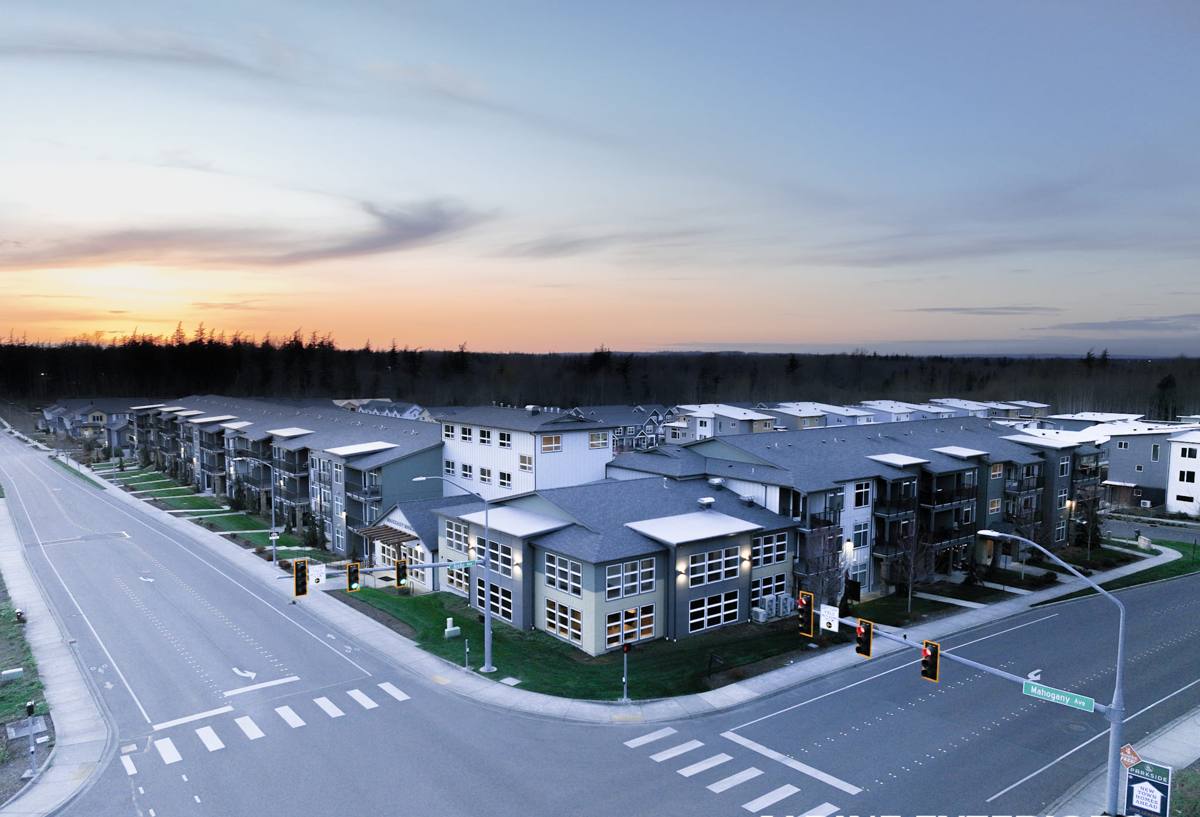
Kulshan Ridge is a residential neighborhood in Mount Vernon, and like the rest of Skagit County, it sits in a spot where the roof over your head does real work year-round. This isn't a climate that's simply "rainy" — it's a combination of near-constant moisture, salt-tinged air moving in off Puget Sound and the Skagit delta, and long stretches of gray, low-sun weather that keep roof surfaces damp for days at a time. That combination is exactly what wears out a roof faster than the manufacturer's warranty label suggests it should.
We work on homes throughout Mount Vernon, and Kulshan Ridge roofs tend to show the same patterns: moss creeping in along north-facing slopes and shaded valleys, granule loss on aging asphalt shingles from repeated wet-dry cycling, and soft spots in decking where a small leak went unnoticed for a season or two. None of that is unusual for this area — it's just what a roof here is up against, and it's why a roof replacement done right needs to account for local conditions, not just meet a generic building code minimum.
What Skagit County Weather Actually Does to a Roof
Salt Air and Metal Fatigue
Homes in and around Mount Vernon get enough marine air influence that unprotected or lower-grade metal components — flashing, fasteners, vent caps — corrode faster than they would further inland. It's rarely dramatic; it shows up as rust streaking near valleys and penetrations, or fasteners that back out because the metal around them has degraded.
Driving Rain and Wind-Driven Water
Straight-down rain is easy for any roof to shed. The problem is wind-driven rain that gets pushed sideways under shingle tabs, around chimney flashing, and into any gap in the underlayment. A roof that looks fine from the ground can still be letting water in at the edges, valleys, and penetrations if those details weren't sealed correctly the first time.
Moss and Sustained Moisture
Skagit County's moss season runs long — realistically, most of the year on shaded roof sections. Moss doesn't just look bad; it holds moisture against the shingle surface, lifts tabs as it grows under the edges, and accelerates granule loss. Once moss has been established for a couple of years, the shingles underneath are almost always more worn than they appear.
Signs a Kulshan Ridge Roof Needs Replacing, Not Patching
Not every roof problem calls for a full tear-off. But there's a point where patching becomes a waste of money, and it helps to know where that line is before you spend on repairs that won't hold.
- Shingles are cupping, curling, or losing granules across large sections rather than in one isolated spot
- Moss has been present for multiple seasons, especially on north- or shade-facing slopes
- You can see daylight or water staining in the attic near the roof deck
- Flashing around chimneys, skylights, or vent pipes is rusted, lifted, or was never properly step-flashed
- The roof is nearing or past the manufacturer's expected service life for this climate (often shorter here than the "25-year" or "30-year" rating suggests)
- You've had more than one repair call in the past two to three years for what should be unrelated issues
- Granules are visibly collecting in gutters or at downspout outlets
If two or more of these apply, it's worth getting a straightforward inspection before deciding between another repair and a full replacement.
What a Correct Roof Replacement Actually Involves
A roof replacement done properly for this climate is more than swapping old shingles for new ones. The parts that matter most are usually the parts you can't see once the job is finished.
Full Tear-Off and Deck Inspection
We remove the old roofing down to the deck rather than layering over it. That's the only way to actually see what's underneath — soft, delaminated, or water-stained plywood or sheathing needs to be replaced before anything new goes down, because new shingles over a compromised deck just hide the problem for another few years.
Ice and Water Shield at Vulnerable Points
Eaves, valleys, and areas around penetrations get a self-adhering waterproof membrane underneath the main underlayment. This is the layer that stops wind-driven rain from working its way in even if water gets past the shingles themselves — the single most important upgrade for a climate like ours.
Proper Flashing Details
Chimneys, skylights, sidewalls, and vent pipes all need correctly formed and layered flashing, not just a bead of sealant. Sealant fails; properly lapped metal flashing sheds water by design and doesn't depend on caulk staying intact for years.
Ventilation That Matches the Home
Balanced intake and exhaust ventilation keeps the attic dry and temperature-stable, which matters for both shingle life and moisture control inside the home. A roof can be installed perfectly and still underperform if the attic underneath is trapping humid air.
Material Selection for the Site
A roof on a shaded, moss-prone slope in Kulshan Ridge may benefit from different shingle or underlayment choices than a sun-exposed roof a few streets over. We look at tree cover, slope orientation, and pitch before recommending a spec, rather than quoting the same package for every house.
Comparing Roofing Materials for This Climate
| Material | Typical Lifespan Here | Moss/Moisture Resistance | Maintenance | Relative Cost |
|---|---|---|---|---|
| Standard 3-tab asphalt | 12–18 years | Lower — flatter profile holds debris | Regular moss treatment recommended | Lowest |
| Architectural (laminate) asphalt | 20–25 years | Moderate to good, especially with algae-resistant granules | Periodic moss/debris clearing | Moderate |
| Metal (standing seam) | 40+ years | Very good — sheds moss and debris well | Low, occasional fastener/sealant check | Higher upfront |
| Cedar shake | Varies widely with maintenance | Requires active upkeep to resist moss and rot in this climate | High — regular treatment needed | High |
We install algae-resistant architectural asphalt shingles on most Kulshan Ridge homes because they strike the best balance of upfront cost, appearance, and real-world performance against local moss and moisture. Metal is a strong option for homeowners planning to stay long-term and wanting to minimize future moss and maintenance calls. We generally steer clients away from cedar shake in heavily shaded, moisture-prone spots — not because the material is bad, but because keeping it properly treated against moss and rot in this climate is an ongoing commitment many homeowners don't want to take on.
Our Process for a Kulshan Ridge Roof Replacement
- On-site inspection — we get on the roof (not just a ground-level look) to check the deck, flashing, ventilation, and any moisture damage before quoting anything.
- Written estimate — a clear scope of work and price, including tear-off, deck repair allowance, underlayment, flashing, and material options, so there are no surprise line items later.
- Material selection — we walk through shingle or metal options based on your home's exposure, budget, and how much moss/maintenance you want to deal with long-term.
- Permit handling — most full roof replacements in Mount Vernon and unincorporated Skagit County require a building permit; we manage that as part of the project rather than leaving it to you.
- Tear-off and deck repair — old roofing removed, deck inspected and repaired where needed, debris hauled and disposed of.
- Underlayment, flashing, and installation — ice-and-water membrane at vulnerable points, correctly lapped flashing, then shingles or panels installed to manufacturer spec.
- Final walkthrough — we go over the finished roof, ventilation, and gutter tie-in with you before calling the job done.
Why It Matters That We Already Work in Kulshan Ridge
A roofing crew that already works this neighborhood isn't guessing at conditions — we've seen how a given slope orientation, tree line, or roof pitch in this part of Mount Vernon actually holds up over a few wet seasons. That's useful in two practical ways. First, it means the spec we recommend is based on what actually performs here, not a one-size-fits-all package. Second, it means faster, more efficient scheduling: when we're already doing work nearby, we can often get an estimate or a start date to you sooner than a crew driving in from outside the county.
Local experience also matters when something needs fast attention. A tarp-and-repair call after a windstorm, or a leak that shows up after the first hard rain of the season, gets handled faster by a crew that's already familiar with the area than one you're calling cold.
Protecting Your Investment After Installation
A new roof is only as good as the upkeep behind it, especially with Skagit County's moss season working against you nearly year-round. A few habits go a long way:
- Keep gutters clear so water isn't backing up under the shingle edge, especially in fall and winter
- Have moss growth treated or removed before it spreads, rather than waiting until it's visible from the street
- Trim back tree limbs that overhang the roof to reduce shade, debris buildup, and physical wear from branches
- Schedule a periodic visual inspection, particularly after major windstorms
- Address small leaks immediately — in this climate, a small leak left alone rarely stays small
Get a Straightforward Estimate
If your Kulshan Ridge roof is showing moss, aging shingles, or signs of a leak, it's worth getting an honest look before deciding what to do next. We'll walk the roof, tell you what we actually find, and give you a clear, no-pressure estimate — use the form below to get started.