 Mount Vernon
 Little Mountain's Siding Problem Isn't Like the Rest of Mount Vernon
Little Mountain sits above the flatter parts of Mount Vernon, and that elevation changes what siding has to deal with. Homes up on and around the mountain catch more direct wind-driven rain than houses down in the valley, get less relief from tree cover in some spots and too much shade in others, and sit close enough to Skagit Bay and Puget Sound that salt-laden air is a real factor, not a theoretical one. Add in the long, damp Skagit County shoulder seasons and you get a siding environment that punishes anything that isn't dimensionally stable and properly detailed at the joints.
We don't treat this as a generic "Pacific Northwest siding" problem. Wind direction, tree canopy, and sun exposure change block by block on a hillside, and that affects how fast moss and algae take hold, how long a wall stays wet after a storm, and where caulk joints fail first. A crew that's worked the mountain knows which elevations and exposures need extra attention before the first panel goes up.
What "Driving Rain" Actually Does to a Wall
Driving rain isn't just water hitting the siding — it's water being pushed sideways and upward under laps, into fastener holes, and behind trim if the flashing details aren't right. On exposed sections of Little Mountain, wind-driven storms off the water push moisture into places a calm, straight-down rain never would. Siding that isn't installed with the right gaps, flashing, and sealant in the right places will let that water in eventually, no matter how good the material is.
Why We Only Install James Hardie Here
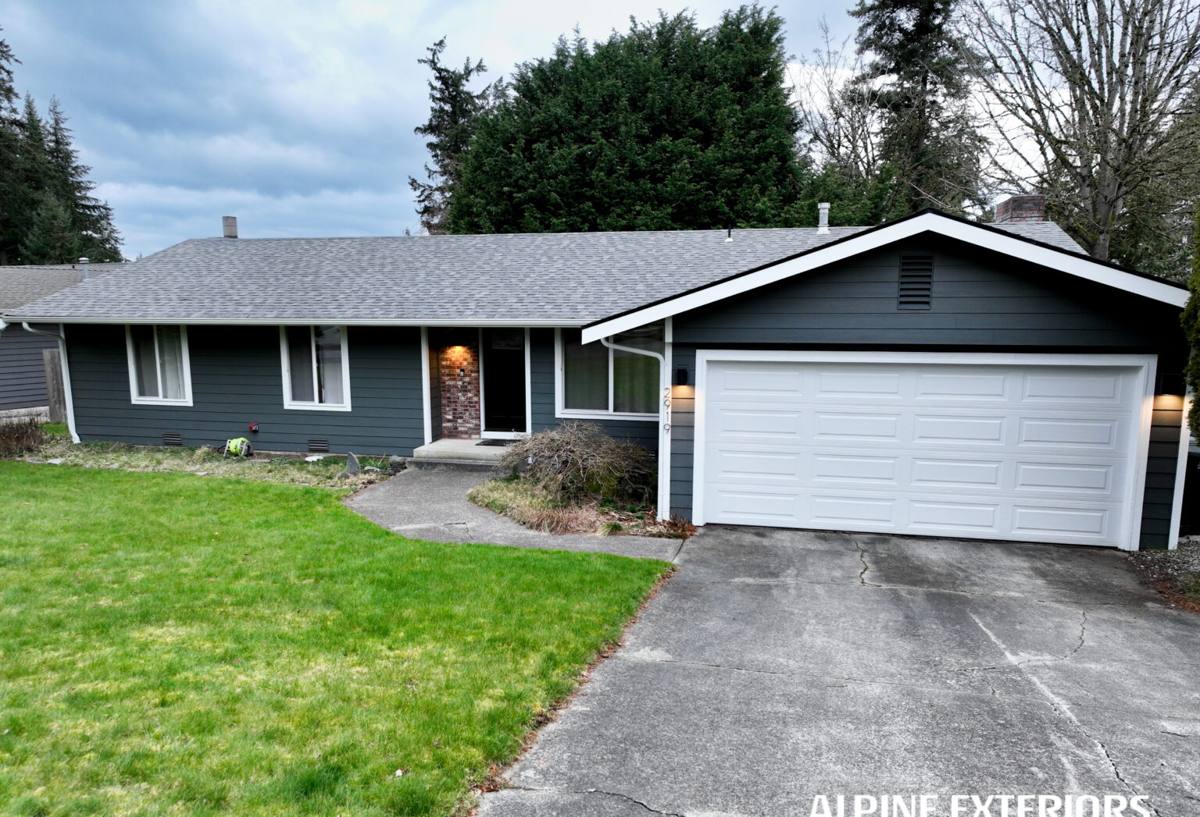
We install James Hardie fiber cement siding exclusively — not vinyl, not LP SmartSide, not Cemplank or Allura, not primed wood. That's a standard we hold on every job, and on a site like Little Mountain it matters more than usual. Hardie's fiber cement doesn't swell, rot, or delaminate the way wood-based products can when they stay damp for extended stretches, which is exactly what happens on shaded, moss-prone slopes through a Skagit Valley winter. It's also non-combustible, which matters anywhere near dry brush or wooded lots come late summer.
James Hardie's HZ5 product line is engineered for climates like ours — freeze-thaw cycles, sustained moisture, and coastal air. The factory-applied ColorPlus finish is baked on and warranted against peeling and cracking in a way field-applied paint on wood or engineered wood siding simply isn't. On a hillside home that's harder to access for repainting, that finish life matters.
What We Turned Down to Get Here
We used to get asked to install cheaper alternatives, and we stopped. Vinyl moves too much with temperature swings and can crack in cold snaps; engineered wood products need their cut edges and exposed faces meticulously sealed or they take on water at the first sign of neglect; primed wood needs a repaint cycle most homeowners don't keep up with. None of those are "bad" products in every setting — they're just not what we're willing to warranty our workmanship against on homes that see this much sustained moisture.
What a Correct Install Looks Like on Little Mountain
The material is only half the job. A Hardie install done wrong will fail in this climate almost as fast as the wrong siding would. Here's what we hold to on every Little Mountain project:
- Proper rain-screen gap behind the siding so water that gets past the cladding can drain and the wall can dry, instead of sitting trapped against the sheathing.
- Correct flashing at every window, door, and roofline transition — this is where most siding failures actually start, not in the field of the wall.
- Fastener placement per James Hardie's published specs — over- or under-driven nails compromise the panel's ability to move and stay sealed.
- Factory-cut and factory-primed edges wherever possible, with any field cuts properly sealed per manufacturer instructions.
- Correct lap exposure and starter strip installation so water sheds outward at every course, not back toward the wall.
- Sealant only where James Hardie's install guide calls for it — over-caulking traps moisture just as badly as under-caulking lets it in.
Any one of these done sloppy will show up as a callback within a few wet seasons — bubbling paint, staining at the laps, or soft spots at trim joints. We build the install around avoiding that, not around finishing fast.
Salt Air and Moss: The Two Slow Failures We Watch For
Salt air doesn't destroy fiber cement the way it can eat at raw metal fasteners or unprotected wood trim, but it does accelerate wear on anything not rated for it — which is why we spec corrosion-resistant fasteners and trim hardware on homes with bay exposure, including much of Little Mountain. It's a small line-item difference that avoids a much bigger problem a decade out.
Moss is the more visible issue. Shaded, north-facing walls and anything under mature tree canopy on the mountain will grow moss and algae faster than open, sun-exposed walls elsewhere in Mount Vernon. Hardie's factory finish resists staining better than bare wood or unprimed products, but moss still needs to be kept off the siding and out of the laps — it holds moisture against the wall and can work into joints over time. We talk through a realistic moss-management routine with every Little Mountain homeowner as part of the estimate, not as an afterthought.
Comparing Hardie's Siding Profiles for This Site
James Hardie makes several siding profiles, and the right one for a given Little Mountain home depends on exposure, architectural style, and how much of the wall is shaded versus open to weather.
| Profile | Best fit here | Consideration on the mountain |
|---|---|---|
| HardiePlank lap siding | Most homes, standard exposure | Widest color and texture selection; performs well on both sun-exposed and shaded elevations when installed with correct lap exposure |
| HardiePanel vertical siding | Accent walls, gable ends, modern or mixed-material facades | Fewer horizontal laps means fewer water-entry points on steep or high-exposure gables |
| HardieShingle siding | Craftsman or cottage-style homes wanting a shingle look | More detail work at the coursing; benefits from extra attention on shaded, moss-prone walls |
| HardieTrim boards | Every job, regardless of profile | Matched trim at flashing points is where most driving-rain failures start if skipped or substituted |
Our Process for Little Mountain Homes
1. On-Site Assessment
We walk the property and look at sun exposure, tree canopy, current moisture or moss patterns, and existing damage before we ever talk product. A shaded, wind-exposed hillside wall gets a different plan than a sun-facing wall on the same house.
2. Tear-Off and Sheathing Check
Old siding comes off and we inspect the sheathing and existing weather barrier underneath. This is where hidden moisture damage from years of a poor install shows up, and it needs to be dealt with before new siding goes on — covering a wet wall with new material just hides the problem.
3. Weather Barrier and Rain-Screen Installation
We install a proper water-resistive barrier and rain-screen gap system suited to the site's exposure, then flash every penetration correctly.
4. James Hardie Installation to Spec
Panels or planks go up per James Hardie's published installation guidelines — fastener spacing, lap exposure, trim details, and sealant locations all follow the manufacturer's spec, not shortcuts.
5. Final Walkthrough
We walk the finished job with the homeowner, cover basic moss and gutter maintenance for the site, and go over the warranty coverage in writing.
Why the Local Crew Part Actually Matters
A crew that's already worked houses on Little Mountain has seen which walls take the worst of the driving rain, which yards need extra care for equipment access on a slope, and how the moss season timing here differs from a flat lot in town. That's not marketing — it changes real decisions on the job, like when to schedule the tear-off so a wall isn't left open during a wet stretch, or which elevations get extra flashing attention without being asked. Hiring someone unfamiliar with hillside sites in Skagit County means paying for that learning curve on your house.
What This Runs
Every Little Mountain home is different — square footage, existing siding condition, number of stories, trim detail, and access all move the number. In general terms, a full Hardie re-side runs into the tens of thousands of dollars on an average single-family home once tear-off, sheathing repair (if needed), and trim are factored in. We don't quote a number without seeing the house; anyone who does is guessing or lowballing to get the contract signed.
Factors That Move the Price
- Condition of the existing sheathing and weather barrier once old siding comes off
- Number of stories and roof pitches affecting access and staging
- Amount of trim, window, and door detail work
- Profile selection — lap, panel, or shingle — and any mixed-material accents
- Site access on sloped or wooded lots
Maintenance After Install
James Hardie siding is low-maintenance, not no-maintenance, especially in a climate that grows moss as readily as Skagit County does. A rinse-down of shaded walls once or twice a year, keeping gutters clear so water doesn't sheet down the face of the siding, and a periodic look at caulk joints around windows and trim will keep a correctly installed Hardie system performing for decades. We go over a maintenance schedule specific to your home's exposure at the final walkthrough, not a generic handout.
If you're on or around Little Mountain and dealing with siding that's staining, holding moisture, or just past its service life, we'd rather come look at the actual wall than guess over the phone. Reach out for a free, no-pressure estimate — we'll tell you straight what your home needs and what it doesn't.