 Mount Vernon
 Siding in La Conner Has to Answer to the Water
La Conner sits right up against Swinomish Channel and the open exposure of Skagit Bay, which means homes here deal with a version of Skagit County's weather that's more concentrated than what you'd see a few miles inland in Mount Vernon. Salt-laden air, near-constant humidity, and wind-driven rain coming off the water put a different kind of stress on exterior materials than a typical valley lot does. Add in the long stretch of gray, wet months when moss and algae get a running start on anything with texture or shade, and you've got a climate that will find every weakness in a siding product within a few winters.
This is exactly the environment James Hardie fiber cement siding was engineered to handle, which is why it's the only siding product we install — here in La Conner and across the rest of our Skagit County service area. This page covers what that actually means for a La Conner home: what the climate demands, what a correct installation looks like, and how our process is built around jobs like this one.
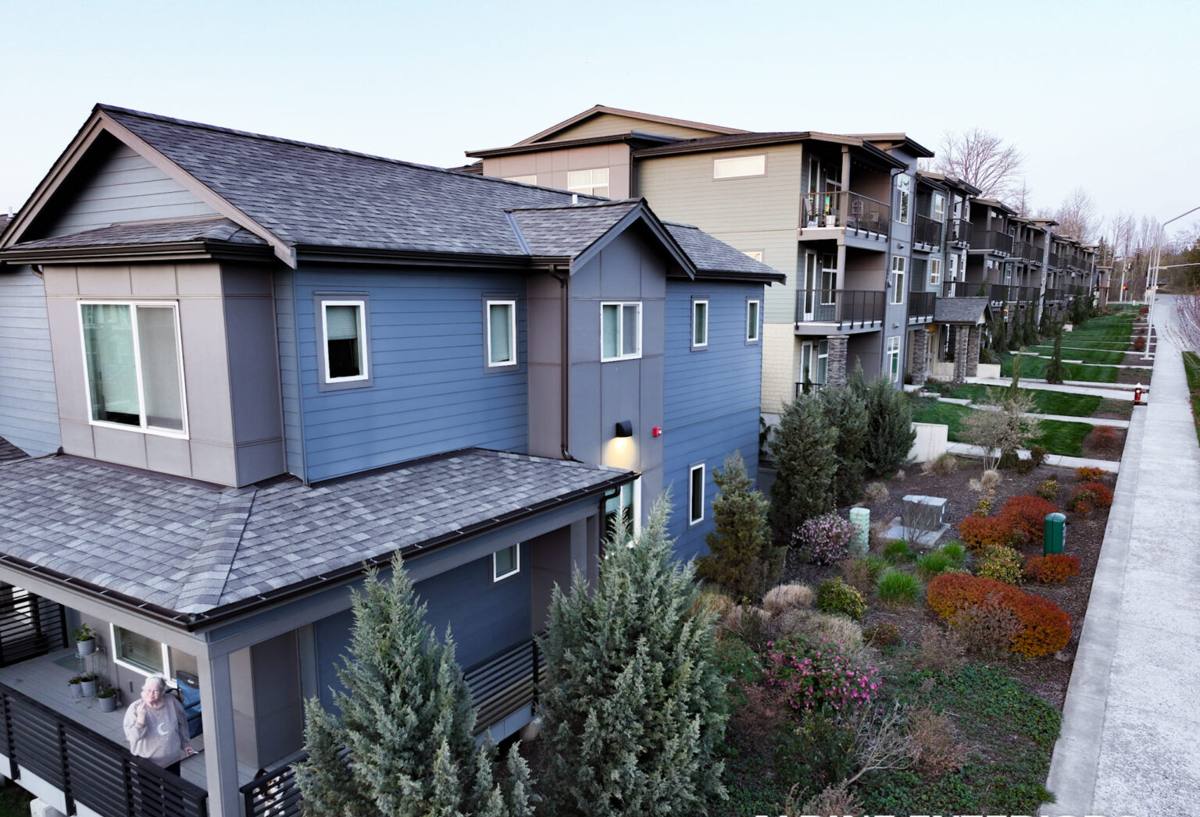
What Salt Air and Moisture Actually Do to Siding
It helps to understand the mechanism, not just the symptom. Homes near the Swinomish Channel take on moisture in two ways: direct wind-driven rain that gets pushed sideways into wall assemblies, and a steady low-grade dampness in the air itself that never fully lets a wall dry out between storms. Salt in that air accelerates corrosion on fasteners and metal trim, and it also holds moisture against surfaces longer than plain rainwater would.
Why This Matters More Here Than Inland
A siding product that performs fine in a drier part of the county can fail faster on a waterfront-adjacent lot. Wood-based products swell, check, and eventually rot when they can't dry out between rain events. Vinyl can warp or become brittle with repeated wet-dry-UV cycling and doesn't hold paint if a homeowner wants to change color later. Fiber cement, correctly installed, doesn't absorb water the way wood does, doesn't warp with temperature swings, and holds a factory finish that isn't relying on caulk and paint alone to keep water out.
Moss and Algae Season
Western Washington's long wet season, roughly October through April, is prime growing conditions for moss and algae on north-facing walls, shaded elevations, and anywhere siding stays damp for days at a time. This isn't just cosmetic — moss holds moisture against the surface, and on porous or textured products that moisture can work its way into seams and fastener holes over time. James Hardie's ColorPlus factory finish is baked on and more resistant to this buildup than field-applied paint, and the material itself doesn't feed mold and mildew growth the way wood-based siding can.
Why We Standardized on James Hardie Instead of Alternatives
We get asked why we don't offer vinyl, LP SmartSide, cedar, or other fiber cement brands. The honest answer is that we made a call as a company: after years of doing tear-offs and repairs on homes with those products, the trade-offs weren't worth it in this climate.
- Vinyl is inexpensive and low-maintenance in a mild climate, but it can't be painted, tends to show wind and impact damage, and its seams and expansion joints give wind-driven rain more chances to get behind the wall.
- LP SmartSide and similar engineered wood products perform reasonably when maintained perfectly, but they're wood-based at the core — if caulking or paint fails and moisture gets into a cut edge, the product can swell and deteriorate, and that's a hard failure to catch early.
- Cedar and primed spruce look great new but require ongoing painting, staining, and caulk maintenance that most homeowners underestimate — and near the water, that maintenance interval shrinks.
- Other fiber cement brands (Cemplank, Allura) are chemically similar to Hardie, but we don't have the same track record with their factory finish warranties or their climate-specific product engineering for the Pacific Northwest.
James Hardie is non-combustible, doesn't rot, holds its factory finish for a documented warranty period, and makes HZ5-rated products specifically engineered for our climate zone. That's the product we stand behind, and it's the only one we put our name on.
What a Correct James Hardie Installation Involves
The material only performs as well as the installation. Fiber cement siding fails prematurely almost exclusively because of installation mistakes, not product defects, and that's especially true in a wet, salt-exposed environment like La Conner.
The Non-Negotiables
- Proper water-resistive barrier and rainscreen or drainage gap behind the siding so any moisture that does get past the surface can drain and dry
- Correct fastener type and spacing — stainless or hot-dip galvanized fasteners driven to Hardie's specification, not overdriven or underdriven
- Factory-cut and field-cut edges properly sealed and primed where required, since an exposed cut edge is where moisture intrusion starts
- Proper flashing at every window, door, and roofline intersection — this is where most water damage on any siding job actually originates
- Correct clearance from grade, roofing, and decks so the bottom edge of the siding isn't sitting in standing water or snow load
- Manufacturer-specified nailing patterns and joint treatment at butt seams, which matter more on a home taking direct wind off the water
Skipping any one of these doesn't show up on day one — it shows up in year three or four, usually as staining, soft spots, or paint failure right at the seams. That's the failure pattern we get called out to fix on other contractors' work, and it's almost always a flashing or fastener issue, not a Hardie product issue.
Our Process for La Conner Jobs
| Step | What Happens |
|---|---|
| Site assessment | We look at wall exposure, wind direction, existing moisture damage, and which elevations take the worst weather off the channel |
| Product selection | We spec the right Hardie line and profile for the home, factoring in exposure and the homeowner's style preference |
| Moisture barrier and flashing plan | We detail flashing at every penetration and confirm drainage plane before any siding goes up |
| Installation | Installed to Hardie's fastening and clearance specs, with attention to cut-edge sealing given the humidity here |
| Final walkthrough | We inspect seams, trim, and flashing details before calling the job done |
Why Local Experience Matters
A crew that mostly works drier inland areas doesn't always think in terms of wind-driven rain and salt exposure by default — it's not part of their daily calculus. We work Skagit County homes regularly enough that details like extra flashing attention on water-facing elevations and edge-sealing in a humid climate aren't an upsell, they're just how we build every job. That local pattern recognition is worth more than it sounds like on paper.
Color and Finish Considerations Near the Water
ColorPlus factory finish is baked on under controlled conditions, which gives it better fade and moisture resistance than a field-applied paint job — that's a real advantage in a spot where a house gets more UV reflection off open water and more sustained dampness than an inland lot. Darker colors on south- and west-facing walls will still fade faster than lighter tones anywhere in the Pacific Northwest, sun exposure is sun exposure, but the factory finish holds up longer than repainting cycles on wood siding would.
What This Costs, Realistically
Every home is different, and exact pricing depends on square footage, number of stories, trim complexity, and how much of the existing wall assembly needs repair before new siding goes on. In general, expect fiber cement installation to cost more upfront than vinyl and be comparable to or somewhat above engineered wood, reflecting both material cost and the labor involved in doing the flashing and fastening correctly. The way to think about it isn't the sticker price alone — it's the cost of a job that needs to be redone in eight years versus one that's still performing in twenty-five.
Factors That Move the Estimate
- How much of the existing sheathing or water barrier needs replacement
- Number of window and door openings requiring flashing detail
- Home's exposure to direct wind off the water (may affect fastening spec)
- Trim and accent choices (Hardie trim boards, batten style, etc.)
- Access and site conditions typical of tighter in-town La Conner lots
Signs Your Current Siding Isn't Keeping Up
If you're not sure whether it's time to replace, a few signs are worth checking for, especially on walls facing the water or shaded by trees:
- Soft or spongy spots when you press on the siding, particularly near the bottom edge or under windows
- Persistent moss or algae staining that comes back within a season of cleaning
- Paint that's peeling or bubbling rather than just fading
- Visible gaps, warping, or cupping in board seams
- Staining on interior walls near exterior corners, which often points to a flashing failure behind the siding
None of these mean panic, but they're worth a professional look before they turn into sheathing or framing damage.
If you're weighing a siding replacement on a La Conner home, we're happy to come take a look, walk the exposure on your specific lot, and give you a straightforward, no-pressure estimate — just fill out the form below.