 Mount Vernon
 Why West Mount Vernon Siding Has to Work Harder
West Mount Vernon sits in that stretch of Skagit County where marine air off Padilla Bay and the Salish Sea meets river-bottom humidity coming off the Skagit. That combination is rougher on exterior siding than most homeowners realize. Salt-laden air accelerates corrosion on fasteners and trim metal. Driving rain, pushed sideways by winter storms, finds every gap in a lap joint or a poorly caulked corner. And the long stretch of gray, wet months from October through April creates ideal conditions for moss and algae to colonize any siding surface that stays damp for days at a time.
None of that is unique to one street or one subdivision — it's the reality for most of low-lying Mount Vernon and the surrounding Skagit Valley. But it matters more on some homes than others, depending on sun exposure, tree cover, and how close a wall sits to prevailing weather. A north-facing wall shaded by mature trees will hold moisture and grow moss noticeably faster than a south-facing wall that gets afternoon sun. Homes closer to open fields or water tend to catch more wind-driven rain than homes tucked behind windbreaks. Any siding installer working in this area needs to plan for the worst case on a given wall, not just the average.
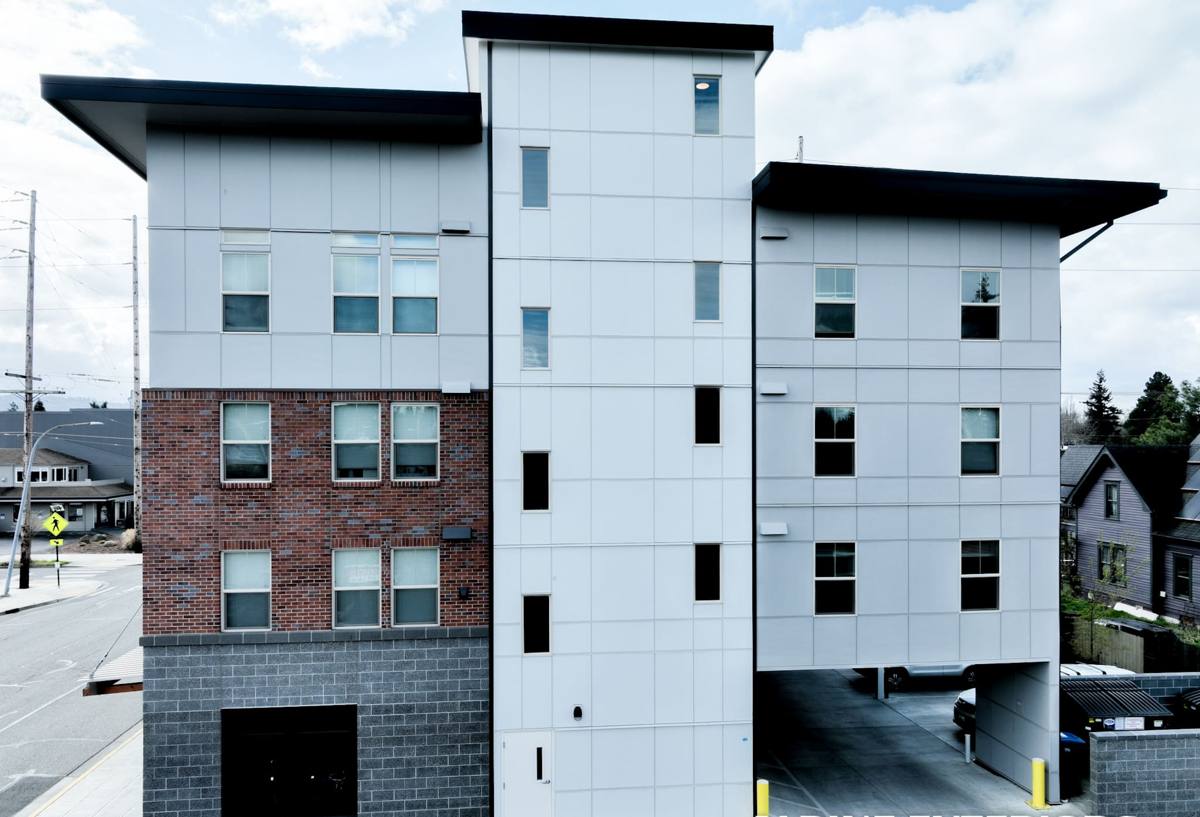
What Ordinary Siding Does Wrong Here
Most siding failures we see in this climate aren't material failures — they're installation failures that the climate exposes faster than it would somewhere drier. Caulk joints that were never meant to be the primary water barrier. Butt joints without back-flashing. Siding nailed tight to the sheathing with no drainage gap, so moisture that gets behind the cladding has nowhere to go and nowhere to dry. In a dry climate those shortcuts might take a decade or more to show up as a problem. In West Mount Vernon's wet season, they show up in years, not decades — as swelling, staining, soft trim, or moss that keeps coming back no matter how many times it's washed off.
This is why the product matters less than most people assume, and the installation matters more. A siding material that can tolerate repeated wetting and drying without swelling or rotting still needs to be installed with a drainage path, correctly lapped and flashed joints, and fasteners that won't corrode and streak the finish. Get those details right and almost any wall assembly will hold up. Get them wrong and even a premium product will fail early.
Why We Install Only James Hardie Fiber Cement
We standardized on James Hardie fiber cement for every job we do, including here in West Mount Vernon, and we don't install vinyl, LP SmartSide, or cedar. That's a deliberate choice, not a sales preference. Fiber cement is non-combustible, dimensionally stable when it gets wet and dries out repeatedly, and doesn't feed moss and algae the way wood-based products can. James Hardie's HardieZone system also lets us spec the HZ10 product line, which is engineered specifically for the kind of marine, moisture-heavy climate Skagit County sits in.
The ColorPlus factory finish is part of why we standardized on this product, too. It's baked on and cured under controlled conditions rather than sprayed on site, which means better adhesion and a finish that resists the fading and peeling that field-applied paint struggles with in a climate this wet. For a wall that's going to spend half the year damp, that finish durability isn't a cosmetic nicety — it's what keeps water from finding a way behind the panel through a cracked paint film.
What Correct Installation Looks Like on a West Mount Vernon Home
- A drainage gap (rainscreen) behind the siding so any moisture that gets past the cladding has a path to drain and air to dry
- Weather-resistive barrier installed and lapped correctly, with all penetrations properly flashed before siding goes up
- Corrosion-resistant fasteners set to Hardie's specified depth — overdriven nails crack the board's edge and create a water entry point
- Butt joints flashed, not just caulked, especially on walls exposed to prevailing wind and rain
- Manufacturer-specified clearances at grade, roof lines, and decks so the bottom edge of the siding never sits in standing water or snow
- Factory-primed cut edges resealed on site with the correct sealant before installation, not left exposed
Our Process, Job to Job
1. Site and Wall Assessment
Before we quote anything, we walk the exterior and look at exposure — which walls take direct weather, which stay shaded and damp longer, where the existing siding or trim is already showing moss, staining, or soft spots. That assessment shapes the flashing and drainage plan for that specific house, not a generic spec.
2. Tear-Off and Substrate Check
Once the old siding comes off, we check the sheathing and framing underneath for hidden moisture damage. This is often where older siding jobs in this area reveal the real cost of years of trapped water — soft sheathing, rusted fasteners, or rot around window openings that wasn't visible from outside. We address what we find before anything new goes up.
3. Weather Barrier and Drainage Plane
We install the weather-resistive barrier and furring or a rainscreen product to create the drainage gap, then flash every window, door, and penetration according to manufacturer and code requirements.
4. Hardie Installation to Spec
Panels and lap siding go up with correct fastener spacing and depth, proper joint treatment, and factory-finish touch-up only where the manufacturer allows it — we don't field-paint over ColorPlus finish, since that defeats the point of it.
5. Final Walkthrough
We walk the finished job with the homeowner, point out anything they should watch for seasonally, and leave them with straightforward maintenance expectations rather than vague promises.
Siding Options Compared for This Climate
| Factor | James Hardie Fiber Cement | Vinyl | Cedar / Wood |
|---|---|---|---|
| Moisture tolerance | Dimensionally stable wet or dry | Doesn't rot but can warp/gap over time | Absorbs water; needs consistent sealing |
| Moss/algae resistance | Good with factory finish; doesn't feed growth | Resists growth but shows staining | Prone to moss colonization in shade |
| Fire resistance | Non-combustible | Combustible, can melt/deform | Combustible |
| Finish durability | Factory-cured ColorPlus finish | Color molded in, can fade/chalk | Field-applied paint/stain, regular upkeep |
| Typical maintenance | Periodic wash, inspect caulk lines | Periodic wash, watch for cracking | Re-stain or re-paint every few years |
What Ongoing Maintenance Looks Like
Correctly installed Hardie siding is low-maintenance, not no-maintenance. In a climate like this one, a little seasonal attention goes a long way toward getting the full life out of the product and the warranty behind it.
- Rinse siding down once or twice a year, more often on shaded north walls where moss tends to establish
- Keep gutters clear so overflow doesn't run down the siding face during heavy rain
- Trim back vegetation and tree limbs that keep a wall section shaded and damp
- Inspect caulk joints at trim and penetrations annually and reseal if you see cracking or gaps
- Watch for any staining or soft spots at the base of the siding near grade, which can indicate a drainage or clearance issue
Cost Factors for a West Mount Vernon Project
Every quote depends on the specifics of the house, but the factors that most often move a fiber cement siding estimate in this area are consistent from job to job.
| Factor | Why It Affects Cost |
|---|---|
| Substrate condition | Rot or moisture damage found during tear-off adds repair scope before new siding goes up |
| Wall exposure and complexity | More corners, windows, and trim detail means more flashing and labor time |
| Siding profile chosen | Lap siding, panel systems, and shingle-style Hardie products carry different material and labor costs |
| Height and access | Second stories and steep grades add scaffolding or lift time |
| Trim and accessory work | Fascia, soffit, and trim replacement alongside siding affects total scope |
We give straightforward, itemized quotes rather than a single lump number, so homeowners can see exactly what's driving the price and where they have choices.
Why a Crew That Already Works This Area Matters
A contractor who works Mount Vernon and the surrounding Skagit Valley regularly already knows how prevailing wind and rain hit different orientations, how long moss season really runs here, and what county permitting and inspection expects for exterior work. That local pattern recognition shows up in small decisions — where to add extra flashing, which wall needs a wider drainage gap, when to flag a sheathing issue before it becomes a bigger repair. It's the difference between a generic installation and one built for the specific weather this house is going to face for the next several decades.
If you're weighing a siding replacement for a home in West Mount Vernon, we're glad to walk the exterior with you, point out what we see, and put together a straightforward, no-pressure estimate for a correctly installed James Hardie system built for this climate.