 Mount Vernon
 Windows Built for Alger's Weather, Not a Showroom in a Dry Climate
Alger sits in one of the wetter, wind-exposed pockets of Skagit County — close enough to Samish Bay and the Sound to pick up salt-laden air, tucked among enough trees and open farmland to catch driving rain off nearly every direction, and shaded enough through the winter that moss and algae get a long head start on anything with a north face. Windows here don't fail because they're old in the abstract sense. They fail because year after year of wind-driven moisture works into seals, frames, and hardware that were never rated for it, and because heat quietly leaks out through glass and frames that were adequate when they were installed but were never particularly efficient to begin with.
This page is about one job, done right, in this one area: replacing windows with genuinely energy-efficient units, installed in a way that actually holds up to Alger's climate rather than just meeting a minimum code checkbox. If you're comparing quotes or just trying to understand what you're paying for, this should help.
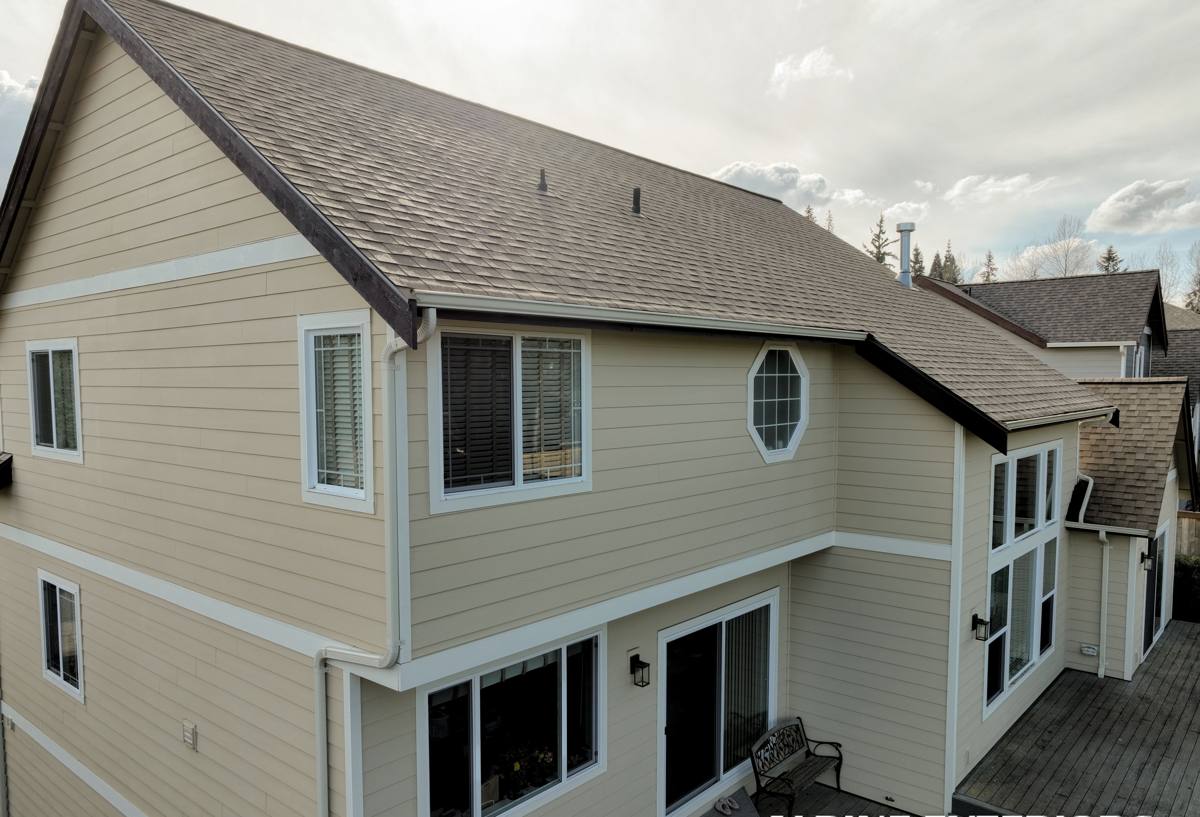
What This Climate Actually Does to a Window
Salt Air
Even a few miles inland from Samish Bay, salt-bearing air corrodes exposed metal hardware — hinges, locks, balance mechanisms, and screen frames — faster than it would in a dry inland climate. Cheaper aluminum or unclad hardware pits and seizes years before the glass itself has a problem. It's a slow process, which is exactly why it gets ignored until a window won't latch or a lock won't turn smoothly anymore.
Driving Rain
Skagit County doesn't just get a lot of rain — a good share of it comes in sideways during winter storms. A window that's watertight when rain falls straight down can still leak when wind pushes water horizontally into the gap between the frame and the wall. This is a flashing and installation issue as much as a product issue, which is why we spend more time on that part of this page than most contractors will spend on the actual job.
Moss and Shade
Tree cover and short winter daylight mean north- and west-facing windows in wooded parts of Alger stay damp longer than windows on an open, sunny lot would. That extended dampness is exactly what moss, algae, and mildew need. On wood-frame or wood-clad windows, it also means paint and sealant fail faster in those spots, which opens the door to rot at the sill and jamb if it's not caught early.
What "Energy-Efficient" Actually Means
"Energy-efficient" gets used loosely in this industry. For a real difference in your heating bill and your comfort near the glass in January, three numbers matter more than the marketing language on the sticker:
- U-factor — how much heat passes through the whole window assembly (frame and glass together). Lower is better. This is the single biggest factor in how cold a window feels to stand next to on a winter evening.
- SHGC (Solar Heat Gain Coefficient) — how much solar heat comes through the glass. In this climate, moderate SHGC is usually right: enough to pick up some free winter warmth on south-facing glass, without overheating rooms with a lot of west sun in summer.
- Air Leakage rate — how much air moves through the window assembly itself, separate from how well it's installed. A low-leakage window installed poorly will still draft. This is why the product rating and the installation quality are two separate questions, both of which have to be right.
Double-pane windows with a low-E coated, argon-filled sealed unit are the practical baseline for this climate. Triple-pane is available and does perform better on paper, but for most Alger homes the jump in comfort and energy savings from triple-pane over a good double-pane, low-E, argon unit is small relative to the added cost — we'll walk through that trade-off honestly rather than upsell it.
Choosing a Frame Material for This Climate
| Frame Material | How It Handles Salt Air & Rain | Maintenance | Notes for Alger |
|---|---|---|---|
| Vinyl | Doesn't corrode; handles moisture well | Low — occasional cleaning | Most common choice locally; good value, wide color range now available |
| Fiberglass | Excellent — very stable, resists moisture and salt exposure | Low | Higher upfront cost; strong long-term choice for exposed or shaded elevations |
| Wood / wood-clad | Vulnerable at joints and sills if paint/sealant isn't maintained | Higher — repainting, sealant checks | Can work if you want the look and commit to upkeep in shaded, damp areas |
| Aluminum | Conducts cold; can corrode with prolonged salt exposure | Moderate | We generally steer clients away from it for primary living-space windows in this climate — thermal performance and long-term hardware wear are the honest trade-offs |
There's no single "right" answer for every house — a shaded, north-facing wall in Alger has different needs than a sunny south wall on the same house. We look at each elevation, not just the house as a whole, when we recommend materials.
What a Correct Installation Actually Involves
In a climate that drives rain sideways, the window unit itself is maybe half the job. The other half is how it's tied into the wall. A correct installation, done right the first time, includes:
- Removing the old window and inspecting the rough opening, sill, and surrounding sheathing for rot or existing water damage before anything new goes in.
- Repairing or replacing any damaged framing or sheathing — installing a new window into a wet or rotten opening just seals the problem in.
- Installing sill pan flashing so any water that does get past the window has a path back out, not into the wall cavity.
- Applying flashing tape and housewrap integration in the correct shingle-lap order (bottom to top) so water sheds outward at every layer, not just at the window itself.
- Setting the window level, plumb, and square, then shimming and fastening per the manufacturer's installation instructions — this matters for both weather sealing and long-term operation of the sashes.
- Sealing the interior and exterior with appropriate sealant and insulation, leaving no gaps for air infiltration around the frame.
- Finishing trim and exterior detailing so water is directed away from the top and sides of the window, not funneled toward it.
Skip the flashing details and you can install a genuinely excellent window and still get a leak in three years — at which point the water damage is often worse than what the old window was doing on its own. This is the step where cutting corners is invisible on installation day and expensive five years later.
How We Approach a Window Project in Alger
Because we already work regularly in Skagit County, including out toward Alger, the process is straightforward and doesn't require us to relearn local conditions on your project:
- On-site assessment — we look at each elevation of the house, note sun exposure, shading, and any existing signs of moisture or rot around current windows.
- Honest product recommendation — matched to your budget and to what each part of the house actually needs, not a one-size-fits-all package.
- Written estimate — clear on product, scope, and what's included, so there are no surprises about what "installation" does or doesn't cover.
- Careful removal and opening inspection — any hidden rot or damage gets flagged and discussed with you before we proceed, not discovered after the fact.
- Installation to manufacturer spec — flashing, sealing, and finish work done in the order and manner that actually holds up to driving rain.
- Walkthrough — we go over operation, hardware care, and what routine maintenance looks like for the specific product installed.
Signs Your Current Windows Are Already Costing You
A lot of window replacement decisions in this area get delayed because the problems are gradual. Worth checking for:
- A noticeable draft or cold spot when standing near the glass, even with the window fully closed and locked
- Condensation forming between the panes (a sign the seal on the sealed glass unit has failed)
- Locks or cranks that are stiff, corroded, or don't latch tightly anymore
- Visible moss, black staining, or soft wood at the sill or lower corners of the frame
- Rooms that are noticeably harder to heat or hold temperature in than the rest of the house
- Paint that's cracking or peeling repeatedly at the same spot on a wood or wood-clad frame
- Noticeable outside noise coming through that didn't used to
Any one of these on its own might just mean a repair. Several together, especially on the same window, usually means the unit and its seal have run their course.
What Affects the Cost
| Factor | Why It Matters |
|---|---|
| Frame material | Vinyl is typically the lowest upfront cost; fiberglass and wood run higher |
| Glass package | Double-pane low-E/argon vs. triple-pane vs. upgraded coatings for sun exposure |
| Window size and style | Fixed picture windows cost less per unit than operable double-hungs or casements of the same size |
| Opening condition | Rot repair or reframing at the rough opening adds labor and material beyond the window itself |
| Number of openings replaced at once | Doing several windows in one project is generally more cost-effective per window than one at a time |
| Access and elevation | Upper-story or hard-to-access windows take longer to remove and install safely |
We don't quote from a distance sight-unseen — actual pricing depends on what we find at the opening once the old window is out, which is why the written estimate follows an on-site look, not a phone guess.
Why It Matters That We Already Work in Alger
A crew that mostly works drier, more sheltered areas can still do a competent job on a calm day. The difference shows up over the following winters — whether the flashing detail was sized for occasional rain or for rain that regularly comes in sideways, and whether the hardware and sealant choices anticipated salt-laden air instead of just handling it the way any inland install would. Working this specific mix of conditions regularly, rather than occasionally, is what keeps us from treating Alger like a generic install and skipping the details that matter here.
If you'd like a straightforward, no-pressure look at your windows and an honest read on what would actually help — whether that's a full replacement or something less — the estimate is free, and there's no obligation attached to it. Use the form below to get started.