 Mount Vernon
 Metal Roofing Built for East Mount Vernon's Weather
East Mount Vernon sits close enough to the Skagit River and the tidal flats west of town that homes here deal with a specific mix of punishment: salt-tinged air moving in off Puget Sound, long stretches of driving rain from October through April, and a moss season that seems to start earlier every year. A roof that works fine in a drier inland climate can still struggle here if it wasn't chosen or installed with these conditions in mind. Metal roofing, done correctly, handles all three better than most other roof coverings — but "done correctly" is doing a lot of work in that sentence, and it's worth understanding what that actually means before you sign a contract.
We're a Mount Vernon-based crew, and East Mount Vernon is part of our regular service area, not a stretch assignment. That matters more than it sounds like it should — a roof crew that's worked this neighborhood before already knows how the local exposure, tree cover, and drainage patterns tend to play out on a roof over time.
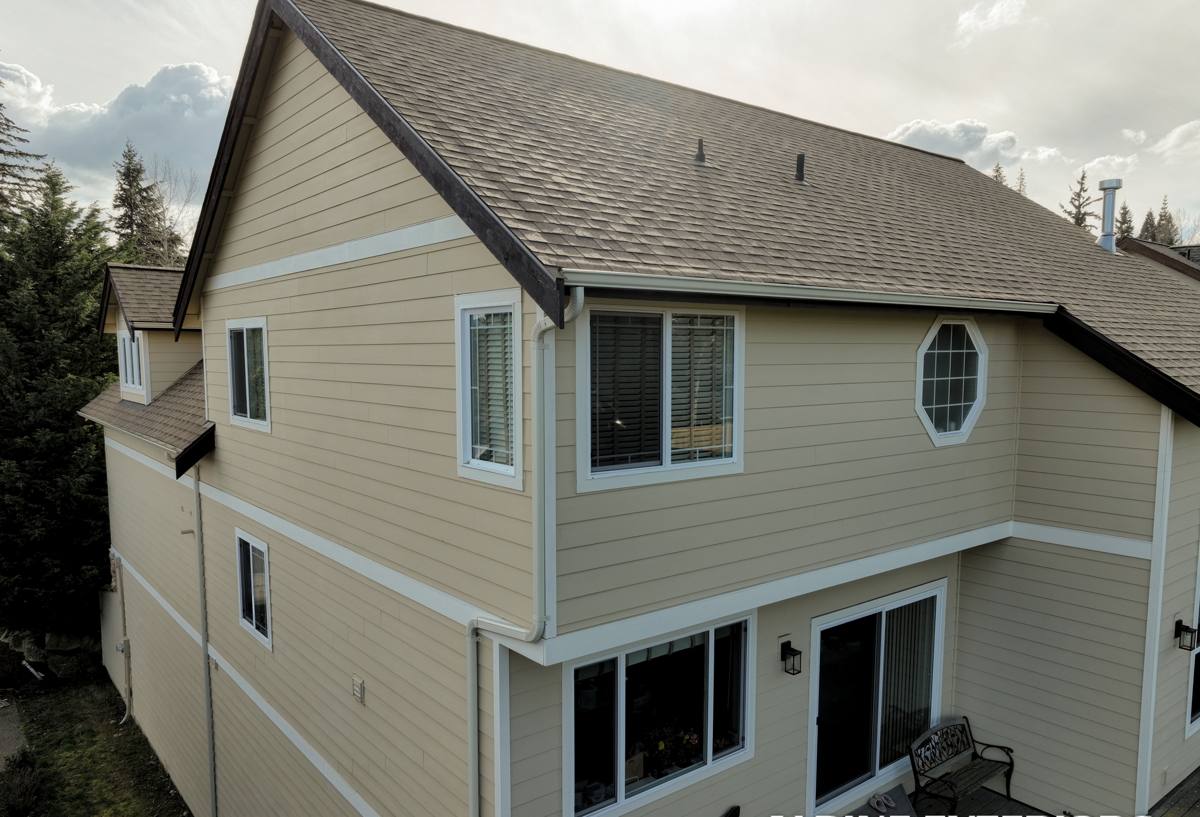
What Skagit County's Climate Actually Does to a Roof
Salt Air and Corrosion
Mount Vernon isn't oceanfront, but westerly weather systems still carry enough salt-laden moisture inland to matter, especially on homes with more open exposure. Salt air accelerates corrosion on unprotected or poorly coated metal fasteners, flashing, and panel edges. It's a slow process — you won't see damage in year one — but over a decade or two, cheap or mismatched hardware will show rust well before the roofing panels themselves fail.
Driving Rain
Our wet season isn't just steady drizzle; wind-driven rain regularly comes in at an angle, which pushes water sideways at seams, valleys, and penetrations instead of just letting it run straight down. A roof detail that would shed water fine in a calmer climate can leak here if laps, sealant, and fastener placement aren't sized for wind-driven exposure.
Moss and Moisture Retention
Tree cover and shaded north-facing slopes around East Mount Vernon give moss plenty of time to establish itself, especially on roofs that stay damp for days at a stretch in winter. Moss holds moisture against the roof surface, and on organic materials that trapped moisture is what eventually causes rot and granule loss. Metal doesn't feed moss the way some materials do, but moss can still take hold in dirt and debris that collects in valleys and behind ribs if the roof isn't occasionally cleared.
Why Metal Roofing Fits This Environment
Metal roofing isn't the right answer for every home or every budget, but for the conditions we just described, it has real, practical advantages:
- Properly coated steel and aluminum panels resist corrosion far longer than exposed fasteners or lower-grade hardware — coating quality and fastener spec matter as much as the panel material itself.
- Standing seam profiles have far fewer exposed fasteners than exposed-fastener metal panels, which means fewer potential leak points in a climate where wind-driven rain finds every weak seam.
- Metal sheds moss and standing water better than porous roofing materials, since there's no organic surface for moss to root into.
- Steep-slope metal roofs shed rain and snow load efficiently, reducing the time water sits on the surface after a storm.
- A correctly installed metal roof typically outlasts asphalt shingle roofing by decades, which matters when you're weighing upfront cost against how many times you'll re-roof over the life of the house.
Standing Seam vs. Exposed-Fastener Metal: An Honest Comparison
Homeowners often ask us to just quote "metal roofing" without realizing there are two very different systems sold under that name. Here's how we walk East Mount Vernon homeowners through the trade-offs:
| Factor | Standing Seam Metal | Exposed-Fastener Metal |
|---|---|---|
| Fasteners | Concealed under the seam, not exposed to weather | Screwed through the panel face, exposed to rain and UV |
| Long-term maintenance | Minimal; no fastener re-tightening needed | Gaskets and screws can loosen or degrade over time and need periodic checking |
| Leak risk in driving rain | Lower — fewer penetrations, seams interlock | Higher if fasteners aren't kept sealed and snug |
| Upfront cost | Higher material and labor cost | More budget-friendly |
| Best fit | Primary residences, long-term ownership | Outbuildings, shops, budget-driven projects |
Our standard for full residential roof replacements in this climate leans toward standing seam, precisely because of the fewer-penetrations advantage in wind-driven rain. We'll still install exposed-fastener systems where it's the honest right fit for the structure and budget — we just won't pretend the maintenance trade-off doesn't exist.
What a Correct Metal Roof Installation Involves
Deck and Ventilation Assessment
Before any metal goes down, we check the roof deck for soft spots, rot, or inadequate ventilation. Metal roofing performs best over a sound, properly ventilated deck — trapping heat and moisture underneath a new metal roof over a bad substrate just moves the problem, it doesn't solve it.
Underlayment Selection
Given how much rain this area sees, we use underlayment rated for the added condensation and moisture exposure metal roofs can experience, particularly a high-temp synthetic or self-adhered membrane at eaves, valleys, and other vulnerable areas — not a bare-minimum felt layer.
Flashing and Penetration Details
Chimneys, vents, skylights, and wall-to-roof transitions are where the majority of roof leaks actually originate, metal or otherwise. Custom-fabricated flashing, correctly lapped and sealed for wind-driven rain, is not an area to cut corners.
Fastener and Coating Spec
We match fasteners and panel coatings to the corrosion exposure this area sees, rather than defaulting to whatever's cheapest. A mismatched fastener — steel screws in an aluminum panel, for example — can cause galvanic corrosion that shows up as staining and pitting years down the road.
Pre-Project Checklist We Walk Through With Homeowners
- Current roof deck condition and any rot or soft-spot repairs needed
- Attic ventilation adequacy for the new roofing system
- Panel profile and gauge appropriate for the home's exposure and roof pitch
- Underlayment type matched to Skagit County's rain volume
- Flashing detail plan for every valley, chimney, and penetration
- Fastener and coating compatibility to avoid corrosion issues
- Snow guard or ice-and-water needs if the roof feeds over walkways or entries
Our Process for East Mount Vernon Metal Roof Projects
- On-site inspection: We walk the roof and attic in person, not just from a satellite photo, to check deck condition, ventilation, and existing flashing.
- Written estimate: You get a clear scope of work and pricing before anything is scheduled — no vague allowances that turn into change orders later.
- Material selection: We go over panel profile, gauge, and coating options against your budget and how long you plan to stay in the home.
- Installation: Deck repair as needed, correct underlayment, panels installed to manufacturer spec, and flashing detailed for this area's wind and rain patterns.
- Final walkthrough: We review the completed roof with you, including basic maintenance items like keeping valleys and gutters clear of debris and moss.
Maintenance: What Metal Roofing Still Needs From You
Metal roofing is low-maintenance, not no-maintenance. In East Mount Vernon's climate, the two things worth staying on top of are keeping valleys and gutters clear of needles and leaf debris (which holds moisture against the roof and feeds moss growth in shaded areas), and having flashing and sealant points checked periodically, especially after a hard windstorm. Neither takes much time, and both extend the life of the investment.
What Drives Cost on a Metal Roof in This Area
| Cost Factor | Why It Matters Here |
|---|---|
| Panel system (standing seam vs. exposed-fastener) | Standing seam costs more upfront but reduces long-term leak risk from wind-driven rain |
| Roof complexity (valleys, dormers, penetrations) | More custom flashing work needed for driving-rain protection |
| Deck condition | Rot repair from prior moisture or moss issues adds cost but is not optional |
| Coating and gauge | Higher-grade coatings resist salt-air corrosion longer, worth the difference over the roof's life |
| Access and roof pitch | Steeper or harder-to-access roofs take more labor time |
We won't quote a number without seeing the roof — anyone who does is either guessing or padding the estimate. What we can tell you honestly is that the cheapest metal roofing bid is rarely the one that holds up best against this area's rain and salt exposure over the next 30-40 years.
Why a Local East Mount Vernon Crew Matters
A roofing crew that regularly works this specific area already has a working sense of which neighborhoods see more moss buildup, which roof orientations take the worst of the wind-driven rain, and how local permitting and inspection processes run in Mount Vernon and Skagit County. That's not a marketing point — it's practical knowledge that shows up in fewer surprises during the project and a roof detailed correctly for the conditions it actually has to survive, not generic conditions from a manufacturer's install guide written for a different climate.
If you're weighing a metal roof for your East Mount Vernon home — whether it's a full replacement, a re-roof after storm damage, or you're just trying to understand your options — we're happy to come take a look and give you a straightforward, no-pressure estimate. There's a form below to get started.