 Mount Vernon
 Downtown Mount Vernon's Climate Is Tougher on Siding Than It Looks
Downtown Mount Vernon sits low in the Skagit Valley, close enough to Puget Sound and Skagit Bay that homes here deal with a steady drift of salt-laden marine air on top of everything else the Pacific Northwest throws at a house. Add driving rain off the water, long stretches of overcast humidity, and a moss season that can run from fall through spring, and you have a climate that quietly works on siding year-round instead of hitting it with one big storm and stopping. Most siding failure we see downtown isn't dramatic. It's slow: a soft spot behind a downspout, a seam that opened up two winters ago and has been letting water in ever since, a north-facing wall carpeted in moss that's been holding moisture against the surface for months at a time.
That combination — salt air, near-constant rain exposure, and moss that thrives in shade and dampness — means siding repair in this part of Mount Vernon has to account for more than the visible damage. A patch that looks fine on day one but doesn't address what let moisture in will fail again, usually faster the second time because the substrate underneath is already compromised.
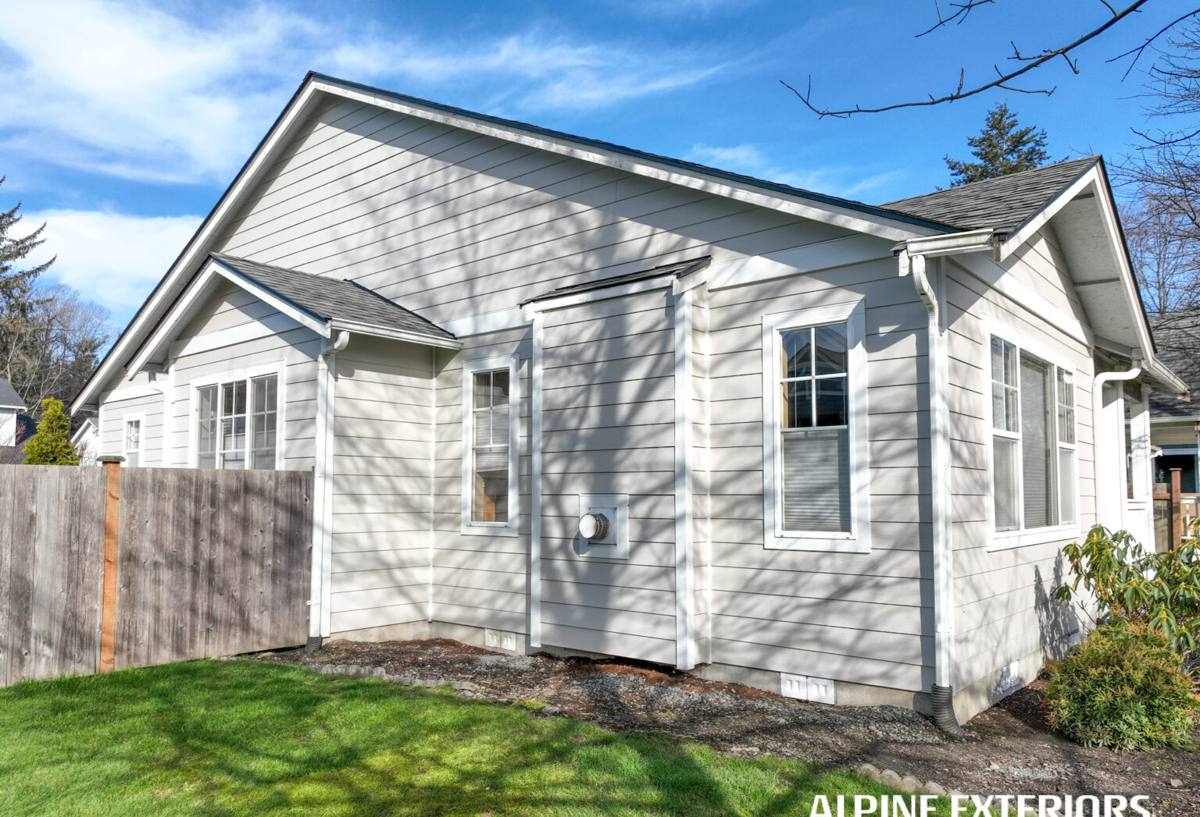
What We Typically Find on Downtown Mount Vernon Homes
Downtown Mount Vernon has a mix of older housing stock and newer infill, which means siding repair calls here cover a wide range of materials and problems. A few patterns show up consistently:
Moisture Behind the Siding, Not Just On It
Salt-carrying marine air combined with frequent rain means water finds its way behind siding through small gaps — nail holes, poorly sealed seams, old caulk that's shrunk and cracked — long before the surface itself looks bad. By the time a homeowner notices bubbling paint, a soft spot, or a stain, the moisture has often been working behind the siding for a while.
Moss and Algae Holding Water Against the Wall
Shaded walls, tree-lined lots, and the valley's humidity give moss ideal conditions. Moss doesn't just look bad — it holds water against the siding surface for extended periods, which accelerates rot in wood-based products and can stain or degrade coatings on other materials. A section of siding that stays damp under moss for months behaves very differently than one that dries out between rain events.
Aging Hardboard, Wood, and Vinyl Reaching the End of Their Service Life
A lot of Downtown Mount Vernon homes were sided decades ago with materials — hardboard, cedar, or vinyl — that were reasonable choices at the time but weren't built for indefinite exposure to this specific mix of salt air, rain, and moss. Repair on these materials is often a race against time: patch it and buy a few more years, or acknowledge that the material is past the point where localized repair makes sense.
Failed Flashing and Trim Details
Window and door flashing, siding-to-trim transitions, and butt joints are common failure points. These aren't always obvious from the ground, and a repair that only addresses the siding panel while ignoring a failed flashing detail behind it will leak again.
What a Correct Siding Repair Actually Involves
A repair that holds up in this climate is not just cutting out a damaged section and nailing in a new piece. It requires diagnosing why the damage happened, not just what the damage looks like.
- Confirming the water source — is it coming through a seam, over a flashing detail, up from grade, or down from a gutter or roof issue that has nothing to do with the siding itself?
- Checking the condition of the water-resistive barrier and sheathing behind the damaged section, not just the siding panel
- Removing all compromised material, including any rot that has spread beyond the visibly damaged area
- Correcting the underlying cause — resealing a seam properly, re-flashing a window, redirecting water away from the wall — before any new siding goes back on
- Matching the replacement material and profile so the repair doesn't stand out as an obvious patch
- Sealing and finishing the repair to the same standard as the surrounding siding, not a shortcut version
Skip any one of these steps and the repair becomes cosmetic rather than structural — it will look fine for a season and then fail again in the same spot, often after the drywall or framing behind it has taken more damage.
Repair or Replace? How We Help Homeowners Decide
Not every siding problem needs a full re-side, and not every siding problem is a good candidate for a patch. The honest answer depends on how much of the wall is affected, how old the existing siding is, and what's happening structurally behind it.
| Factor | Points Toward Repair | Points Toward Replacement |
|---|---|---|
| Extent of damage | Isolated to one or two sections | Spread across multiple walls or elevations |
| Age of existing siding | Still well within its expected service life | Already near or past the age where the material typically fails |
| Cause of damage | A one-time or localized issue (impact damage, a single failed seam) | A systemic issue affecting the whole installation (widespread failed caulk, chronic moisture intrusion) |
| Moss and algae history | Recent, surface-level growth with no wood softening | Long-term moss coverage with confirmed rot underneath |
| Material availability | Matching material or a close match is available | Original material is discontinued or too different to blend in |
When repair is the right call, we do it right rather than doing the minimum. When the damage or the material's condition tells us repair would just be a temporary fix, we say so directly instead of patching something that's going to fail again.
Our Repair Process for Downtown Mount Vernon Homes
- Inspection. We look at the damaged area and the surrounding siding, check for moisture behind the surface, and identify what actually caused the problem.
- Diagnosis and explanation. We tell you what we found in plain terms — what's damaged, why, and whether repair or replacement is the honest recommendation.
- Scope and estimate. You get a clear picture of what the work involves before anything is cut into.
- Removal and inspection of the substrate. Once the damaged siding is off, we check the sheathing and water-resistive barrier before closing anything back up.
- Correction of the root cause. Flashing, sealant, and drainage details get fixed, not just covered over.
- Repair and finish. New material goes in matched as closely as possible to the existing siding, finished to blend rather than stand out.
Why Local Experience in Downtown Mount Vernon Matters
A siding repair crew that regularly works in and around Downtown Mount Vernon already understands the pattern of damage this area produces — where moss tends to take hold first, how far marine air pushes up the valley, and which older siding materials in this neighborhood are holding up versus which ones are on borrowed time. That familiarity shortens the diagnosis step and means fewer surprises once a wall is opened up.
It also matters for something more practical: a contractor who knows the area can usually get eyes on a repair faster, understands typical permitting and access considerations for downtown lots, and isn't learning the region's climate behavior on your project. When you're vetting a contractor for a repair, a few things are worth confirming directly:
- Do they inspect behind the damaged siding, or just replace the visible panel?
- Will they put the diagnosis and scope of work in writing before starting?
- Do they carry liability insurance and, if required, proper licensing for exterior work in Washington?
- Can they match your existing siding material and profile, or will they tell you upfront if a match isn't realistic?
- Do they address the cause of the damage — flashing, sealant, drainage — or only the cosmetic patch?
What We Use When a Patch Isn't the Right Answer
We install James Hardie fiber cement siding exclusively, and there's a reason that matters even on repair calls. When a section of siding has failed badly enough that a true match isn't possible, or when a homeowner's aging hardboard or wood siding is showing damage in multiple spots and a pattern of recurring repairs is starting to add up, we'll say so plainly and walk through what a partial or full re-side with Hardie would look like instead of continuing to chase patches on a material that's reaching the end of its usable life.
Hardie's fiber cement is non-combustible, holds its factory-applied ColorPlus finish far longer than field-painted materials, and is engineered in HZ product lines built for exactly this kind of climate — sustained moisture, humidity, and coastal-influenced air. It's not the right call for every repair, and we're not going to push a re-side when a legitimate patch will do the job. But when the numbers or the material's condition point that direction, we'd rather tell you honestly than keep billing you for repairs on a wall that's not going to hold up much longer.
Keeping a Repair From Becoming a Recurring Job
Once a repair is done correctly, a little seasonal attention goes a long way toward making sure it stays that way in this climate:
- Keep gutters and downspouts clear so water isn't dumping directly onto or behind siding sections
- Trim back vegetation and tree cover on shaded walls to reduce the conditions moss needs to establish
- Rinse visible moss and algae growth off siding before it has a chance to hold moisture against the surface for an extended period
- Recaulk seams and trim joints as sealant ages, rather than waiting until water has already gotten behind the siding
- Have any soft spots, bubbling, or discoloration looked at early — small repairs are far less invasive and less costly than waiting until damage spreads
If you're seeing damage, moss buildup, or a soft spot on your Downtown Mount Vernon home and want an honest opinion on whether it calls for a repair or something more, we're happy to take a look. Estimates are free, there's no pressure, and you'll get a straight answer about what your siding actually needs.