 Mount Vernon
 Why Downtown Mount Vernon Roofs Age Differently
Downtown Mount Vernon sits low in the Skagit Valley, close enough to tidal water and the Skagit Bay estuary that homes here deal with a mix of coastal and river-valley weather most inland Washington towns never see. Salt-laden air off the Sound corrodes exposed metal faster than it would twenty miles east. Long stretches of driving rain off the Pacific push water sideways into laps and seams that a roof in a drier climate would never have to resist. And the mild, wet winters that make this a good place to live also make it a good place for moss, moss that holds moisture against shingles for months at a stretch instead of drying off in a day or two.
None of that means a roof here is doomed to fail early. It means the installation has to be done with those specific stresses in mind, rather than treated like a generic tear-off-and-reshingle job. That's the difference between a roof that looks fine for a few years and one that actually holds up through a couple decades of Skagit County winters.
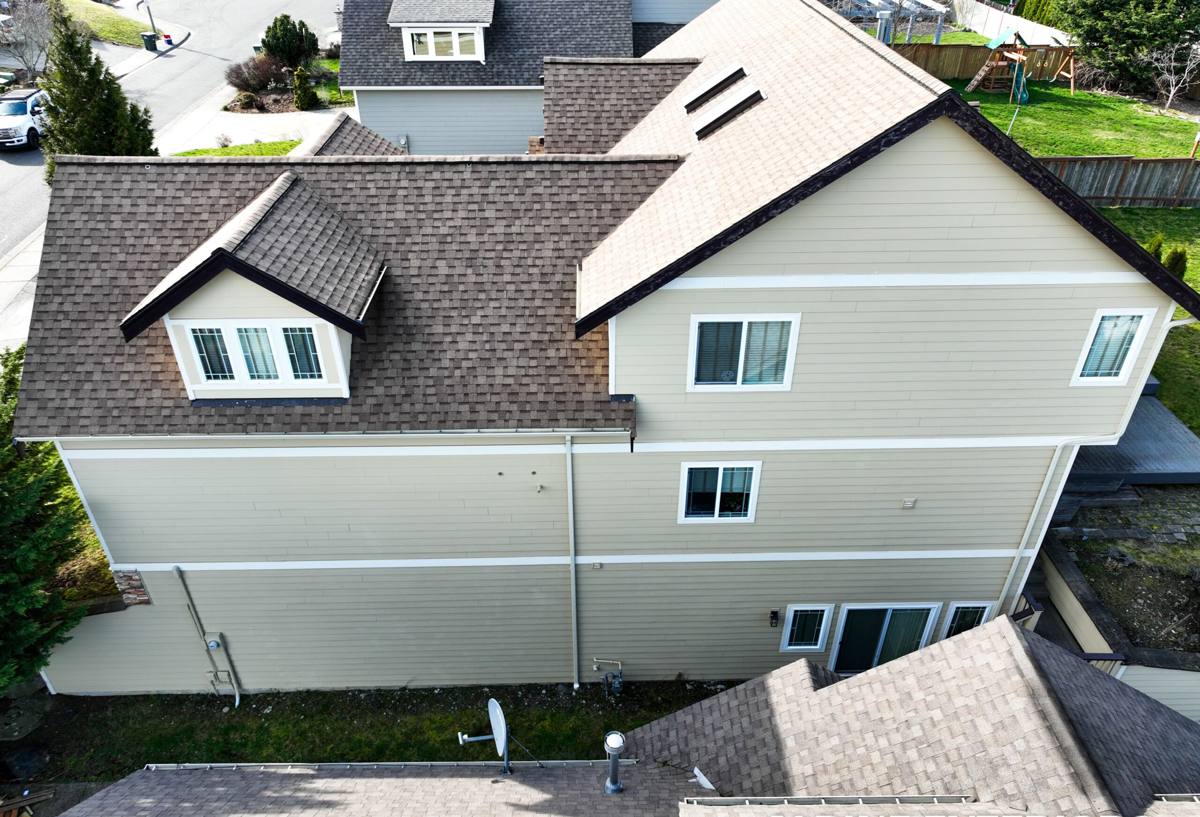
What a Correct New Roof Installation Actually Involves
A new roof is more than shingles on plywood. Every layer underneath does specific work, and skipping or shortcutting any of them is where most premature failures start.
Tear-off and deck inspection
We remove the old roofing down to the deck rather than layering over it. That lets us actually see the sheathing — soft spots, delaminated plywood, or rot around old flashing points don't show up until the old material is off. In a climate this wet, hidden deck damage is common enough that skipping this step is asking for trouble later.
Underlayment and ice-and-water protection
Given how much wind-driven rain this area gets, we pay close attention to underlayment at eaves, valleys, and any low-slope transitions, areas where water is most likely to be pushed backward under standard shingle laps.
Flashing at every penetration
Chimneys, skylights, vent stacks, and wall-to-roof transitions are where most leaks actually start — not in the open field of shingles. New step flashing, counter-flashing, and pipe boots matter more here than in drier regions because there's simply more water looking for a way in.
Ventilation
Balanced intake and exhaust ventilation keeps the attic dry and temperature-stable, which slows moss growth on the roof surface and prevents moisture buildup that rots decking from underneath. This is one of the most commonly skipped steps on budget re-roofs, and it's one of the most consequential for long-term performance in this climate.
Material Options for This Climate
There's no single "best" roofing material for every home — it depends on budget, roof pitch, and how much long-term maintenance you're willing to do. Here's how the common options actually compare for a coastal Skagit County setting.
| Material | Typical Lifespan Here | Moss/Moisture Behavior | Maintenance |
|---|---|---|---|
| Architectural asphalt shingle | 25–30 years | Good with proper ventilation and periodic cleaning | Low to moderate |
| Standing seam metal | 40–50+ years | Sheds moss and moisture very well; minimal organic growth | Low |
| Cedar shake | 20–25 years in this climate | Absorbs moisture; needs active moss and mold management | High |
| Synthetic composite shingle | 30–40 years | Resists moisture absorption; performs well with good ventilation | Low to moderate |
We install architectural asphalt and metal roofing most often on Downtown Mount Vernon homes because they hold up well against the salt air and constant damp without demanding the ongoing upkeep that a wood product does. If you specifically want cedar shake for its look, we'll install it, but we'll be upfront that it needs more attention than the alternatives in a climate this wet — that's a maintenance trade-off, not a knock on the material.
A note on older downtown homes
Many homes in and around Downtown Mount Vernon are older housing stock with steeper roof pitches and, in some cases, multiple layers of old roofing already on the deck. Steeper pitches shed water and moss faster, which is a point in their favor, but they also take longer to work safely and carefully. Multiple old layers have to come off, both because building code generally limits how many layers can be on a roof and because you can't properly inspect or flash a deck you can't see.
The Long Moss Season and What It Means for a New Roof
Western Washington's moss season isn't really a season — on a shaded, north-facing roof in Skagit County, conditions can favor moss growth nine or ten months a year. A brand-new roof doesn't stop moss from landing on it, but the installation choices you make up front determine how much of a problem it becomes:
- Zinc or copper strips near the ridge, installed during the roof install, release trace metal ions with every rain that inhibit moss growth over time
- Proper attic ventilation keeps the underside of the deck from staying damp, which reduces the conditions moss and algae thrive in
- Adequate roof slope and clean drainage paths mean less standing moisture after a storm
- Choosing a shingle or metal profile that sheds debris rather than trapping it in valleys and behind vents
None of these steps make a roof moss-proof — nothing does in this climate — but they buy years before moss becomes a maintenance issue instead of a cosmetic one.
Our Installation Process
We run the same process on every roof, whether it's a small bungalow or a larger two-story home:
- On-site inspection. We walk the roof and the attic, check the decking, note flashing conditions, and measure for materials.
- Written estimate. You get a clear scope of work and price before anything is scheduled — no verbal quotes, no surprise add-ons buried in fine print.
- Scheduling around weather. We work with the reality of Skagit County's rain patterns and plan install days to minimize the deck's exposure to open weather.
- Tear-off, deck repair, and dry-in. The roof gets covered with underlayment the same day it's opened up wherever possible, so an unexpected afternoon shower isn't a crisis.
- Flashing, ventilation, and final roofing installation. Every penetration is flashed correctly; ventilation components go in as designed, not skipped for speed.
- Cleanup and walkthrough. We magnet-sweep for nails, clear debris, and walk the finished roof with you so you know exactly what was done.
Why Hiring a Crew That Already Works Downtown Mount Vernon Matters
A roofing crew that works this specific area regularly already knows which details matter here: how steep a given block's older homes tend to run, what the City of Mount Vernon's permitting process requires, and how to sequence a job around the wetter stretches of a Skagit County winter instead of getting caught mid-tear-off in a downpour. That local familiarity shows up in small but real ways — correctly anticipating deck condition on an older home, knowing which flashing details tend to fail first in this climate, and being available for a warranty check or a question after the job is done, rather than being a crew that passed through once.
It also means accountability. A contractor with an established local presence has a reputation in the community to protect, which is a different incentive structure than an out-of-area crew that's harder to reach once the final payment clears.
Signs You May Need a New Roof Before Next Winter
- Shingles that are cupping, curling, or missing granules in patches
- Daylight visible through the roof deck from inside the attic
- Soft or spongy spots when walking the roof
- Heavy moss buildup that's lifted shingle edges rather than sitting on the surface
- Water stains on interior ceilings, especially near chimneys, skylights, or exterior walls
- A roof already past 20–25 years old with asphalt shingles, or showing granule loss in the gutters
- Previous patch repairs in multiple spots rather than one contained area
If more than one or two of these apply, it's worth getting an inspection before the wetter months make a small problem into interior damage.
Cost Factors to Understand Before You Get Quotes
Roofing costs vary based on more than just square footage. The factors that most affect price on a Downtown Mount Vernon home include roof pitch and complexity, how many layers of old roofing need removal, deck repair needs discovered during tear-off, material choice, and the number of penetrations (chimneys, skylights, vents) requiring flashing. A straightforward, low-pitch roof in good structural condition will always price differently than a steep, multi-valley roof on an older home with hidden deck damage. Any honest estimate should walk you through which of these factors apply to your specific roof, rather than quoting a flat per-square rate with no context.
If you're weighing a new roof for a home in Downtown Mount Vernon, we're happy to take a look and give you a straightforward, no-pressure estimate — just fill out the form below to get started.