 Mount Vernon
 Building Decks for Big Lake's Damp, Shaded Climate
Big Lake sits in a pocket of Skagit County where the weather works against outdoor structures more than most homeowners realize. Between the lake's own humidity, the tree cover that shades much of the shoreline, and the long stretch of gray, wet months that define western Washington, a deck out here takes on moisture almost year-round. Add in the broader Skagit Valley climate — driving rain off the Puget Sound corridor and a moss season that can run eight months or more — and you have conditions that punish decks built to a generic, one-size-fits-all spec.
We build decks specifically for this environment. That means paying attention to details a crew from a drier climate might skip: how water sheds off the surface, how air moves underneath the structure, and which materials actually hold up when they stay damp for days at a time instead of drying out between rains.
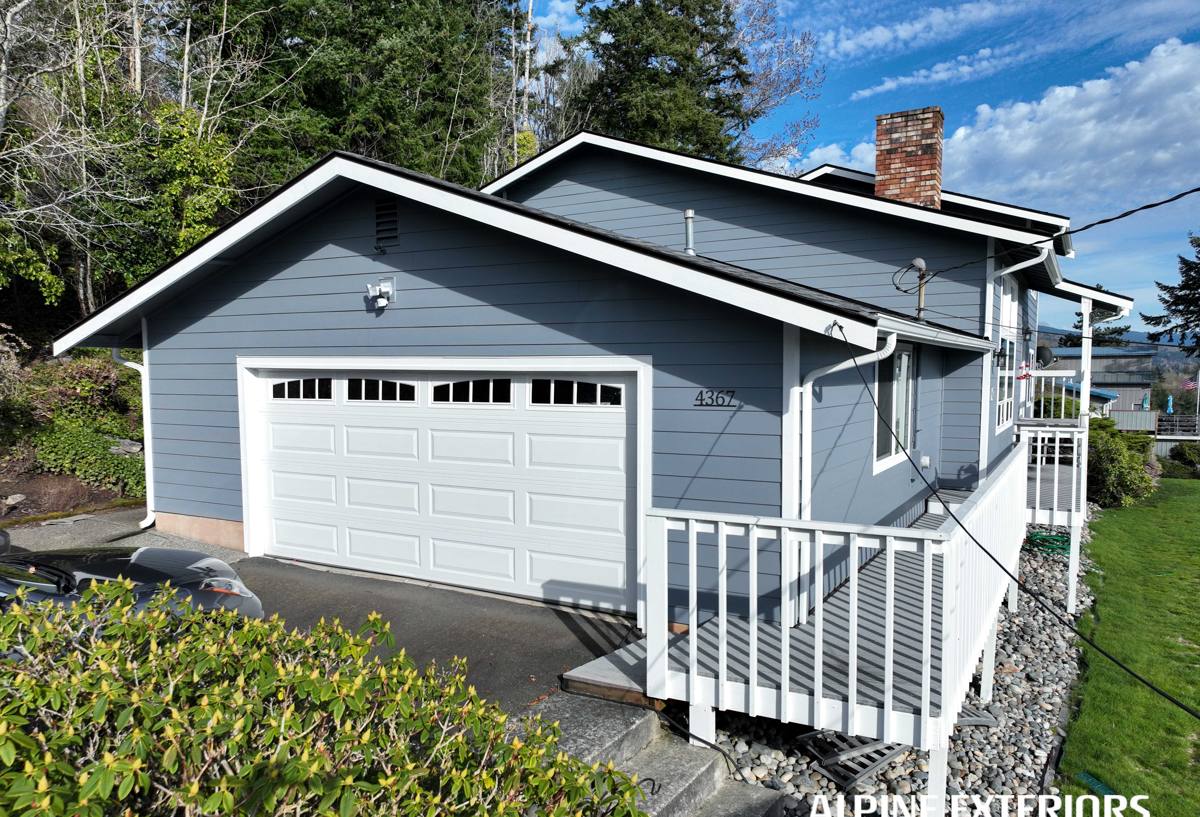
What Big Lake's Environment Does to a Deck
Homes close to the water deal with a specific combination of stresses that inland, sun-exposed decks don't see as much:
- Persistent surface moisture — lakeside humidity and morning fog keep deck boards wet longer than the same board would stay wet a mile away from the water.
- Shade-driven moss and algae growth — mature trees around much of the lake block direct sun on large sections of many decks, and moss thrives exactly where sunlight can't reach to dry things out.
- Slippery surfaces — algae film on wood or poorly-textured composite becomes a real slip hazard on stairs and landings, especially in fall and winter.
- Fastener and hardware corrosion — the general salt-air influence that reaches inland through the Skagit Valley, combined with constant dampness, accelerates rust on anything less than a genuinely corrosion-rated fastener.
- Ground-level rot at posts and footings — properties near the lake often have higher water tables and softer ground, which changes how footings need to be set.
None of this means a deck can't hold up for decades out here — it means the build has to account for these conditions from the footings up, not just at the surface finish.
Choosing Decking Material for a Lake Property
The material decision matters more at Big Lake than it does in a dry, open backyard elsewhere in Mount Vernon. Here's how the common options actually perform under shade and lake moisture:
| Material | Moss/Moisture Resistance | Maintenance Needed | Typical Lifespan |
|---|---|---|---|
| Pressure-treated pine | Fair — needs sealing to perform well | Annual cleaning and re-sealing recommended | 10–15 years before major boards need replacing |
| Cedar | Good natural resistance, but still needs care in full shade | Periodic cleaning, occasional oil/stain | 15–20 years with upkeep |
| Composite decking | Very good — doesn't absorb water like wood | Occasional washing to keep algae film off the surface texture | 25+ years, backed by manufacturer warranty |
| PVC/capped polymer | Best — fully non-absorbent surface | Lowest maintenance of the group | 25–30+ years |
Cost runs roughly in line with that performance ladder — pressure-treated is the least expensive material up front, composite and PVC cost more to install but cut down dramatically on the sanding, staining, and board replacement that shaded, damp decks otherwise need every few years. For a shaded, lakeside lot, we're generally steering clients away from bare pressure-treated for open surfaces unless budget is the deciding factor, simply because the maintenance burden in constant shade is real. Cedar is a fine middle ground for owners who want a natural look and are willing to keep up with it.
Structural Details That Matter Near the Water
Footings and Framing
Ground conditions around Big Lake can be softer and hold more moisture than a typical inland lot, so footing depth and bearing need to be set to the actual soil, not assumed. We frame with attention to airflow underneath the deck — a structure that traps still, damp air against the joists is where hidden rot starts, long before it ever shows on the surface.
Ledger Attachment and Flashing
Where a deck attaches to the house, proper flashing is what keeps water from tracking behind the siding and into the wall assembly. This is one of the most common failure points on older decks in this area — a ledger board that was screwed to the house without correct flashing becomes a slow leak that isn't discovered until siding or framing damage shows up years later.
Fasteners and Hardware
We use stainless or coated, corrosion-rated fasteners and structural hardware sized for exterior, high-moisture use. Standard hardware that isn't rated for this exposure will rust and stain the decking around it within a couple of seasons in a lakeside, shaded setting.
Design Choices That Work for Big Lake Homes
Beyond materials and structure, a few design decisions consistently make a real difference for decks in this specific setting:
- Gapped board spacing sized to let water drain through quickly rather than pool on the surface.
- Grooved or textured board profiles on composite and PVC products, which resist the slick film that builds up on smooth surfaces in shade.
- Railing systems that don't trap water at base connections, since horizontal surfaces on railings and cap rails collect standing water and moss just as readily as the deck floor.
- Stair and landing surfaces treated as safety zones first — this is where slip risk from moss and algae is highest, and it's worth the extra attention regardless of the decking product chosen for the rest of the deck.
- Orientation and layout that work with, rather than fight, the tree cover and sun angles already on the lot, so we're not designing a deck that assumes full sun exposure when the site delivers deep shade for half the day.
Our Deck Building Process
- On-site assessment — we walk the property, check ground conditions, sun/shade exposure, and how the deck will tie into the house.
- Design and material selection — we go over the tradeoffs between wood, composite, and PVC for that specific lot, honestly, based on shade level and maintenance appetite.
- Permitting — we handle the permit process with Skagit County or the applicable jurisdiction so the structure is built and signed off to code, including railing height and stair requirements.
- Footings and framing — set to the actual soil conditions on site, with flashing and fastener choices matched to the moisture exposure.
- Decking, railing, and finish work — installed with proper spacing and drainage in mind from the start.
- Final walkthrough — we go over basic care for whatever material was installed, so the deck is set up to actually reach its expected lifespan.
Maintenance Checklist for Big Lake Deck Owners
Whatever material you choose, a little seasonal attention goes a long way in this climate. A simple yearly routine:
- Sweep off fallen leaves and debris regularly — trapped organic matter is what feeds moss and algae growth.
- Rinse or lightly power-wash the surface (on a safe, low setting for composite/PVC) at least once a year, more often in heavily shaded areas.
- Check ledger flashing and the house connection point annually for any signs of water tracking.
- Inspect fasteners and hardware for rust staining, which signals it's time to address that connection before it spreads.
- Re-seal or re-stain wood decking on the manufacturer's or installer's recommended schedule — don't wait until it visibly needs it, since damage happens underneath the surface first.
- Keep an eye on stair treads and landings specifically for slip risk going into fall and winter.
Why a Crew That Already Works Big Lake Matters
A deck built to a generic spec will often look fine for the first year or two anywhere. The difference shows up three, five, ten years in — and that difference comes down to whether the footings were set for the actual soil, whether the flashing was done correctly at the ledger, and whether the material and fastener choices matched the real exposure of the site. We build decks throughout Mount Vernon and the surrounding Skagit County communities, and the lake-adjacent, shaded lots around Big Lake get specific treatment because they need it — not the same spec we'd use on an open, sun-exposed lot across town.
Permits and Local Code
Deck construction near Big Lake generally falls under Skagit County's building permit requirements, covering structural framing, railing height, guard spacing, and stair geometry. Depending on the property's exact location and proximity to the water, additional shoreline or setback considerations may apply. We handle the permit application and inspection coordination as part of the build, so you're not left navigating that process on your own.
If you're planning a new deck or need to replace one that's showing its age around Big Lake, we're happy to take a look and talk through what makes sense for your specific lot. Reach out for a free, no-pressure estimate using the form below.