 Mount Vernon
 Conway's Climate Puts Extra Weight on Every Siding Decision
Conway sits low in the Skagit River delta, close enough to Skagit Bay and Puget Sound that salt-laden air is just part of the weather here, not an occasional event. Add the driving rain that comes off the water most of the fall and winter, plus the long stretch of gray, damp months where moss and algae get a real head start on any north-facing wall, and you've got one of the tougher siding environments in Skagit County. Siding here isn't just cosmetic — it's the first line of defense against moisture that wants to get behind the wall and stay there.
Conway is a smaller, more exposed pocket of Skagit County than inland Mount Vernon — closer to the tidal flats and open water, which means homes here take a more direct dose of salt-laden wind and driving rain than siding installed a few miles up the valley. It's a real difference in exposure, not just a difference in address, and it's part of why we treat a Conway project a little differently than one closer to town.
We've worked on enough homes between Conway and Mount Vernon to know that siding failures in this area rarely happen all at once. They start small: a hairline crack at a butt joint, a soft spot where two pieces of trim meet, a patch of moss holding water against the wall longer than it should. By the time it's visible from the street, there's usually been moisture intrusion happening for a season or two already.
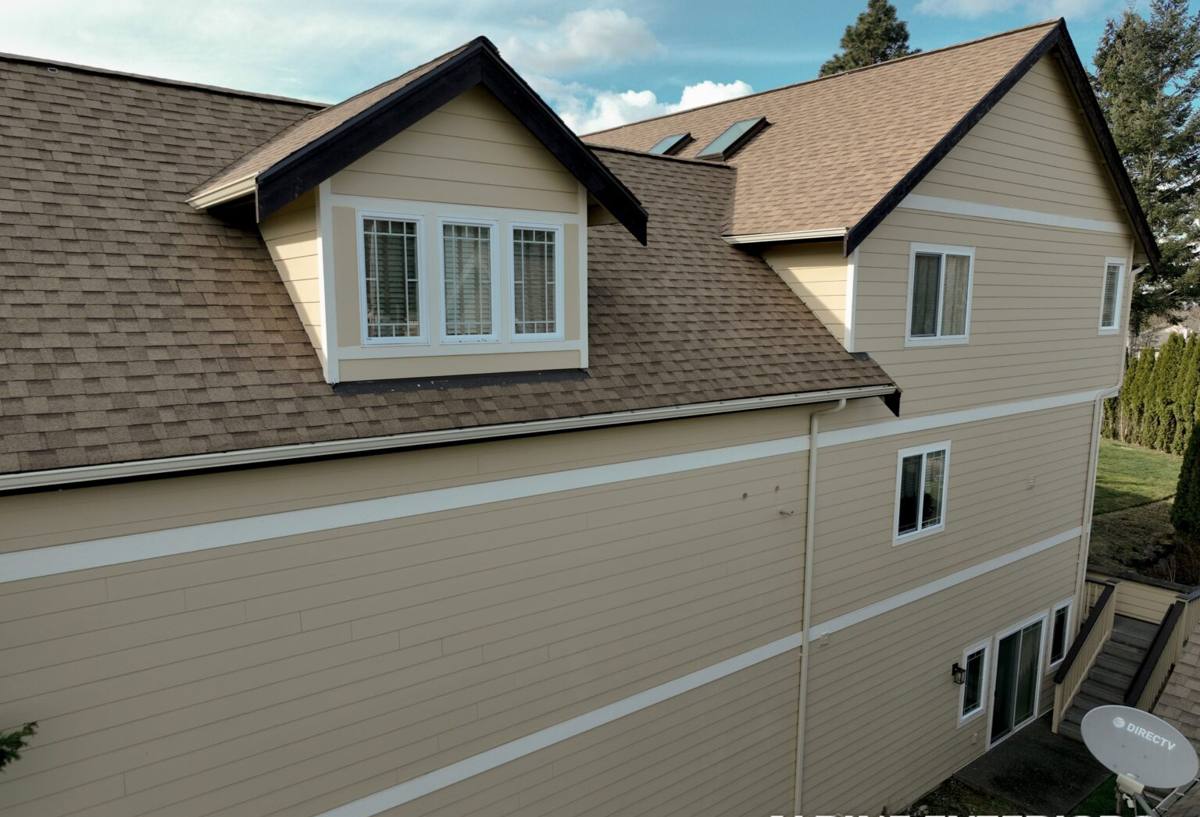
What Salt Air, Rain, and Moss Actually Do to Siding
Salt Air
Airborne salt is corrosive to metal fasteners and accelerates the breakdown of finishes that aren't built to handle it. Paint chalks and fades faster near open water. Caulk joints dry out and crack sooner. Over years, salt exposure is one of the quiet reasons a lot of siding in this part of the county looks tired well before it's actually old.
Driving Rain
Wind-driven rain doesn't just fall on a wall — it gets pushed sideways into laps, seams, and any gap in the housewrap or flashing. Siding that isn't installed with the right clearances and overlaps will let water track behind it, where it can sit against sheathing and framing for days without anyone noticing.
Moss and Algae
Shade, moisture, and mild temperatures are exactly what moss wants, and Conway has all three for a good chunk of the year. Moss holds water against a wall surface far longer than open air does, which is bad news for any siding material that isn't dimensionally stable or that absorbs moisture into its core.
Why Fiber Cement Is the Right Material for This Environment
Fiber cement is cement, sand, and cellulose fiber pressed and cured into a dense, stable board. It doesn't absorb water into a wood-fiber core, it doesn't rot, and it doesn't provide anything for insects to chew on. For a location like Conway, where the combination of salt air, rain, and moss works against almost every other siding material eventually, fiber cement removes several of the biggest failure points before installation even starts.
We install James Hardie fiber cement exclusively — not LP SmartSide, not vinyl, not Cemplank or Allura, not primed spruce or cedar. That's a deliberate standard, not a sourcing convenience. Hardie's ColorPlus factory finish is baked on and warranted against fading in a way field-applied paint isn't, and Hardie's HardieZone system means the boards specified for our climate are engineered for the moisture load a place like Conway actually sees. We'd rather install one product well and stand behind it than offer a menu of options with different maintenance realities and different failure modes.
What a Correct Fiber Cement Installation Involves
Fiber cement is forgiving compared to some materials, but it is not foolproof, and a lot of the siding problems we get called out to look at trace back to shortcuts taken during install rather than the material itself.
Clearance and Drainage
Every piece needs proper clearance from grade, roofing, decks, and walkways — Hardie's published minimums exist for a reason, and in a wet climate like ours they're not the place to cut a corner. A drainage plane behind the siding, not just housewrap taped tight to the sheathing, gives incidental moisture a way out instead of a place to collect.
Flashing at Every Penetration
Windows, doors, hose bibs, vents, light fixtures — anywhere something interrupts the siding is a place water can get behind it if the flashing isn't right. In a location that gets as much wind-driven rain as Conway does, flashing detail is often the difference between a wall that stays dry for decades and one that's rotting from the inside within a few years.
Fastening and Joints
Hardie boards need to be fastened per the manufacturer's schedule, with corrosion-resistant fasteners driven correctly — not overdriven, not underdriven. Butt joints get treated as seams that need attention, not just two boards pushed together. Sloppy joint work is one of the most common places we see moisture start working its way in on other contractors' installs.
Caulking and Sealing
The right sealant, applied at the right joints — and left out where Hardie's own details call for an open joint instead — keeps water managed without trapping it. Over-caulking is almost as much of a problem as under-caulking, because it can seal moisture in rather than letting it drain and dry.
Choosing the Right Hardie Product Line
Hardie makes several distinct product lines, and picking the right one is part of doing the job correctly, not just a style choice.
- HardiePlank lap siding — the most common choice, available in several textures and exposures, a solid fit for most homes in the Conway area.
- HardiePanel vertical siding — often used for accents, gables, or a board-and-batten look.
- HardieTrim — used around windows, corners, and fascia so the whole exterior is built from materials with matching moisture behavior, instead of pairing fiber cement field siding with wood trim that ages differently.
- ColorPlus finishes — factory-applied and baked on, which matters more here than in a drier climate, since field-applied paint is exactly what salt air and UV work hardest against.
Fiber Cement Compared to the Alternatives
Homeowners in Conway usually come to us already having looked at a few options. Here's how the honest trade-offs stack up in this specific climate.
| Material | Moisture / Salt Air Behavior | Maintenance | Typical Lifespan Locally |
|---|---|---|---|
| Vinyl | Doesn't rot, but can warp or crack in temperature swings; seams are a weak point in driving rain | Low, but limited repair options once damaged | Moderate |
| Cedar / primed wood | Attractive but absorbs moisture; needs a sound paint film to hold up against salt air and rain | High — repainting and caulk maintenance on a regular cycle | Shorter without diligent upkeep |
| LP SmartSide (engineered wood) | Treated to resist moisture, but a wood-based core is still sensitive to cut edges and sustained wetting | Moderate — edge sealing and caulk maintenance matter | Moderate |
| James Hardie fiber cement | Non-combustible, dimensionally stable, engineered moisture resistance for our HardieZone | Low — occasional wash, caulk checks at joints | Long, when installed to spec |
The line items that actually move the price on a fiber cement project are usually the same ones everywhere, but a few matter more in a place like Conway. Full tear-off versus siding over an existing layer, the amount of trim and corner detail on the home, how accessible the walls are for scaffolding or lifts, and whether sheathing repairs turn up once the old siding comes off all affect the final number more than the siding material itself does. We give a firm number after a walkthrough rather than guessing over the phone, because a home with hidden moisture damage behind old siding costs more to do right than one that doesn't — and in this climate, that's a real possibility worth checking for before work starts, not after.
Our Process for a Conway Fiber Cement Project
- Walkthrough and assessment — we look at the existing siding, sheathing condition where accessible, drainage around the foundation, and any trouble spots specific to the home's exposure to wind and rain.
- Product and color selection — matching the right Hardie line and ColorPlus color to the home and its exposure.
- Tear-off and inspection — removing old siding gives us a look at the sheathing and framing underneath, which is often where we find the moisture damage that prompted the call in the first place.
- Water management and flashing — housewrap, drainage plane, and flashing details get addressed before a single piece of siding goes up.
- Installation to manufacturer spec — correct clearances, fastening schedule, and joint treatment throughout.
- Final detail and cleanup — trim, caulking, and a walk-through so the homeowner knows what they've got and how little upkeep it actually needs.
Timing a Project Around Our Wet Season
Fiber cement installation depends on dry, stable conditions to cure caulk and adhere finish coats properly, and Conway's wet season runs long. A crew that doesn't plan around that will end up caulking joints that never fully set up right, or trapping moisture behind trim installed on a day it should have waited. Scheduling a project here means watching the weather window as closely as the calendar, and being honest with a homeowner about when work should pause rather than pushing through a soggy stretch just to stay on schedule.
Why a Crew That Already Works Conway Matters
A lot of siding advice is generic because a lot of siding companies work everywhere. We work Skagit County, and Conway's particular mix of tidal-flat salt air, exposure to weather coming off the water, and the shaded, damp lots that grow moss faster than most is something you learn by doing the work here repeatedly — not by reading a manufacturer's spec sheet once. That shows up in small decisions: which side of a house gets extra attention to flashing, where moss is going to be a persistent problem versus a minor one, how much clearance really makes sense given how this specific area drains.
It also means we're not guessing when something goes wrong years down the road. A crew that's local and still around stands behind its own work and can speak to Hardie's warranty terms with the manufacturer directly if something needs attention.
Keeping Fiber Cement Siding Healthy in Conway
Correctly installed Hardie siding needs very little from a homeowner, but a short seasonal check goes a long way in this climate:
- Rinse off moss and algae buildup on shaded or north-facing walls before it has a chance to hold moisture against the surface.
- Check caulk joints around windows, doors, and trim once a year for cracking or separation.
- Keep gutters clear so overflow isn't running down the wall face during heavy rain.
- Trim back vegetation that keeps a section of wall shaded and damp longer than the rest of the house.
- Look at grade and landscaping periodically to make sure soil or mulch hasn't built up against the bottom clearance of the siding.
If your Conway home's siding is showing moss, soft spots, or peeling paint, or you're planning ahead for a replacement, we'd be glad to take a look and give you a straightforward, no-pressure estimate — just fill out the form below.