 Mount Vernon
 Why Window Replacement in Burlington Is a Different Job Than Elsewhere
Burlington sits in the flat, wet middle of Skagit County, close enough to Padilla Bay and the Sound that salt-laden air is a regular visitor, and far enough into the valley that fog, low cloud, and standing moisture linger longer than they do on higher ground. Windows here don't fail because homeowners neglected them. They fail because the materials and installation methods used decades ago were never built for this specific combination of salt exposure, near-constant rain, and shaded, moss-friendly siding. A window replacement done for a dry-climate house doesn't hold up the same way here, and a contractor who mostly works inland or in drier counties can miss the details that matter in Burlington specifically.
This page is about one job: replacing windows on homes in and around Burlington, done in a way that accounts for what the local climate actually does to a window over ten, twenty, or thirty years.
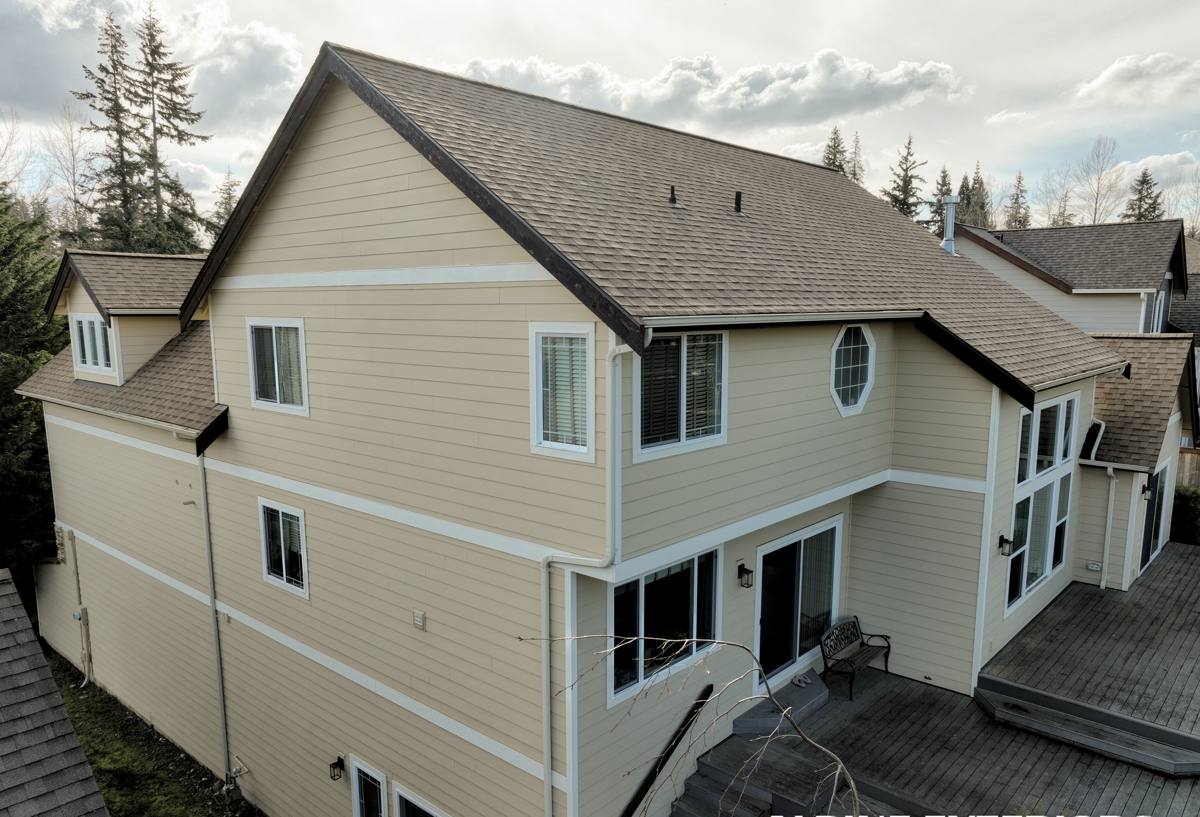
What the Local Climate Does to Aging Windows
Salt Air and Corrosion
Even a few miles inland, salt-carrying air settles on metal window hardware, aluminum frames, and fasteners. Over years it accelerates corrosion on hinges, balances, and cranks, and it pits unprotected aluminum trim. Windows with exposed metal components in poor-quality finishes tend to show this wear first, especially on the sides of a house that face open water or prevailing wind.
Driving Rain and Seal Failure
Skagit County doesn't just get a lot of rain, it gets wind-driven rain that hits windows at an angle instead of falling straight down. That kind of exposure finds any weakness in a seal, a sloppy caulk line, or a flashing detail that was never installed correctly in the first place. Once water gets behind a window, it doesn't just sit there. It works into the framing, the sill, and eventually the wall assembly.
Moss and Trapped Moisture
Long moss seasons aren't just a roof and siding problem. Moss and algae growth around window trim and sills holds moisture against wood and painted surfaces for months at a time, which is exactly the condition that causes rot, paint failure, and swelling in wood-frame windows. A window that would dry out in a week in a drier climate can stay damp here for most of the fall and winter.
Signs Your Windows Are Overdue for Replacement
Some of these show up gradually, and homeowners often adjust to them without realizing how much has changed. Worth checking for before deciding whether repair or replacement makes sense:
- Visible fogging or a haze between panes of double-glazed glass, which means the seal has failed and the insulating gas or dead-air gap is gone
- Windows that are difficult to open, close, or lock, especially after damp weather
- Soft, spongy, or discolored wood at the sill or frame corners
- Cold drafts near the window frame even when the sash is fully closed and locked
- Paint that bubbles, peels, or won't hold on the exterior trim
- Noticeable condensation on the inside of the glass during cool mornings
- A rise in heating costs that isn't explained by anything else in the house
- Visible gaps between the window frame and the siding or trim around it
What a Correct Window Replacement Actually Involves
Removal and Inspection
The old window comes out carefully so we can see what's actually going on underneath, not just what the window itself looks like. This is often where hidden rot, old flashing mistakes, or moisture damage from years of small leaks gets found. In a climate like this one, skipping this step is how new windows end up sitting on top of problems that were never actually fixed.
Flashing and Weatherproofing
This is the step that matters most for long-term performance and the one that's easiest to rush. Proper flashing directs any water that gets past the exterior cladding back out, rather than letting it pool at the sill or migrate into the wall. Given how much wind-driven rain this area sees, flashing details that would be a minor issue in a drier climate become the difference between a window that lasts decades and one that causes hidden damage in five years.
Setting and Sealing the New Window
The window has to be set plumb, level, and square, shimmed correctly so it isn't stressed, and sealed with materials suited to sustained moisture exposure, not just a quick bead of caulk. Insulation around the frame needs to fill the gap without over-packing it, which can bow the frame and cause operational issues later.
Full-Frame Replacement vs. Insert Replacement
One of the first decisions on any project is whether to replace just the window unit within the existing frame (an insert or "pocket" replacement) or remove the old frame entirely and install new (full-frame). Both are legitimate approaches, and the right one depends on the condition of what's already there.
| Factor | Insert (Pocket) Replacement | Full-Frame Replacement |
|---|---|---|
| Best used when | Existing frame is sound, square, and dry | Frame shows rot, water damage, or is out of square |
| Labor and cost | Generally faster and less expensive | More labor-intensive, higher cost |
| Access to hidden damage | Limited — existing frame stays covered | Full access to sill, framing, and flashing |
| Glass area | Slightly reduced due to new frame nesting inside old one | Can typically match or maximize original opening size |
| Long-term risk in this climate | Fine if the existing frame is genuinely sound | Lower risk when moisture damage is a real concern |
In Burlington specifically, we lean toward recommending a full-frame approach more often than we might in a drier area, simply because hidden moisture damage behind old frames is common enough that it's worth checking rather than assuming. We'll tell you honestly which one your house needs after we've actually looked, not before.
Choosing Frame and Glass for This Climate
Frame material matters less than installation quality, but it's not irrelevant. Vinyl and fiberglass frames handle sustained moisture and salt air with minimal maintenance, which is a real advantage here compared to painted wood, which needs regular upkeep to keep water out of the joints and finish. We're upfront that this is a maintenance and moisture-management tradeoff, not a claim that any one material is inherently better in every situation — some homeowners have good reasons to want wood, and if that's the case we'll talk through what upkeep that choice requires in this climate.
On the glass side, dual-pane units with a low-E coating and an argon or krypton gas fill are the practical standard for this area. Low-E coatings reduce heat loss without darkening the glass noticeably, and the added gas fill improves insulating performance, which matters both for comfort and for keeping condensation off the interior glass during cold, damp mornings.
| Cost Factor | Why It Moves the Price |
|---|---|
| Full-frame vs. insert | Full-frame requires more labor and often exterior trim/siding repair |
| Frame material | Vinyl and fiberglass vary by manufacturer and reinforcement level |
| Glass package | Impact-resistant, sound-dampening, or higher-performance low-E glass adds cost |
| Number and size of windows | Larger openings and specialty shapes take more time and material |
| Hidden repairs | Rot or damage found during removal adds labor once uncovered |
Our Process, Start to Finish
- Free on-site estimate where we look at every window being discussed, not just measure and quote from a checklist
- Written scope covering full-frame or insert approach, frame material, glass package, and a realistic timeline
- Careful removal with an inspection of the sill and framing before anything new goes in
- Proper flashing and weatherproofing sequenced to shed water outward, not trap it
- New window set, shimmed, insulated, and sealed to spec
- Interior and exterior trim finished to match the house
- Final walkthrough where we show you the operation of every window before we consider the job done
Why Hire a Crew That Already Works Burlington
A lot of window problems in this area trace back to installation decisions that made sense somewhere drier but don't hold up under Skagit County conditions — thin sealant beads, skipped flashing steps, or frame choices that need more upkeep than the homeowner realized they were signing up for. A crew that regularly works in Burlington and the surrounding Mount Vernon area has already seen how these houses age, what the coastal-influenced weather does to different materials over time, and which shortcuts cause problems five or ten years down the road instead of on move-out day. That's not a marketing point, it's a practical one: fewer surprises, and a job that's built for the weather it will actually face.
If you're weighing whether it's time to replace your windows, or you just want a straight answer about what's actually going on with them, we're happy to come take a look. The estimate is free, there's no pressure, and you'll get a clear explanation of what we see and what your realistic options are — use the form below to get started.