 Mount Vernon
 Window Installation Built for Burlington's Climate
Burlington sits low in the Skagit River valley, close enough to Padilla Bay and the Salish Sea that salt-laden air is a regular visitor, and far enough into the marine climate zone that driving rain and long stretches of overcast, damp weather are just part of the year. Add in the moss season that runs from fall through spring across most of Skagit County, and you've got a set of conditions that are hard on window openings specifically — not just on siding and roofs. Frames, sills, and the seals around them take on moisture pressure from multiple directions: wind-driven rain hitting the glass and trim, condensation forming on the inside during cold snaps, and slow saturation of wood trim that never gets a long dry stretch to fully recover.
A window that's installed correctly for this climate looks basically the same as one installed anywhere else. The difference is underneath — in the flashing, the sealant choices, and the way the installer ties the new window into the existing wall assembly. Get that wrong and you won't see a problem on day one. You'll see it eighteen months later as a soft spot in the sill, a musty smell in the wall cavity, or black mold spots creeping across an interior frame.
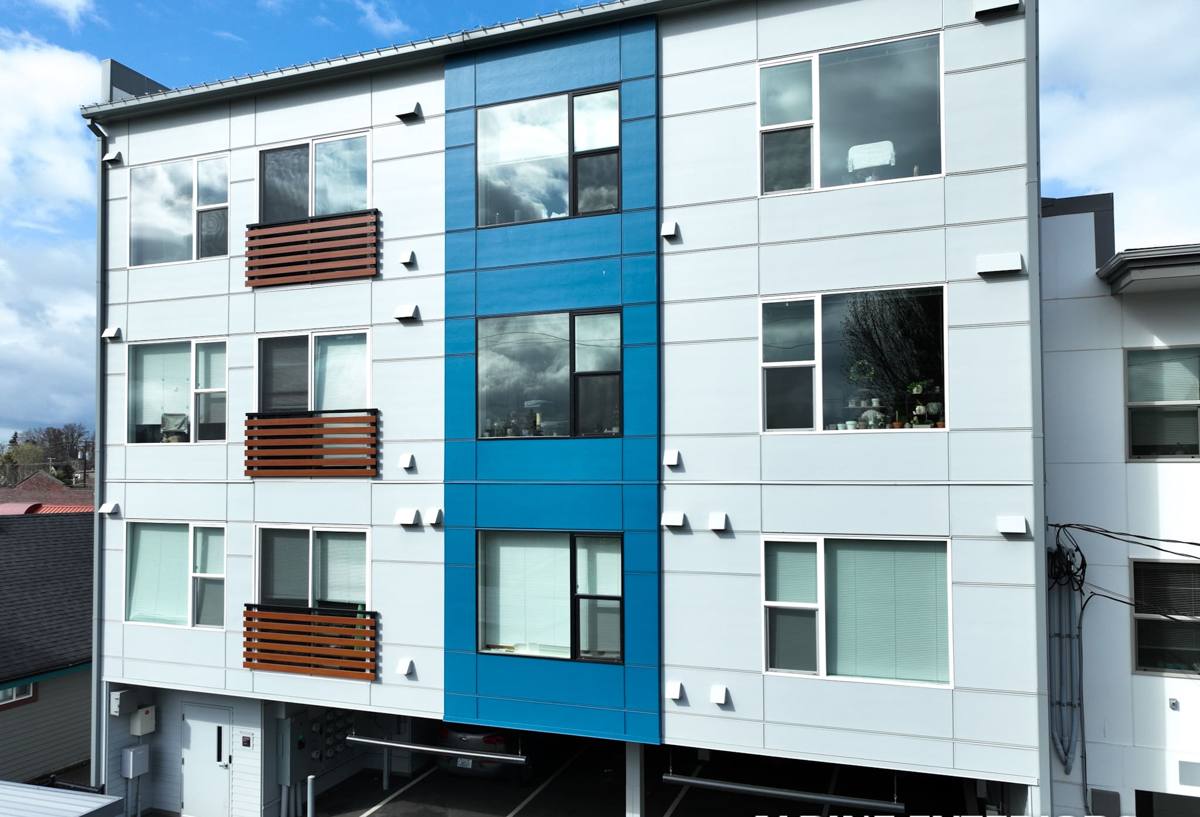
Signs a Burlington Home's Windows Need Attention
Most homeowners don't call about windows until something is obviously wrong, but a lot of the warning signs show up well before that. Here's what we tell people in this area to watch for:
- Fogging or a hazy film between the panes of a double-pane window (the seal has failed and the gas fill is gone)
- Windows that are noticeably harder to open, close, or lock than they used to be
- Visible soft or discolored wood at the sill or lower corners of the frame
- Drafts you can feel with a hand near the frame on a windy day
- Condensation forming on the inside of the glass regularly, especially in bathrooms and kitchens
- Peeling or bubbling paint on the interior or exterior trim around the window
- A heating bill that's crept up without an obvious explanation
Any one of these on its own might just mean a caulking touch-up. Several of them together, especially on the sides of the house that take the brunt of the weather, usually mean the window itself or the flashing behind it has reached the end of its useful life.
What a Correct Window Installation Actually Involves
Removal and Inspection
Pulling the old window is also the best chance to find out what's really going on in the wall. We check the framing, sill plate, and sheathing around the opening for rot or water staining before anything new goes in. In this climate, it's common to find some degree of moisture damage even on windows that looked fine from the outside — catching it here is far cheaper than dealing with it later.
Flashing and Weatherproofing
This is the part that actually determines whether the window will hold up. The flashing has to be layered correctly — sill pan first, then side flashing, then the head flashing lapped over the top — so that any water that gets past the exterior finish drains back out instead of pooling at the sill or working its way into the wall. We integrate the new flashing with the existing weather-resistive barrier rather than just caulking around the outside, since caulk alone is a maintenance item, not a permanent seal.
Insulation and Air Sealing
The gap between the window frame and the rough opening needs to be filled with a material that stays flexible and doesn't compress or trap water — not stuffed with fiberglass batting, which holds moisture against the frame. Done right, this step also cuts down on drafts and the cold, clammy feel some older windows give a room in the winter.
Trim and Finish
Interior and exterior trim gets reset or replaced, and every exterior joint gets sealed with a sealant rated for the movement and moisture exposure it'll see. This is also where small details matter — back-caulking trim boards before installing them, for example, so water can't wick in behind the wood.
Choosing a Window Frame for a Wet, Salt-Air Climate
There's no single "best" window material for every home — it depends on budget, the look you want, and how much upkeep you're willing to do. Here's how the common options actually perform in Skagit County conditions:
| Frame Material | Moisture & Salt Air Resistance | Maintenance | Typical Lifespan |
|---|---|---|---|
| Vinyl | Very good — won't rot or corrode | Low; occasional cleaning | 20–30 years |
| Fiberglass | Excellent; stable in temperature swings and damp conditions | Low | 30+ years |
| Aluminum | Prone to condensation and corrosion near salt air unless thermally broken | Moderate | 20–25 years |
| Wood / wood-clad | Good if maintained; vulnerable if paint or cladding fails | High; needs regular paint/sealant upkeep | Varies widely with maintenance |
We don't push one brand or material on every job. Wood-clad windows can look great on an older or historic-style home, but we're upfront that they need more attention out here than vinyl or fiberglass — a failed paint seam on a wood sill in a house that gets driving rain off the valley will find trouble faster than the same window would in a drier climate. That's not a knock on wood windows; it's just an honest maintenance conversation we'd rather have before installation than after.
Our Window Installation Process in Burlington
- Free on-site assessment — we look at the existing windows, the wall condition, and talk through what you actually need (energy performance, noise reduction, easier operation, appearance)
- Accurate measurement and product selection, including frame material, glass package, and grille style if wanted
- A written scope and cost estimate before any work is scheduled
- Careful removal of the old window with an inspection of the framing underneath
- Installation with proper sill pan flashing, side and head flashing, and integration into the existing weather barrier
- Insulation and air sealing around the frame
- Interior and exterior trim finish work
- Final walkthrough, operation check on every window, and cleanup of the work area
We schedule around Skagit County's weather rather than fighting it — exterior work pauses during heavy rain events, which are common enough here that it's just part of realistic planning, not an excuse.
What Affects the Cost of Window Installation
We won't quote a number without seeing the job, but these are the factors that actually move the price up or down:
| Factor | Why It Matters |
|---|---|
| Number of windows | Per-window cost usually drops on larger jobs |
| Frame material and glass package | Vinyl, fiberglass, and wood-clad windows sit at different price points; upgraded glass (extra panes, low-E coatings) adds cost but also performance |
| Window size and type | A large picture window or an awkward shape costs more than a standard double-hung |
| Condition behind the old window | Rotted framing or sheathing found during removal adds repair time before the new window can go in |
| Accessibility | Second-story or hard-to-reach windows take longer and may need extra equipment |
| Trim and finish work | Matching existing trim profiles or upgrading trim adds labor and material |
The one line item we'd flag for older Burlington and Mount Vernon homes specifically is that last one about hidden condition — after years of driving rain and moss holding moisture against exterior surfaces, it's common enough to find some framing repair needed that we build the possibility into every estimate conversation up front rather than surprising you with a change order.
Why It Matters to Hire a Crew That Already Works in This Area
Window installation isn't exotic work, but the details that make it hold up long-term are regional. A crew that mostly installs in a dry inland climate isn't necessarily thinking about sill pan drainage the same way a crew that works Skagit County day in and day out does, because they haven't had to watch what happens to a poorly flashed window after a few winters of Puget Sound weather. We've seen how moss buildup on siding and trim holds moisture against a wall longer than most homeowners realize, and we flash and seal accordingly rather than by a generic checklist.
There's also a practical side: local crews know which building departments in Skagit County require permits for window replacement and which don't, what inspection steps are typical, and how to schedule outdoor work around the wetter months instead of losing days to weather delays that a traveling crew might not plan for.
Caring for New Windows After Installation
A correctly installed window still benefits from basic upkeep, especially in this climate:
- Rinse salt residue and grime off exterior glass and frames a couple times a year, more often if the house faces open water or prevailing wind
- Check exterior caulking annually for cracking or separation, particularly after the first year as new materials settle
- Keep gutters and downspouts clear so roof runoff isn't sheeting down across window heads
- Clear moss or debris that accumulates on sills, tracks, or nearby trim rather than letting it hold moisture in place
- Operate locks and hardware periodically even on windows you don't open often, so mechanisms don't seize up
None of this is complicated, but skipping it is how a well-installed window ends up with an avoidable problem a few years down the road.
Get a Straight Answer on Your Windows
If you're dealing with drafty, foggy, or hard-to-operate windows in Burlington, or you're just planning ahead before the wetter months set in, we're happy to take a look and give you an honest read on what's actually needed — no pressure, no inflated scope. Fill out the form below for a free estimate.