 Mount Vernon
 Siding Installation in Burlington, Washington
Burlington sits in the flat, damp heart of Skagit County, close enough to the Sound and the delta farmland to get the worst of both worlds when it comes to siding: salt-laden air rolling in off the water, driving rain that comes in sideways during winter storms, and a moss season that can stretch from October clear through April. Siding here doesn't fail because homeowners neglect it. It fails because it was never built or installed for this specific combination of moisture, wind, and organic growth in the first place.
We install James Hardie fiber cement siding exclusively, and we've worked enough homes in and around Burlington to know what actually holds up here versus what looks fine in a showroom and struggles within a decade. This page covers what a correct siding installation looks like for a Burlington home, why the climate matters more than most homeowners realize, and how our process is built around getting it right the first time.
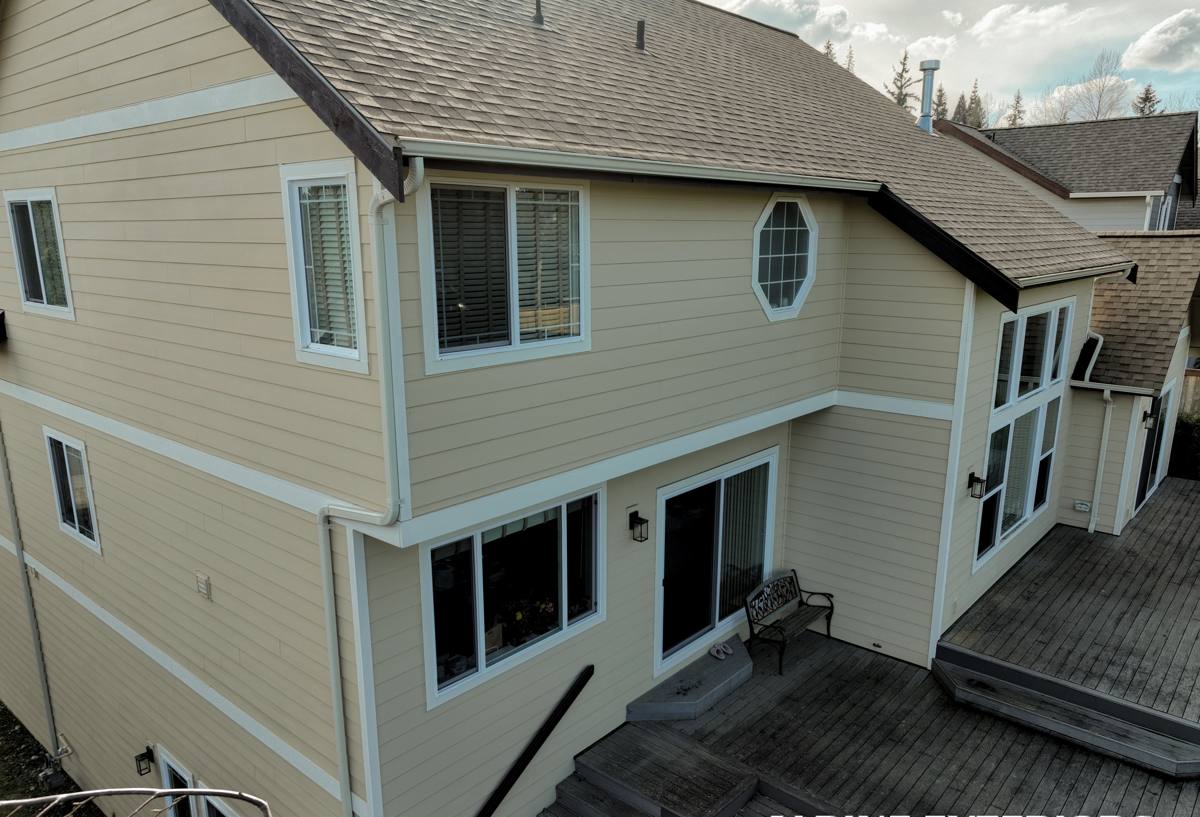
Why Burlington's Climate Is Hard on Siding
A few things make this stretch of Skagit County tougher on exterior materials than people expect:
Salt air and moisture load
Proximity to Puget Sound means a steady low-grade exposure to salt-carrying air, which accelerates corrosion on fasteners, trim, and any metal flashing that isn't properly rated or protected. It also keeps ambient humidity higher than in drier parts of the state, which matters for how fast siding materials dry out between rain events.
Driving rain and wind-driven water
Storms coming off the water don't just fall straight down — they get pushed sideways into wall assemblies, which puts real pressure on seams, laps, and butt joints. A siding system that's only rated for vertical rain exposure gets tested hard in a Burlington winter.
Moss and organic growth
Shaded north walls, tree cover, and long stretches of damp weather add up to a genuine moss season. Moss and algae hold moisture against the siding surface far longer than open air would, which is exactly the condition that rots wood-based products and stains porous ones.
None of this is unique to Burlington specifically — it's the Skagit County norm — but Burlington's mix of open farmland wind exposure and closer-to-water humidity makes it a fair test case for whether a siding installation is actually built for the region or just installed to code minimums.
What a Correct Installation Involves
Good siding starts before the first plank goes up. The sequence matters as much as the material.
Tear-off and substrate inspection
We remove the old siding and inspect the sheathing underneath for rot, soft spots, or prior water damage — common on older Burlington homes where a failed siding system has been quietly letting moisture in behind it for years. Any damaged sheathing gets replaced before anything else happens.
Weather-resistive barrier and flashing
A correctly lapped weather-resistive barrier (WRB) goes over the sheathing, with flashing detailed at every window, door, and penetration so water is directed out and down, never trapped behind the cladding. This is the step that determines whether wind-driven rain becomes a cosmetic non-issue or a slow leak behind the wall.
Rain screen or direct-applied, chosen deliberately
Depending on wall orientation, existing assembly, and exposure, we'll either install a rain screen gap to let the wall breathe and drain, or apply Hardie panels directly per manufacturer spec. This isn't a one-size-fits-all call — it's based on how exposed the specific wall is to wind-driven rain and shade-driven moss growth.
Fastening and joint treatment
Corrosion-resistant fasteners, correct nailing patterns, and properly sealed or flashed butt joints are non-negotiable in a salt-air environment. Sloppy joint work is the single most common reason siding that "should" last decades starts failing at year eight or nine.
Trim, caulking, and finish details
Trim boards, corners, and caulked transitions get finished to shed water outward, not wick it in. ColorPlus factory-finished panels reduce the amount of field caulking and painting needed compared to site-finished materials, which matters in a climate where paint has a hard time curing between rain events.
Why We Only Install James Hardie
We don't install vinyl, LP SmartSide, Cemplank, Allura, primed spruce, or cedar. That's a deliberate standard, not a lack of options, and it comes down to how each of those products actually performs against Skagit County weather over the long run.
| Material | Where It Falls Short Locally |
|---|---|
| Vinyl | Can warp or crack under wind load and temperature swings; seams give wind-driven rain a path in; not fire-rated |
| LP SmartSide (engineered wood) | Wood-based core is vulnerable to moisture intrusion if any seam, cut edge, or fastener point isn't perfectly sealed and maintained |
| Cemplank / Allura (other fiber cements) | Fiber cement category is sound, but these lines lack Hardie's specific HZ climate engineering and factory finish warranty structure |
| Primed spruce / cedar | Natural wood siding demands ongoing repainting and sealing to survive salt air and moss exposure — a maintenance burden most owners underestimate |
James Hardie's HZ10 product line is engineered specifically for climates like ours — freeze-thaw cycling, sustained moisture, and coastal-adjacent humidity. It's non-combustible fiber cement, which also matters given Washington's growing wildfire risk in dry summer months. The ColorPlus factory finish is baked on under controlled conditions, so it resists fading and holds up to moss and mildew far better than field-applied paint. And the warranty is transferable, which protects resale value if a Burlington home changes hands down the road.
We're not saying every other product is worthless everywhere — some are reasonable choices in drier, milder climates. We're saying that for this specific location, with this specific rain, salt, and moss exposure, Hardie is the product we're willing to put our name behind.
Signs a Burlington Home Needs New Siding
- Visible moss or algae staining that keeps coming back after cleaning
- Soft spots, bubbling, or delamination, especially on north-facing or shaded walls
- Paint that won't hold — peeling or bubbling within a couple years of a repaint
- Gaps at seams, corners, or trim where daylight or drafts are noticeable
- Rusted or failing fasteners visible on older siding
- Rising energy bills that suggest the wall assembly is no longer sealing properly
- Warping, cracking, or cupping boards, particularly on the wind-exposed side of the house
Our Process for Burlington Homeowners
- Free on-site estimate — we walk the exterior, check the current siding and substrate, and talk through what your home's exposure actually calls for.
- Written scope and product selection — a clear plan covering Hardie product line, color, trim details, and any substrate repair needed, with no vague allowances.
- Tear-off and prep — old siding removed, sheathing inspected and repaired as needed, before any new material goes up.
- Weather barrier and flashing installation — the unglamorous step that determines long-term performance more than the siding itself does.
- Hardie installation to manufacturer spec — correct fastening, joint treatment, and clearances, inspected as the work progresses, not just at the end.
- Final walkthrough — we go over the finished work with you before calling the job done.
Why a Crew That Already Works Burlington Matters
Siding installation isn't just a manufacturer spec sheet — it's judgment calls about how a specific wall, on a specific lot, in a specific microclimate, needs to be detailed. A crew that already works Skagit County knows which walls in this area tend to hold moss, how far wind-driven rain typically pushes water up a wall face, and where older Burlington construction is prone to hidden moisture damage behind the existing siding. That local pattern recognition shows up in fewer callbacks and a job that's actually built for the weather it has to survive, not just the weather on the label.
It also means straightforward logistics — material staging, permitting familiarity, and scheduling around the wetter months — without the guesswork of a crew learning the area on your dime.
What to Expect Cost-Wise
Siding installation cost depends on home size, existing substrate condition, how much repair the sheathing needs, trim complexity, and Hardie product line selected. Homes with hidden moisture damage from a failed prior siding system will cost more because of the repair work uncovered during tear-off, not because of the new siding itself. We don't quote ballpark numbers over the phone — every estimate is based on an actual look at your home, because guessing costs homeowners money one way or the other.
Get an Estimate
If your Burlington home's siding is showing moss staining, soft spots, failing paint, or you're just planning ahead for a replacement, we're happy to take a look and give you a straight answer about what it needs. The estimate is free, there's no pressure, and you'll get a clear picture of your options before you decide anything.