 Mount Vernon
 Roof Repair in Burlington: Built for What Skagit County Weather Actually Does
Burlington sits in a stretch of Skagit County where the weather doesn't do a roof any favors. You're close enough to Puget Sound and Padilla Bay to get salt-laden air working on metal fasteners and flashing year-round, far enough inland to still catch the driving, wind-pushed rain that comes off the water, and shaded enough by mature trees and river-valley moisture that moss has a long, comfortable growing season on north-facing slopes. None of that is dramatic on its own. It's the slow, cumulative wear — a little corrosion here, a little lifted shingle edge there, a little moss holding water against the roof deck longer than it should — that eventually shows up as a leak, a stain on a ceiling, or a soft spot underfoot in the attic.
A roof repair done right in Burlington isn't the same job as a roof repair in a dry inland climate. It has to account for near-constant moisture exposure, a real moss and algae cycle, and materials that have to hold up to salt air without becoming a maintenance headache. This page covers what that actually looks like — what local roofs need, what a correct repair involves, how our process works, and why it matters to hire a crew that already knows this specific stretch of Skagit County.
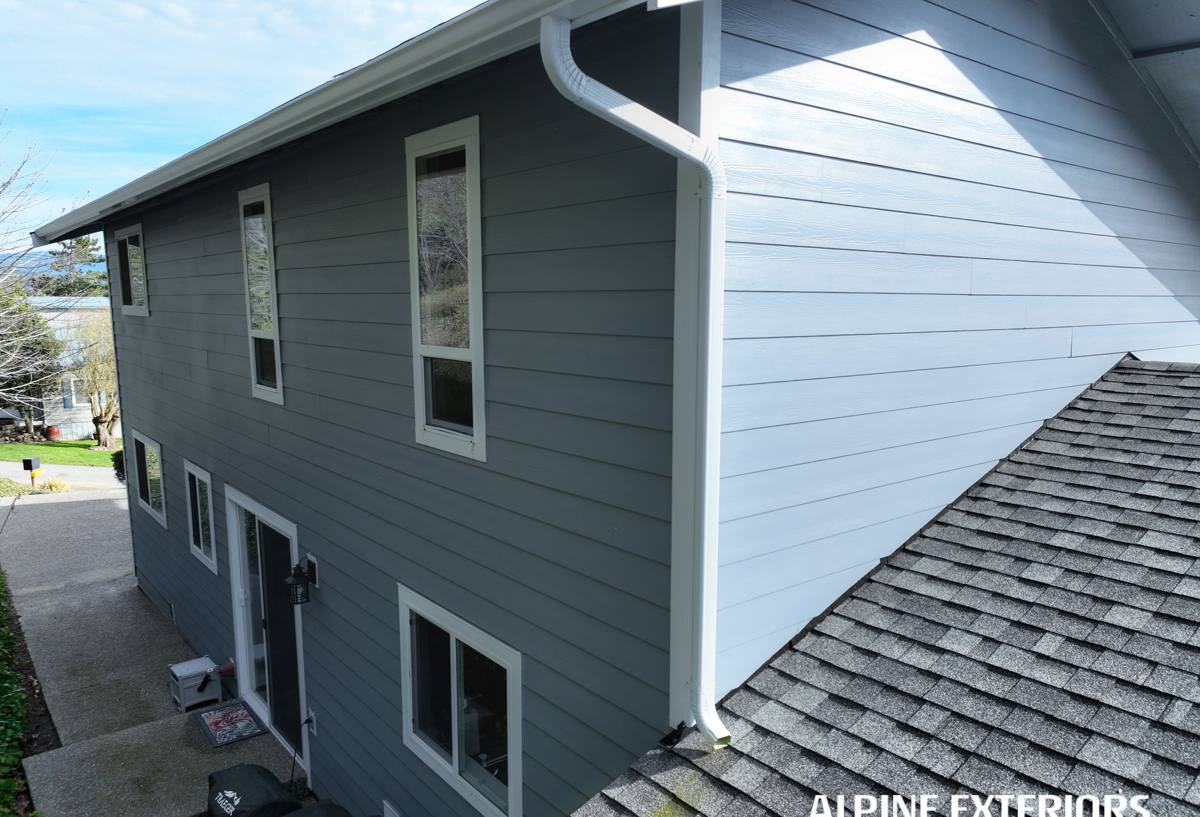
Why Roofs Age Differently in This Part of Skagit County
Three regional factors do most of the damage over time:
Salt Air and Metal Fatigue
Homes closer to the water pick up airborne salt that accelerates corrosion on exposed metal — flashing, nail heads, gutter hardware, and vent caps. Corroded flashing is one of the most common hidden causes of a "mystery leak," because the metal can look fine from the ground while it's already failing at the seams.
Driving, Wind-Pushed Rain
Skagit County doesn't just get rain — it gets rain pushed sideways by wind coming off the Sound. That kind of rain finds every weak point: lifted shingle tabs, under-lapped flashing, gaps around pipe boots and chimneys. A roof that would be fine in a calm, straight-down rain can leak in Burlington because wind drives water uphill and sideways under materials that aren't properly sealed or lapped.
A Long Moss Season
Shade, humidity, and mild temperatures mean moss and algae can grow here for most of the year, not just a few winter months. Moss on a roof isn't just cosmetic — it holds moisture against shingles and roof decking, works its way under tabs and shakes as it grows, and can lift material enough to let water underneath. Left unaddressed, a moss problem turns a simple maintenance issue into a repair, and a repair into premature replacement.
Signs a Burlington Roof Needs Repair
Most roof repairs get called in after a leak shows up inside the house, but the roof usually gives warning signs first. Worth checking for, or asking about at your next inspection:
- Granules collecting in gutters or at downspout outlets (a sign of shingle wear)
- Dark streaking or thick moss growth, especially on north-facing or shaded slopes
- Curling, cracking, or lifted shingle edges, particularly on slopes that catch prevailing wind
- Rust staining or visible corrosion around flashing, vent pipes, or chimney metal
- Sagging or soft-feeling sections when walked (a sign moisture has reached the decking)
- Water stains on interior ceilings or in the attic, even faint ones that come and go with weather
- Daylight visible through the roof deck from inside the attic
Any one of these on its own might be minor. Several together, or anything involving the decking or attic, usually means it's time for a proper inspection rather than a wait-and-see approach.
What a Correct Roof Repair Actually Involves
A lot of "repairs" in wet climates fail again within a season or two because they treat the symptom, not the cause. A tarp over a leak, or a bead of roofing cement on a crack, might stop water for a while, but it doesn't address why the roof failed there in the first place. A repair worth paying for should include:
Finding the Real Source
Water rarely leaks in a straight line — it can travel along rafters or decking and show up on a ceiling several feet from where it actually entered the roof. A correct repair starts by tracing the water back to its actual entry point, not just patching where the stain appeared.
Addressing Flashing, Not Just Shingles
Flashing around chimneys, skylights, vents, and roof-to-wall transitions is where most leaks in this climate actually originate, especially once salt air has started corroding it. A repair that replaces shingles but leaves failing flashing in place is a repair that will need to be done again.
Matching Underlayment and Ventilation to the Climate
In a region with this much moisture, underlayment quality and attic ventilation matter as much as the visible roofing material. Poor ventilation traps humid air against the underside of the deck, which encourages rot and shortens the life of a repair no matter how well the top layer was installed.
Clearing and Treating Moss Before Closing the Job
If moss contributed to the failure, removing the visible growth isn't enough on its own — the repair should also address drainage and shading conditions where practical, and the roof should be left clean so new growth doesn't immediately undo the work.
How Our Repair Process Works
We keep the process straightforward because homeowners dealing with a leak don't need extra complexity on top of it:
- Inspection and diagnosis. We look at the roof itself, the attic side if accessible, and the pattern of any interior staining to identify the actual source, not just the visible symptom.
- Honest scope and estimate. We tell you plainly whether this is a targeted repair, a larger repair, or a case where repair no longer makes sense compared to replacement — and why.
- Material selection. We use flashing, fasteners, and sealants suited to a coastal-influenced, high-moisture climate rather than whatever is cheapest, because the wrong materials here fail faster.
- The repair itself. This includes removing and replacing damaged material, correcting flashing and lapping so water sheds properly under wind-driven rain, and checking surrounding areas that are showing early wear.
- Cleanup and moss treatment. Debris and moss are cleared from the work area and, where it applies, the surrounding roof, so the repair isn't immediately undermined by the same conditions that caused it.
- Walkthrough. We explain what we found, what we did, and what to watch for going forward — including anything on the rest of the roof worth keeping an eye on.
Common Burlington Roof Repairs and What Drives Cost
Repair pricing depends on the scope of damage, roof access, and the material involved. This is a general guide to the factors, not a quote — every roof is different.
| Repair Type | Typical Cause in This Area | Key Cost Factors |
|---|---|---|
| Flashing repair/replacement | Salt-air corrosion, poor original installation | Location (chimney vs. valley vs. wall), metal type, accessibility |
| Shingle or shake replacement (localized) | Wind-driven rain, age, moss undermining | Number of courses affected, matching existing material, roof pitch |
| Moss removal and treatment | Long shaded moss season | Extent of growth, roof size, whether decking is also affected |
| Leak tracing and decking repair | Prolonged undetected moisture intrusion | How far water has traveled, extent of rotted decking, attic access |
| Ventilation correction | Trapped humidity accelerating decay | Existing vent type and count, attic layout |
As a rough rule: a small, isolated flashing or shingle repair is usually the least expensive fix, while anything involving rotted decking or a leak that's been running unnoticed for a while costs more because it involves rebuilding, not just resealing.
Repair or Replace? An Honest Comparison
Not every roof problem in Burlington needs a full replacement, and not every leak is worth chasing with repeated repairs. Here's how we think about the decision:
| Factor | Repair Usually Makes Sense | Replacement Usually Makes Sense |
|---|---|---|
| Age of roof | Well within expected lifespan for the material | At or beyond expected lifespan, or already had prior repairs |
| Extent of damage | Localized — one area, one cause | Widespread — multiple slopes, several failure points |
| Decking condition | Solid, no rot found | Soft, rotted, or repeatedly wet decking |
| Moss/algae history | First occurrence or manageable growth | Heavy, recurring growth despite past treatment |
| Repair history | Little to no prior repair on this roof | Multiple past repairs in the same area |
We'll always tell you honestly which side of that table your roof falls on. Recommending a repair when a roof needs replacement just delays an inevitable, larger cost — and recommending replacement when a repair would genuinely hold isn't fair to the homeowner either.
Ongoing Care That Protects a Repair
A repair is only as good as the maintenance around it. In a climate like this one, a few habits go a long way toward making sure a repair lasts as long as it should:
- Keep gutters and downspouts clear so water isn't backing up under roof edges
- Have moss growth checked and addressed at least once a year, especially on shaded slopes
- Trim back overhanging branches that keep sections of the roof damp and shaded
- Check attic ventilation isn't blocked by insulation or debris
- After major windstorms, do a visual check for lifted shingles or displaced flashing
- Address small leaks immediately rather than waiting for warmer, drier weather
Why It Matters to Hire a Crew That Already Works in Burlington
Roofing crews who work across very different climates sometimes default to generic materials and methods that work fine somewhere drier but underperform here. A crew that regularly works Burlington and the surrounding Mount Vernon and Skagit County area already knows which flashing details hold up against salt air, how aggressively moss needs to be managed on shaded slopes, and how wind-driven rain actually behaves on local roof pitches and orientations. That local pattern recognition is part of what keeps a repair from becoming a repeat call a year later.
Local presence also means a faster, more accountable response — someone who can get out to look at an active leak without a long drive, and who has a reputation in the community worth standing behind. We're not guessing at what Skagit County weather does to a roof; we see the same conditions on homes throughout this area.
What to Expect From an Estimate
When we come out to look at a roof repair, we're checking the specific damaged area, the surrounding roof for related early wear, flashing condition, and — where accessible — the attic side for signs of moisture. You'll get a plain explanation of what's actually wrong, what it will take to fix it correctly, and a written estimate before any work starts. There's no pressure to upgrade to a bigger job than the roof actually needs.
If you're dealing with a leak, visible moss buildup, or just want a roof that's been through a wet Skagit County winter checked over before the next one, we're glad to take a look. Reach out for a free, no-pressure estimate using the form below.