 Mount Vernon
 Why Decks in Bow Wear Out Faster Than the Rest of the House
Bow sits close enough to Samish Bay and the open water of Skagit County that salt-laden air is a daily fact of life, not an occasional weather event. That air finds every exposed fastener, every joint, and every scratch in a deck's finish, and it works on them year-round. Add the region's long stretch of driving rain each fall and winter, plus a moss and algae season that can run from October well into April on shaded or north-facing decks, and you have a structure that's under more sustained stress than most homeowners realize until something gives.
A deck built or repaired without that reality in mind will show problems years before it should. We've built our repair process around what actually happens to wood, fasteners, and composite materials in this specific stretch of the Skagit Valley, not a generic checklist.
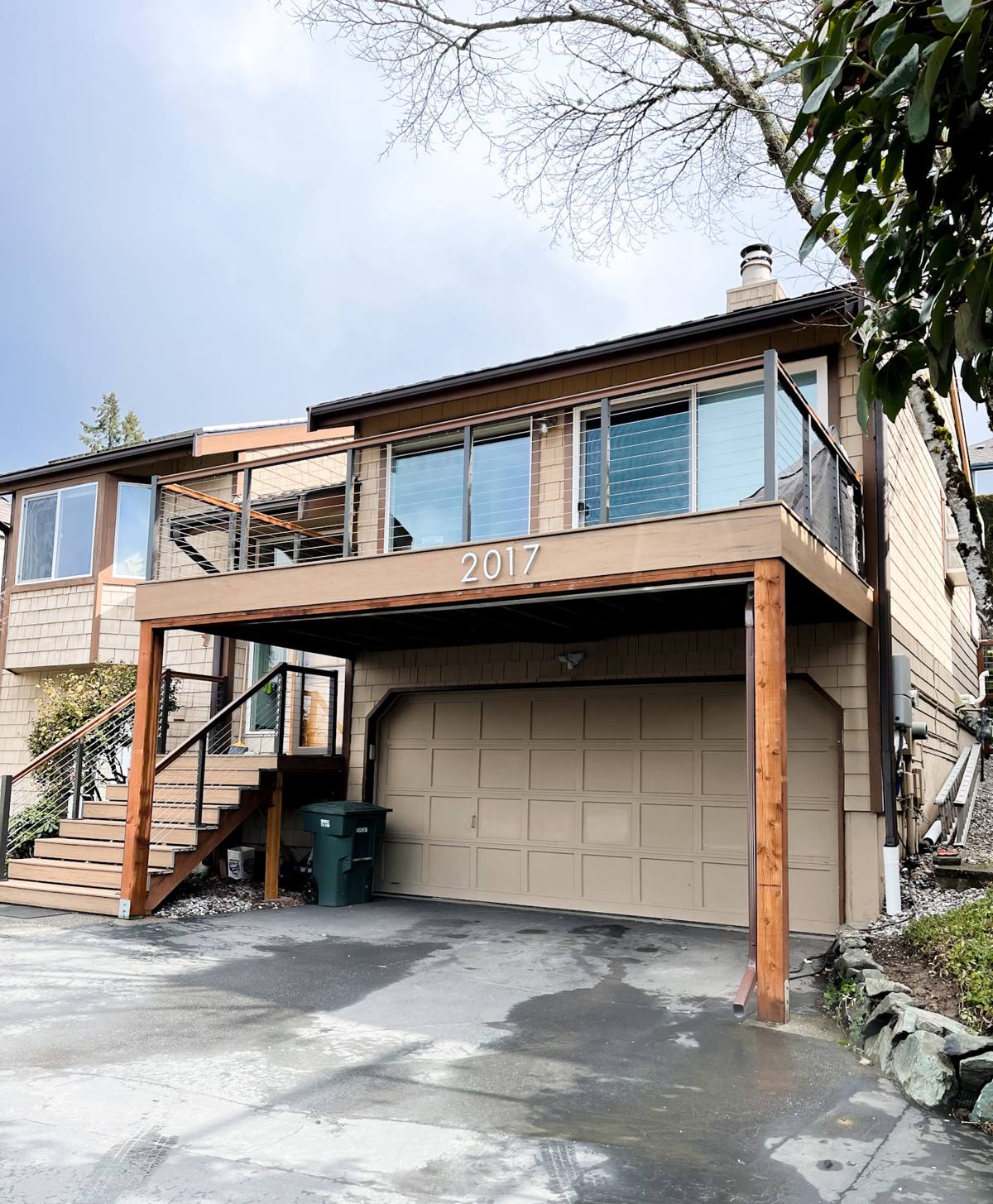
What Actually Fails on a Bow Deck
The Ledger Connection
Where a deck attaches to the house is almost always the first place we check, and it's the spot most homeowners never look at because it's hidden behind decking boards and rim joist trim. Flashing that was skipped, undersized, or installed before current code caught up lets rainwater track behind the ledger board and into the house framing. In a climate with as much sustained rain as ours, that's a slow rot problem that can go undetected for years.
Fasteners and Hardware
Salt air corrodes standard fasteners and joist hangers faster than most people expect, especially on decks facing open water or exposed to onshore wind. We regularly find galvanized hardware that's rusted through at the point of contact with treated lumber, which accelerates the corrosion further. Once a joist hanger or ledger bolt fails, the load path for that section of deck is compromised even if the wood around it still looks fine.
Decking Boards and Moss
Moss and algae don't just make a deck slippery, which is a real fall hazard on its own. They hold moisture against the wood surface long after the rain has stopped, which is exactly the condition wood rot needs. Shaded decks, decks under trees, and north-facing decks in Bow's tree-heavy lots are the most common candidates for this kind of surface breakdown.
Stairs and Railings
Stair stringers and railing posts take direct weather exposure and repeated stress from foot traffic, and they're often built from smaller-dimension lumber that rots faster than the main deck framing. A wobbly railing or a stringer with soft spots is a structural and safety issue, not a cosmetic one.
Repair or Replace: How We Actually Decide
Not every deck problem means starting over, and not every deck is worth patching. We look at the framing first, because framing condition drives the decision more than the look of the surface boards.
| Condition Found | Typical Approach | Why |
|---|---|---|
| Isolated rot at ledger or a few joists | Sister or replace affected framing, correct flashing | Structure is sound elsewhere; targeted repair restores it without full teardown |
| Surface moss, graying, minor cupping on boards | Clean, treat, refasten or replace individual boards | Surface-level damage that hasn't reached the framing yet |
| Rust-through hardware, loose ledger bolts | Hardware replacement with corrosion-appropriate fasteners | Restores load path without touching sound wood |
| Widespread rot in joists and support posts | Full or partial rebuild | Patching compromised framing is a safety risk, not a fix |
| Deck over 20-25 years old with recurring repairs | Replacement usually pencils out better long-term | Repeated repair costs on aging framing rarely beat a rebuild |
We'll tell you honestly when a repair makes sense and when it doesn't. There's no benefit to us in talking you into a full rebuild you don't need, and no benefit to you in patching a deck whose framing is past the point of trusting it.
Our Deck Repair Process
1. Structural Inspection First
Before we quote anything, we get under the deck where possible and probe the ledger, joists, posts, and beam for soft spots, not just the visible decking. A deck can look fine on top and be failing underneath, especially around the ledger and post bases where moisture collects.
2. Identify the Moisture Source
Repairing rot without fixing what let water in means you're repairing the same spot again in a few years. We trace failures back to their cause, whether that's missing flashing, a clogged gap between boards, poor drainage at post bases, or a finish that's worn through.
3. Repair the Framing Correctly
Damaged joists get sistered or replaced, ledger flashing gets corrected to current standards, and any hardware showing corrosion gets swapped for fasteners rated for exterior and coastal-influenced exposure. This is the part of the job that never shows once it's finished, and it's the part that matters most.
4. Address the Surface
Decking boards get replaced where they're beyond saving, moss and algae get cleaned off the rest, and the whole surface gets treated so growth doesn't establish itself again right away. Railings and stair components get the same structural scrutiny as the deck frame, since they see just as much weather.
5. Finish and Protect
Depending on the material, that means a fresh sealant or stain cycle on wood, or confirming fastener and edge details on composite. Either way, the goal is buying you real years before the next maintenance cycle, not just making it look good for one season.
Hardware and Materials: Why the Details Matter Here
In a climate with this much sustained moisture and salt exposure, the fasteners and connectors holding a deck together matter as much as the lumber itself. We use hardware rated for exterior and coastal exposure rather than the minimum-grade galvanized hardware that's common in drier parts of the country. It costs a little more up front and it's the difference between a repair that lasts and one that fails again at the same joint in a few years.
- Stainless or high-corrosion-rated fasteners at ledger connections and anywhere hardware meets treated lumber
- Proper ledger flashing that directs water away from the house framing, not just a bead of caulk
- Pressure-treated framing lumber rated for ground contact where posts meet the soil
- Gapping and drainage details on decking that let water shed instead of pooling on the surface
On the surface material question, we'll talk you through the honest trade-offs. Wood decking is more affordable up front and repairable board-by-board, but it needs a maintenance cycle of cleaning and sealing to hold up against our moss season. Composite decking costs more initially and resists rot and moss staining better, but it's less forgiving of poor drainage or trapped moisture underneath, and warranty terms vary a lot by manufacturer and installation method. Neither is automatically the right answer for every deck; it depends on how much upkeep you want to do and what the existing framing can support.
Moss Season: What Homeowners Can Do Between Repairs
A repaired deck still needs some seasonal attention in this climate, especially anything shaded by trees or facing north. None of this requires a contractor, but skipping it shortens the life of the repair work.
- Sweep leaves and debris off the deck surface before fall rains set in, especially from between boards where they trap moisture
- Clean visible moss or algae growth before it spreads across the whole surface, using a deck-safe cleaner rather than a pressure washer alone
- Check that gaps between boards haven't filled with debris, which blocks drainage and holds water against the wood
- Look at post bases and any spot where the deck meets the ground for standing water or soil buildup
- Have railings and stair connections checked periodically for looseness, since these move and loosen before framing rot becomes visible
Signs Your Bow Deck Needs Repair Now
Some problems can wait for a scheduled maintenance visit. Others shouldn't wait, because they involve the structure holding people up.
- Soft or spongy spots anywhere on the decking surface
- Visible rust staining running down from fasteners or hardware
- A railing or post that moves or flexes under normal pressure
- Gaps or separation where the deck meets the house at the ledger board
- Persistent moss or dark staining that keeps returning after cleaning
- Stair stringers that feel spongy or show splitting at the cut ends
- Visible daylight or gaps around joist hangers
If you're seeing any of these, it's worth getting a real inspection rather than waiting for the next dry season to deal with it. Rot and corrosion don't pause just because the weather improves.
Why It Matters That We Already Work in Bow
A crew that mostly works inland or in drier parts of Skagit County can still do competent carpentry, but they may not have a feel for how fast salt air corrodes standard hardware here, or how much shade and moisture a given lot actually holds through the winter. Working regularly in Bow and the surrounding Mount Vernon area means we've seen the specific failure patterns this stretch of coastline produces, and we build repairs to hold up against them rather than against a generic weather assumption. That local familiarity also means straightforward answers on permitting and code requirements that apply to deck work in this part of Skagit County, without guesswork.
If you've got a deck in Bow that's showing rust stains, soft boards, a wobbly railing, or moss that keeps coming back, we're glad to take a look. We offer free, no-pressure estimates, and we'll tell you plainly what we find and what it would take to fix it right — use the form below to get started.