 Mount Vernon
 Building Decks in Bow: What the Climate Actually Demands
Bow sits close enough to Samish and Padilla Bay that salt-laden air is a daily fact of life, not an occasional nuisance. Combine that with Skagit County's long wet season and the shade thrown by mature fir and cedar cover on a lot of Bow properties, and you get a deck-building environment that punishes shortcuts fast. A deck built the same way you'd build one in a dry inland climate will show problems within a few seasons here — soft spots at the ledger, rusted fasteners bleeding stains into the decking, and moss creeping across boards that never fully dry out between rains.
This page is specifically about deck building for Bow homes. It's not a general overview of decks — it's what we've learned building and repairing them in this particular stretch of Skagit County, where the combination of salt air, driving rain, and moss season changes almost every material and detail decision.
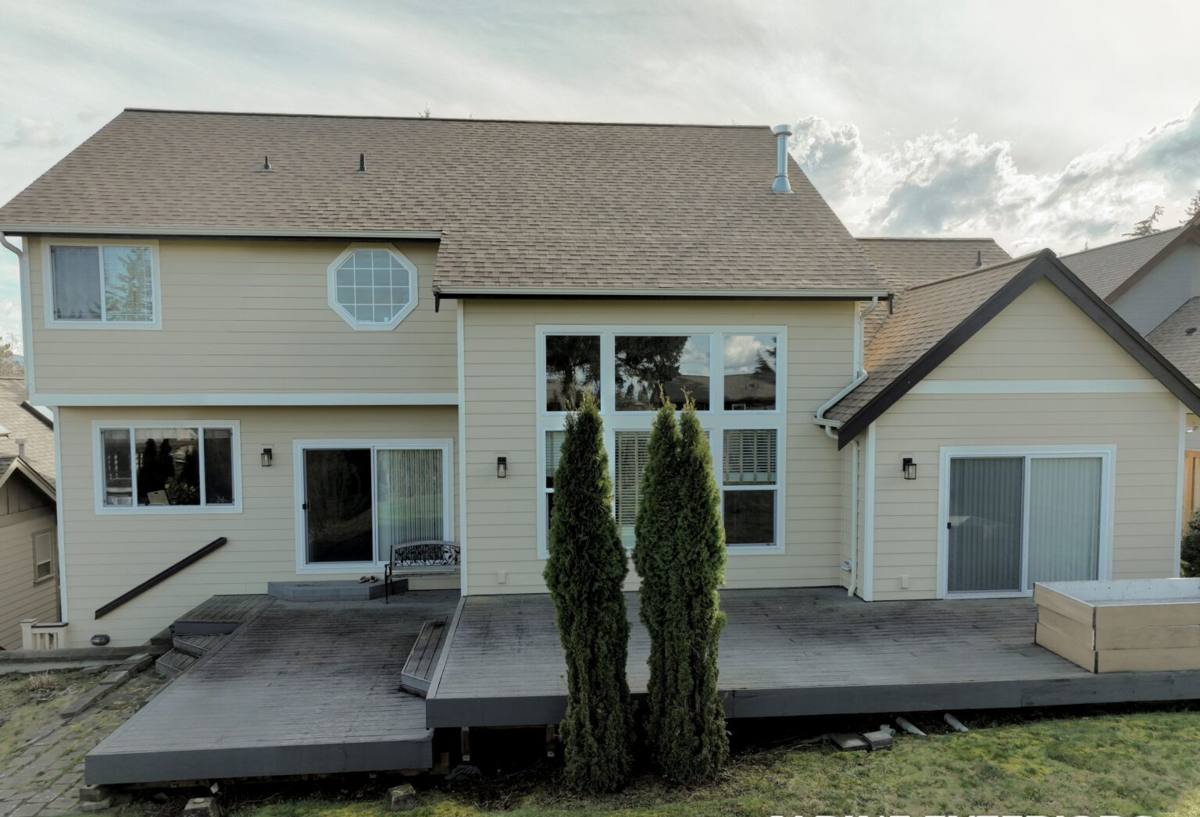
Why Bow's Setting Changes the Deck-Building Calculus
Salt Air and Metal
Properties closer to the water deal with airborne salt that accelerates corrosion on anything metal — joist hangers, screws, bolts, and railing hardware included. Standard electro-galvanized fasteners that might be fine forty miles inland can start rusting within a couple of years out here. It's not dramatic, it's gradual — but a corroded joist hanger is a structural problem, not a cosmetic one.
Driving Rain and Wind-Driven Moisture
Rain in this part of Washington doesn't just fall straight down. Wind off the water pushes it sideways, which means ledger boards, rim joists, and any wood-to-house connection point take on moisture that a purely vertical rain would never reach. Flashing details that would be optional in a drier climate are not optional here.
Moss Season
Shaded lots, tree cover, and months of damp weather add up to a real moss season that runs longer here than in most of the country. Moss holds moisture against wood and decking surfaces, and it's not just unsightly — sustained dampness under a moss mat is exactly the condition that rots boards and de-laminates composite decking from the inside.
Material Choices That Hold Up in Bow Conditions
There's no single "right" decking material for every Bow property — it depends on sun exposure, tree cover, budget, and how much upkeep you want to do. Here's an honest comparison of what we typically work with.
| Material | How it handles moss/moisture | Maintenance | Notes |
|---|---|---|---|
| Cedar | Naturally rot-resistant, but still needs airflow to shed moisture | Periodic cleaning, refinishing every few years | Classic look, needs shaded areas cleared of debris regularly |
| Pressure-treated fir/hem-fir | Resists rot chemically, but end cuts and fastener holes need field treatment | Moderate — cleaning, occasional sealing | Cost-effective, common for framing and lower-budget decking |
| Composite decking | Won't rot, but moss and algae can still grow on the surface film | Low — occasional wash-down | Higher upfront cost, no refinishing needed |
| PVC decking | Fully impervious to moisture, moss sits on top rather than penetrating | Low | Highest upfront cost, best for heavily shaded or waterfront lots |
For heavily shaded Bow lots where moss is a constant fight, we lean toward composite or PVC decking not because wood is a bad product, but because the maintenance burden of keeping natural wood clean and sealed in near-permanent shade is a real, ongoing cost that a lot of homeowners underestimate when they choose a material.
Fasteners and Hardware
Regardless of decking material, we use stainless steel or heavy hot-dip galvanized fasteners and connectors on Bow projects, not standard-duty electro-galvanized hardware. It costs more up front. It also doesn't rust through in five years near the water, which matters more than the small savings.
What a Correctly Built Deck Involves
A deck is a structure, and in this climate the parts you don't see matter more than the decking boards on top. The pieces we treat as non-negotiable:
- Proper footings sized and set to frost depth and soil conditions, not guessed at
- Ledger board flashed with a code-compliant moisture barrier where the deck attaches to the house — the single most common source of hidden rot we find on older decks
- Joist hangers and structural connectors rated for the load, in corrosion-resistant material
- Gapping and spacing between boards that lets water drain and wood breathe instead of trapping moisture
- Railings and stair stringers built to current code, not just "close enough"
- Grading and drainage under the deck so water doesn't pool and feed moss growth from below
Skip any one of these and the deck may look fine for a year or two before the problem shows up. We'd rather get the parts you can't see right the first time than come back for a rebuild.
Our Process for Bow Deck Projects
1. Site Visit and Assessment
We walk the property, look at sun and shade patterns, existing drainage, and how close you are to salt air exposure. That assessment drives the material and hardware recommendations, not a one-size-fits-all default.
2. Design and Material Selection
We go over the honest trade-offs for your specific lot — budget, maintenance tolerance, and how much shade the deck will sit in — so you're choosing a material based on how it'll actually perform there, not just how it looks in a showroom.
3. Permitting
Most new decks and many rebuilds in Skagit County require a permit, particularly for anything attached to the house or above a certain height. We handle that process as part of the job rather than leaving it to the homeowner to sort out.
4. Construction
Footings, framing, flashing, decking, and railings, built in that order with inspections at the structural stages where required. We don't cover framing with decking before it's been checked.
5. Final Walkthrough
We walk the finished deck with you, cover basic care for whatever material you chose, and make sure everything is solid before we call it done.
Maintenance for Bow's Moss Season
Even a well-built deck needs some seasonal attention here. A simple checklist that covers most of what matters:
- Sweep leaves and debris off the deck regularly in fall — trapped organic matter is what moss and algae feed on
- Rinse or wash the surface a couple of times a year, more often in heavily shaded spots
- Check that gaps between boards are still clear and draining, not clogged with debris
- Inspect the ledger board area annually for any signs of staining or softness
- Trim back overhanging branches where possible to get more sun and airflow onto the deck
- For wood decking, reseal on the manufacturer's recommended schedule rather than waiting until it looks obviously weathered
Why a Crew That Already Works Bow Matters
Deck building isn't identical from town to town. A crew that mainly builds in drier, inland parts of the state may not default to stainless hardware, may not think through wind-driven rain at the ledger, and may not have a feel for how fast moss takes over a shaded Skagit County lot. Working in and around Bow regularly means we're not guessing at any of that — it's just what we build to as a matter of course.
There's also the practical side: familiarity with how Skagit County permitting works for deck projects, what inspectors are looking for at each stage, and how site access and soil conditions tend to run in this area. None of that is exotic knowledge, but it saves time and avoids surprises mid-project.
Cost Factors to Expect
Every deck is different, but the variables that move the price on a Bow project tend to be the same ones:
| Factor | Why it affects cost |
|---|---|
| Size and footprint | More square footage means more footings, framing, and decking material |
| Material choice | Wood, composite, and PVC decking span a wide cost range per square foot |
| Height and stairs | Elevated decks need more substantial framing, railings, and stair structures |
| Site access | Tight or sloped lots can slow down material staging and footing work |
| Existing structure removal | Tearing out and disposing of an old deck adds labor before rebuilding starts |
| Hardware grade | Stainless or heavy-duty galvanized connectors cost more than standard hardware |
We'd rather walk your specific property and give you real numbers than throw out a broad estimate that doesn't account for your lot's shade, access, or existing condition.
If you're planning a new deck or looking at replacing one that's showing its age in Bow, we're happy to come take a look and give you a straightforward, no-pressure estimate — just fill out the form below.