 Mount Vernon
 Board & Batten in a Skagit County Climate
Board and batten has a long history on homes in and around Downtown Mount Vernon, and it's easy to see why — the vertical lines suit the mix of older farmhouses, craftsman-style homes, and newer infill construction found throughout the area. But the look is only half the story. This is a siding profile with more seams, more edges, and more exposed fastener points than lap siding, which means it lives or dies on the quality of the install underneath it. In a climate that combines salt-laden air pushing in from Skagit Bay, long stretches of driving rain, and a moss season that can run most of the year, those seams and edges are exactly where problems start if the work is cut corners.
We install board and batten siding on Downtown Mount Vernon homes as a system, not a cosmetic layer. That means thinking through water management, ventilation, and fastening before the first board goes up — not patching issues after the fact.
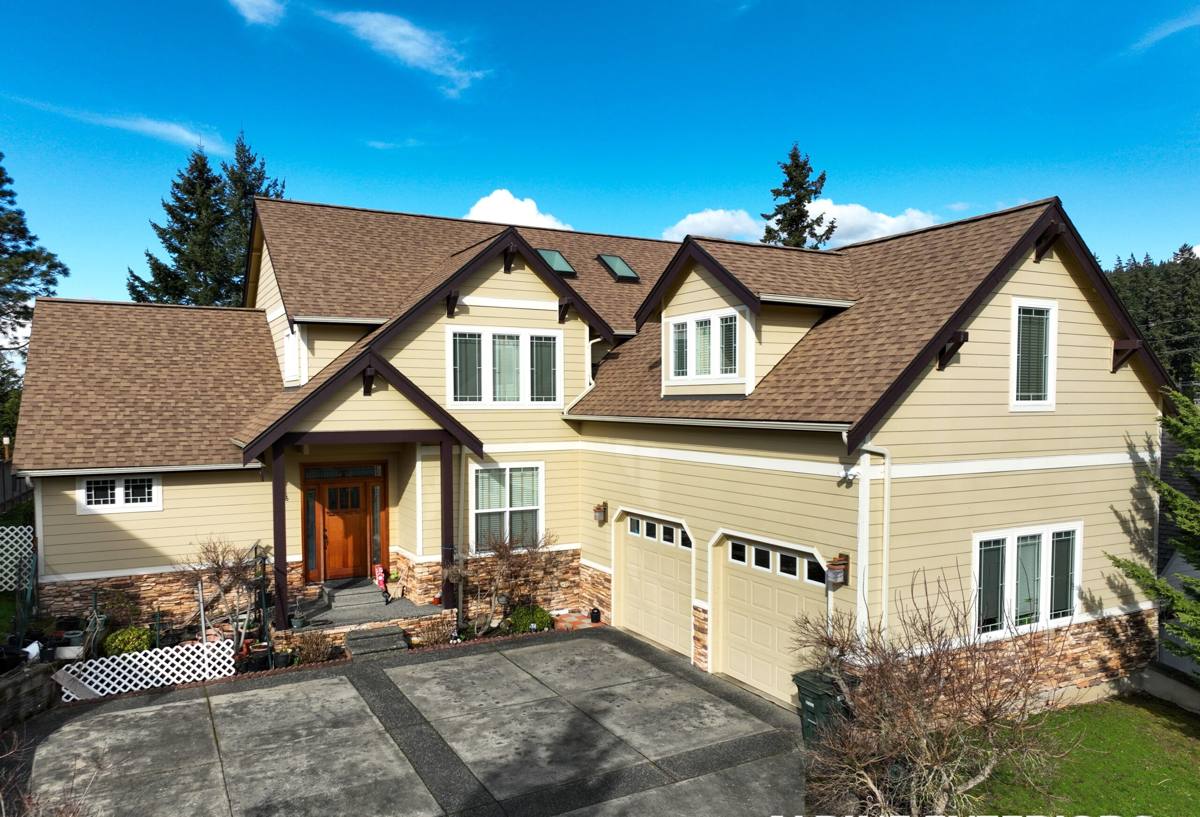
Why Downtown Mount Vernon Homes Need a Different Approach
Salt Air and Fastener Corrosion
Homes in this part of Skagit County sit close enough to tidal water and marine air that salt exposure is a real factor, even blocks away from the water itself. Salt accelerates corrosion in any fastener or trim piece that isn't rated for it. Board and batten siding has roughly double the vertical seams of standard lap siding, and every batten strip is its own fastening line — so the number of exposed nail heads and joints is higher than most other siding styles. If those fasteners aren't corrosion-resistant, they streak, weaken, and eventually let water in behind the boards.
Driving Rain and Seam Exposure
Mount Vernon gets wind-driven rain often enough that siding can't just shed water straight down — it has to resist water being pushed sideways and upward under laps and battens. Board and batten's vertical battens create horizontal shadow lines that, done wrong, can catch and hold water instead of directing it away from the wall. The gap behind each batten, the flashing at every horizontal transition, and the caulking strategy at trim intersections all matter more here than they would in a drier climate.
Moss and Sustained Moisture
Skagit County's moss season isn't a short nuisance — it's close to year-round on north-facing and shaded walls. Moss holds moisture against a wall surface long after rain has stopped, which is hard on any substrate that isn't dimensionally stable. It also tends to establish first in the recessed grooves and batten shadow lines, which is exactly the profile board and batten creates. A siding material that swells, wicks, or softens under sustained dampness will show wear in those recesses years before the rest of the wall does.
What a Correct Board & Batten Install Actually Involves
A lot of what separates a board and batten job that lasts twenty-plus years from one that needs repairs in five comes down to details that aren't visible once the project is finished. Here's what we treat as non-negotiable:
- Weather-resistive barrier installed and lapped correctly before any siding goes up, with all penetrations sealed
- Rainscreen or furring strategy that lets the wall assembly drain and dry, rather than trapping moisture behind the boards
- Corrosion-resistant, manufacturer-approved fasteners at every board and batten — no mixed or substandard hardware
- Flashing at every horizontal joint, window, door, and roofline transition, not just caulk alone
- Correct board spacing and batten placement so the assembly can expand and contract without cracking finish or opening seams
- Factory-finished material on cut edges properly sealed, since exposed raw edges are where moisture intrusion typically starts
Skip any one of these and the siding may look fine for a season or two before the underlying problems surface — usually as soft spots, staining, or paint failure right at the seams.
Why We Install Only James Hardie for Board & Batten
Board and batten profiles are available in vinyl, engineered wood, and fiber cement, and we've made the decision to install James Hardie fiber cement exclusively — including for this specific look. Vinyl board and batten can work loose or warp under UV and temperature swings, and its seams rely heavily on the installer getting overlap and fastening exactly right, with little room for error. Engineered wood and primed wood products need consistent field maintenance to keep moisture out of cut edges and joints — maintenance that's easy to fall behind on, and unforgiving when it does.
James Hardie's HZ5 product line is engineered specifically for climates like ours — freeze-thaw cycles, sustained damp, and salt air. It's non-combustible, doesn't swell or rot the way wood-based products can, and comes with a factory-applied ColorPlus finish that's baked on rather than field-painted, which matters enormously on a profile with this many exposed edges and seams. Hardie backs the product with a transferable warranty that holds up as long as the material is installed to their specification — which is precisely why we treat installation method as seriously as the material choice itself.
Board & Batten Material Comparison
| Factor | Vinyl Board & Batten | Wood / Engineered Wood | James Hardie Fiber Cement |
|---|---|---|---|
| Salt air resistance | Moderate — hardware and seams vulnerable | Poor without regular upkeep | Strong when properly installed |
| Moisture/moss tolerance | Doesn't rot, but seams can trap water | Vulnerable to swelling and softening | Engineered for damp climates |
| Finish durability | Fades, can look plastic over time | Requires repainting/resealing | Factory ColorPlus finish, long-lasting |
| Fire resistance | Combustible | Combustible | Non-combustible |
| Maintenance burden | Low, but limited repair options | High — ongoing sealing/painting | Low when installed correctly |
Our Process for a Downtown Mount Vernon Board & Batten Project
1. On-Site Assessment
We walk the home and evaluate the existing wall assembly, moisture history, sun/shade exposure, and any problem areas — trim, window flashing, roofline transitions — before ever quoting the job.
2. Water Management Plan
Before ordering material, we map out flashing details, drainage plane strategy, and how the board and batten pattern will handle the home's specific exposure to wind-driven rain.
3. Removal and Substrate Check
Old siding comes off and we inspect sheathing underneath for rot or damage — common on older homes in this area where moisture has been getting behind the wall for years without visible symptoms.
4. Installation to Manufacturer Spec
Hardie boards and battens go up following James Hardie's installation guidelines exactly — fastener type and spacing, gapping, flashing sequence — because deviating from spec is what voids warranty coverage and shortens the life of the siding.
5. Final Walkthrough
We review the completed work with the homeowner, point out anything that needs periodic attention (gutters, plantings against the wall, etc.), and make sure everything meets our own standard before calling the job done.
Why Local Experience in Downtown Mount Vernon Matters
A crew that only occasionally works in Skagit County will design and install siding the way they would anywhere else. A crew that works Downtown Mount Vernon regularly already knows which exposures take the worst of the driving rain, where moss establishes fastest, and which older homes in the area tend to have hidden moisture issues behind their walls. That local pattern recognition shows up in small decisions — extra flashing at a vulnerable transition, a different fastening approach on a shaded north wall — that a generic install wouldn't catch.
Signs Your Current Siding Needs Attention
- Soft or spongy spots when pressed, especially near the base of walls or under windows
- Persistent moss or algae growth that returns quickly after cleaning
- Paint or finish that's peeling or bubbling specifically along seams and batten lines
- Visible gaps opening up between boards or at trim joints
- Rust streaking below fastener heads
- Musty smell or discoloration on interior walls that back up to exterior siding
Any one of these is worth a closer look before it turns into a larger repair. Board and batten's seam-heavy design means small issues at the joints tend to get worse faster than they would on flat lap siding.
Cost Factors for Board & Batten Projects
Every home is different, but the main variables that affect the scope and cost of a board and batten project in this area include:
| Factor | Why It Matters |
|---|---|
| Existing wall condition | Hidden rot or sheathing damage adds repair work before new siding can go on |
| Home exposure | Walls facing prevailing wind-driven rain need more attention to flashing and drainage detailing |
| Trim and architectural detail | More windows, dormers, and roofline transitions mean more flashing and cut work |
| Board and batten spacing pattern | Wider or narrower reveal patterns affect material quantities and labor |
| Color and finish selection | Factory ColorPlus finishes vary slightly by product line and color depth |
We give straightforward, itemized estimates so homeowners can see exactly what's driving the cost of their specific project — no vague lump-sum numbers.
If your Downtown Mount Vernon home could use new board and batten siding, or you want a second opinion on siding that's showing early signs of trouble, we're happy to take a look. Request a free, no-pressure estimate using the form below and we'll walk the property with you before recommending anything.