 Mount Vernon
 Building a Deck That Actually Belongs in Blanchard
Blanchard sits in the part of Skagit County where forested hillsides run close to saltwater, and that combination shapes almost every decision that goes into a good deck. A design that works fine in a dry, sunny yard inland can start showing problems within a couple of seasons out here — soft spots at the ledger, black streaks on the boards, fasteners bleeding rust, moss creeping across the surface by late fall and staying put until June. None of that is inevitable. It just means the deck has to be built for the place it's actually going, not for a generic climate.
This page is about one job in one area: building decks for homes in and around Blanchard, where salt-laden air off the nearby water, long stretches of driving rain, and shaded, moisture-holding ground combine into a harder environment for outdoor wood structures than most of the country deals with. We treat that as the starting point of the design, not an afterthought.
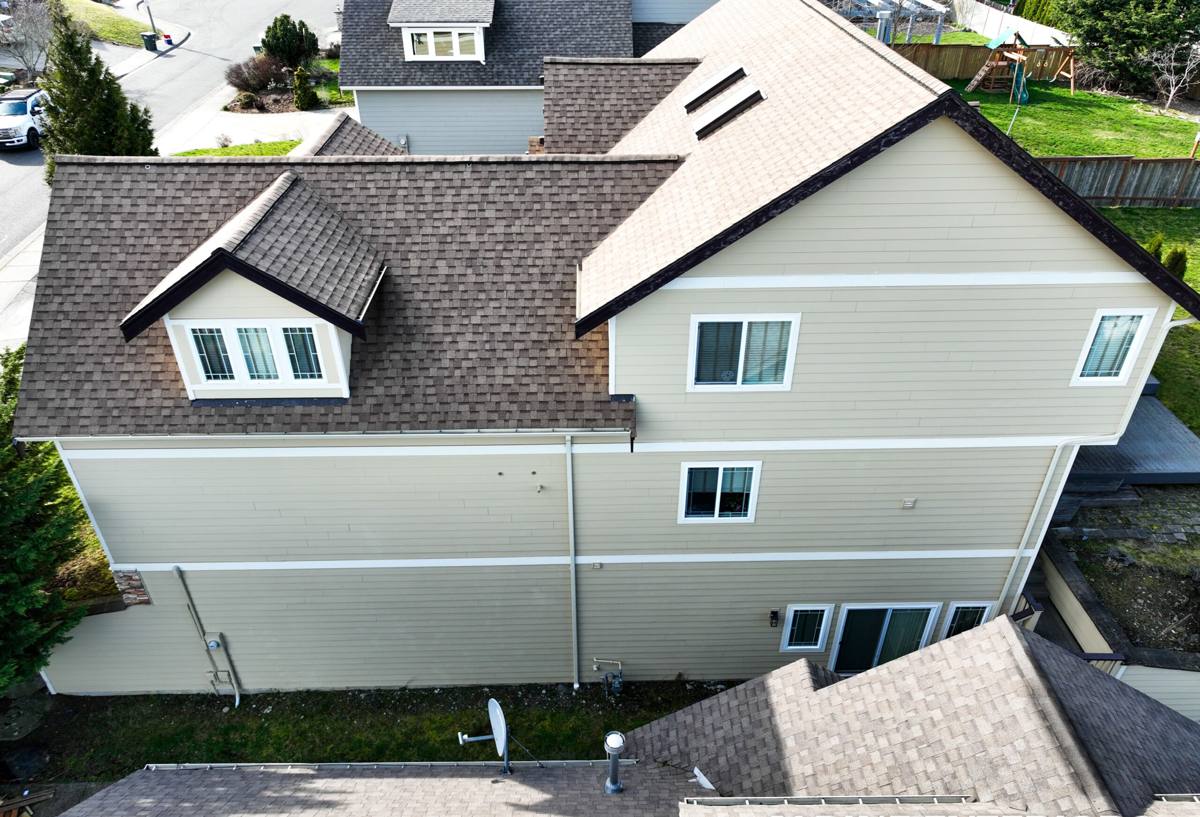
What Salt Air, Driving Rain, and Moss Actually Do to a Deck
Each of these three factors attacks a deck in a different way, and understanding the mechanism is what separates a deck that lasts from one that doesn't.
Salt air
Airborne salt accelerates corrosion on anything metal — nails, screws, joist hangers, post bases, railing hardware. Standard electro-galvanized fasteners that are perfectly adequate in a dry inland yard can start rusting within a few years this close to salt water. Once a fastener corrodes, it loses holding strength long before it looks obviously bad, which is part of why hardware selection matters more here than the average deck job.
Driving rain
Wind-driven rain doesn't just fall on a deck, it gets pushed sideways into ledger connections, under flashing, and into end-grain cuts on framing lumber. Water that gets trapped rather than shed is what causes rot — it's rarely the rain itself, it's rain with nowhere to go.
Moss and organic buildup
Shaded, damp surfaces in this part of Western Washington can stay wet for days after a storm, and moss and algae take hold anywhere sunlight and airflow are limited. Beyond the slip hazard, moss holds moisture directly against the decking surface, which speeds up wood decay and telegraphs staining into composite boards that aren't built to shed it.
Choosing Decking Material for This Microclimate
There's no single "best" decking material — there's a best material for a given lot's sun exposure, shade, and how close it sits to the water. The table below compares the common options as they actually perform in a Blanchard-type environment, not in a marketing brochure.
| Material | Upfront Cost | Moss/Mildew Resistance | Maintenance | Notes for This Area |
|---|---|---|---|---|
| Pressure-treated fir/hem-fir | Lowest | Moderate — needs regular cleaning | Annual cleaning, periodic sealing | Budget-friendly; performance depends heavily on upkeep and drainage detailing |
| Cedar | Moderate | Good natural rot resistance, still needs cleaning | Regular cleaning and refinishing | Attractive, ages gracefully, but requires an owner willing to maintain it |
| Composite (capped) | Higher | Good — resists staining and rot | Low — periodic washing | Strong choice for shaded, damp lots; still benefits from airflow underneath |
| PVC decking | Highest | Best — non-organic, won't rot | Lowest | Best moisture and moss performance of the group; higher material cost |
As a broad range, homeowners in this area typically see finished deck costs somewhere in the $35–$70-per-square-foot range depending on material, framing, height, and railing choices — pressure-treated framing with composite or PVC decking on top is a common middle-ground pairing that balances upfront cost against long-term maintenance in a wet climate.
Framing, Fasteners, and Footings Done Right
The decking surface gets the attention, but the framing underneath is what determines whether the deck is still solid in fifteen years. A few details matter more here than they would in a drier climate:
Fastener selection
Given the salt exposure, we lean toward stainless steel or heavy hot-dip galvanized fasteners and connectors rather than standard electro-galvanized hardware, especially on lots closer to open water. It costs more up front and saves a rebuild later.
Ledger and flashing details
Where a deck attaches to the house, proper flashing that directs water out and away from the ledger board is non-negotiable in a climate with this much driving rain. This is one of the most common failure points we see on older decks in the area — water working behind the ledger over years, hidden until the rot is significant.
Joist protection
Wrapping joist tops and cut ends with a protective flashing tape keeps standing water from soaking into end grain, which is typically where rot starts even on pressure-treated lumber.
Footings
Footings need to be set below the local frost depth and sized for the soil they're going into — some lots in this area have heavier, slower-draining soil, others are sandier and drain faster, and the footing design should account for which one you've got rather than using a one-size answer.
Drainage, Airflow, and Keeping Moss From Taking Over
Moss control is really a structural design issue, not just a cleaning chore. A deck that's designed to shed water and get airflow underneath will grow far less moss than one that traps moisture, regardless of how often it gets scrubbed.
- Proper board spacing lets water drain through rather than pool on the surface
- Clearance and airflow underneath the deck reduce the damp, shaded conditions moss needs to establish
- Under-deck drainage systems can be added where the space below is finished living space or storage that needs to stay dry
- Keeping overhanging branches trimmed back opens up sunlight and airflow, which does more for moss prevention long-term than any cleaner
- Sloping the deck surface slightly away from the house keeps water moving toward the edges instead of sitting against the house wall
None of this eliminates moss entirely in a climate this wet and shaded — it reduces how fast it comes back and how much damage it does while it's there.
Permits and Code Basics for Deck Projects in This Part of Skagit County
Most attached and elevated decks require a building permit, and the local building department will review the plans for structural adequacy, guardrail height, stair geometry, and setback from property lines before work starts. Guardrails are generally required once a deck surface reaches a certain height above grade, and stair rise and run have to fall within a set range for safety. We handle the permit submission and inspections as part of the job rather than leaving it to the homeowner to navigate — it's a normal part of building a deck correctly, not an extra service.
How We Handle a Blanchard Deck Project
Site visit and assessment
We start by looking at the actual lot — how much sun and shade it gets through the day, which direction storms typically hit it from, what the soil looks like where footings will go, and how close it sits to salt water. That assessment drives the material and hardware recommendations, not the other way around.
Design and material selection
We walk through the material comparison honestly, including the maintenance trade-offs, so the choice matches how much upkeep the homeowner actually wants to do — not just what looks best on day one.
Permit and engineering
We prepare and submit the permit package, including footing and framing details sized for the site conditions found during the assessment.
Construction
Framing goes in with the fastener and flashing details covered above, followed by decking, railings, and stairs. We build the drainage and airflow details in during framing — they're much harder to add after the fact.
Final walkthrough
Before we call the job done, we go over basic maintenance expectations for the specific materials used, so there are no surprises about what upkeep looks like a year or two down the road.
Maintenance Checklist for a Blanchard Deck
A well-built deck still needs some seasonal attention in this climate. This is the routine we recommend to homeowners after the walkthrough:
- Sweep leaves and debris off the surface regularly through fall, when buildup happens fastest
- Clean the deck surface at least once a year to remove early moss and algae growth before it spreads
- Check fastener heads and railing connections annually for early signs of corrosion, especially on lots closer to the water
- Inspect the ledger flashing and the area where the deck meets the house for staining or softness
- Trim back overhanging vegetation that shades the deck surface or drops organic debris onto it
- Reseal wood decking on the manufacturer's recommended schedule if wood was chosen over composite or PVC
Why a Crew That Already Works in Blanchard Matters
A lot of deck problems in this area don't come from bad workmanship in general — they come from a design that would have been fine somewhere drier and sunnier, applied without adjustment to a shaded, salt-exposed lot. A crew that's already built and maintained decks in and around Blanchard has seen which lots need extra drainage detailing, which ones need upgraded hardware because of proximity to the water, and which shaded yards are going to fight moss no matter what material goes down. That local pattern recognition shows up in fewer callbacks and a deck that's still solid well after the novelty has worn off.
If you're planning a new deck or replacing one that's showing its age, we're happy to come take a look and talk through what your specific lot needs — there's a free, no-pressure estimate form below whenever you're ready.