 Mount Vernon
 Board & Batten Siding for Blanchard Homes
Blanchard sits in that stretch of Skagit County where the Puget Sound air meets the foothills, and homes there take a different kind of weathering than siding twenty minutes inland. Board and batten is one of the most requested looks out here — the vertical lines read well against the tree line and the farmhouse and craftsman styles common in the area — but it's also one of the least forgiving profiles when the wrong material or the wrong install crew gets involved. The narrow battens and exposed vertical seams either shed water cleanly for decades or become the exact places a house starts failing early. There isn't much middle ground with this profile.
We install board and batten in Blanchard regularly enough that we're not guessing at how the wind comes off the water or how long a north-facing wall stays damp after a system rolls through. This page covers what that experience actually changes about the job — the material call, the install details, and why a crew that already knows this pocket of Mount Vernon's service area matters more here than it would on a straightforward lap-siding job somewhere drier.
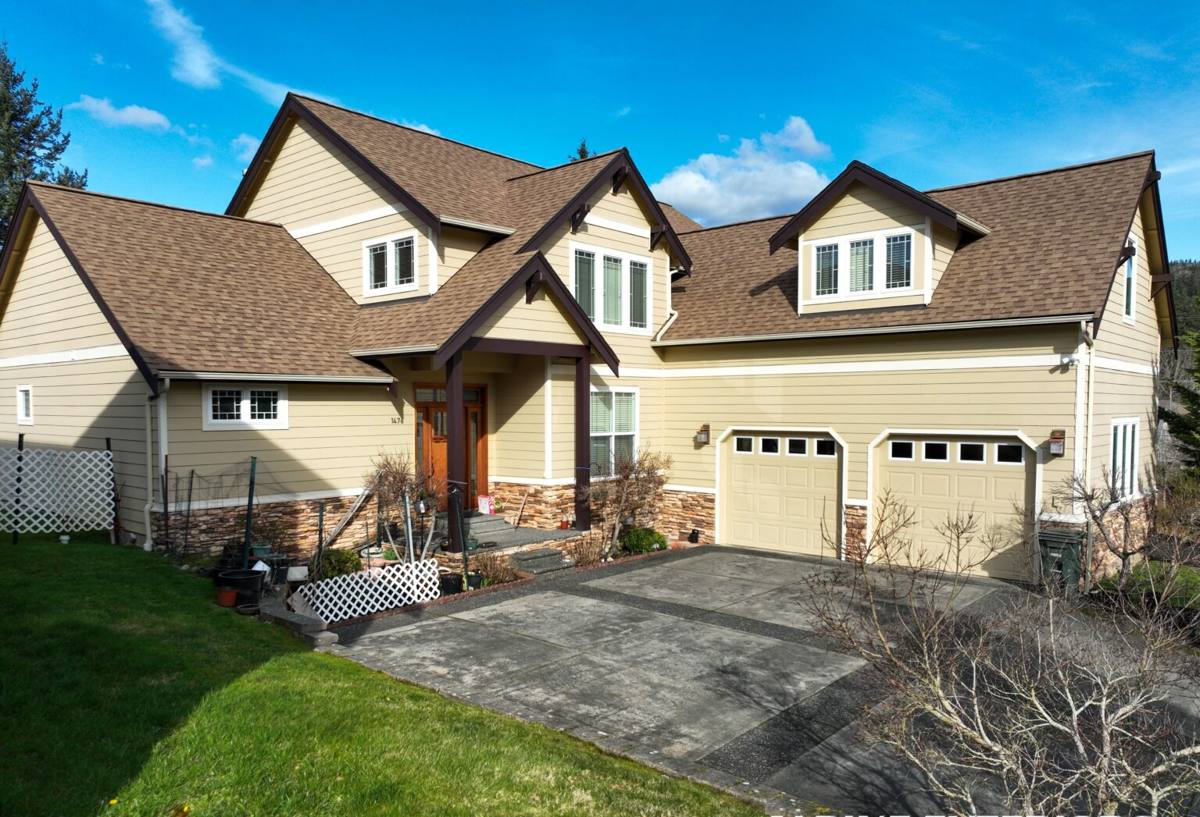
Why Blanchard's Climate Is Hard on Vertical Siding
Board and batten's vertical battens create a repeating pattern of seams running top to bottom on the wall. Every one of those seams is a place water can find a way behind the cladding if it's not detailed correctly. In a low-humidity climate that's a minor concern. In Blanchard, it's the whole ballgame, for three overlapping reasons:
- Salt air: proximity to the Sound means airborne salt settles on exterior surfaces and accelerates the breakdown of unprotected wood fiber, uncoated fasteners, and lower-grade paint films.
- Driving rain: wind-driven storms don't just wet a wall — they push moisture sideways and upward into seams, laps, and batten edges that a calm-weather install might have gotten away with cutting corners on.
- A long moss season: shaded and north-facing walls stay damp for extended stretches much of the year, and moss and algae take hold on any siding surface that can't shed water and dry out between systems.
None of these factors are unique to Blanchard, but they compound here more than they do on drier, more sheltered lots elsewhere in the greater Mount Vernon area. A siding choice or install detail that's "fine" on a protected inland lot can be a callback waiting to happen on an exposed Blanchard elevation.
Why This Hits Board & Batten Harder Than Lap Siding
Lap siding has one style of horizontal overlap repeated up the wall — a proven, simple water path. Board and batten depends on the vertical batten covering the joint between two field boards cleanly, with the right gap, the right fastening pattern, and the right material behind it so the boards don't cup, swell, or telegraph movement over time. Get any one of those wrong and the seams that make the style attractive become the seams that let moisture in.
What Correct Board & Batten Installation Requires
A board and batten job done right isn't complicated, but every step matters more than it looks like it should:
- Weather-resistant barrier installed and lapped correctly behind the entire field, with all penetrations sealed before the first board goes up
- Proper furring or rainscreen gap where wall conditions call for it, so water that does get behind the cladding has somewhere to drain and dry
- Battens fastened through the field board into framing, not just face-nailed into the board joint, so the assembly can handle wind load and material movement without splitting
- Correct gap width between field boards under the batten — too tight and expansion causes buckling, too wide and the batten can't cover reliably
- Factory-primed or factory-finished edges at every cut, especially at window and door returns, so raw material is never left exposed to weather
- Sealed, back-primed trim at inside and outside corners, sills, and transitions — the places every siding failure we get called out to inspect actually starts
Skip any of these and the house might look right for a season or two before the seams start telling on the installer.
Why We Only Install James Hardie for This Profile
We install James Hardie fiber cement exclusively, and board and batten is one of the clearest cases for why. This profile puts more vertical seam and more exposed edge on a wall than almost any other siding style, which means the material behind it has to hold up to repeated wetting and drying without swelling, cupping, or losing paint adhesion at the cut edges.
Fiber cement doesn't absorb water the way wood-based products do, so it doesn't swell at the batten joints or expand and contract enough to open gaps over a few seasons. It's also non-combustible, which matters to a lot of homeowners regardless of siding style. James Hardie's ColorPlus factory finish is baked on and warrantied against fading and peeling, which counts for more on a vertical profile with dozens of exposed cut edges than it does on a simple horizontal lap wall — factory-finished edges mean less field painting and fewer weak points for salt air and moss to work on. Hardie's HZ5 product line is engineered specifically for climates with sustained moisture exposure, which describes this part of Skagit County accurately.
We get asked why we don't offer board and batten in cedar, primed spruce, or engineered wood siding. Those materials can look excellent when new. The honest trade-off is that they're wood-based, and wood-based siding on a high-seam-count profile in a wet, salt-exposed climate needs more maintenance — recaulking, repainting, and edge monitoring — to hold up over the same time span fiber cement handles with routine upkeep. We'd rather tell a Blanchard homeowner that up front than sell a product we know will need more attention than they were told to expect.
Material Comparison for This Application
| Material | Behavior at Batten Seams | Salt Air / Moisture Exposure | Maintenance Over 15+ Years |
|---|---|---|---|
| James Hardie fiber cement | Dimensionally stable, minimal swelling at cut edges | Non-combustible, resists moisture-driven damage well | Periodic caulk/inspection; factory finish holds color |
| Cedar | Can cup or check at exposed edges if finish is compromised | Vulnerable without diligent refinishing | Regular refinishing and edge sealing required |
| Primed spruce / engineered wood | Edge swelling risk if primer is breached at cuts | Moisture intrusion accelerates deterioration | Field painting and edge maintenance ongoing |
| Vinyl board & batten | Doesn't swell, but can warp/fade and won't hide seam movement | Handles salt air fine but expands/contracts with temperature | Low maintenance, limited repair options if damaged |
This table reflects general material behavior, not a claim about any specific product's failure rate. It's the reasoning behind our standardization on James Hardie, laid out plainly.
Our Process for Blanchard Board & Batten Projects
Assessment and Wall-by-Wall Planning
We walk the property and look at each elevation separately — a south-facing wall in full sun behaves differently than a shaded north wall, and the batten spacing, gap tolerances, and drainage details get planned per elevation, not applied uniformly across the house.
Barrier and Substrate Prep
Weather-resistant barrier, flashing at every penetration and transition, and a drainage plane appropriate to the wall assembly go in before a single board is hung. This is the step that determines whether the finished siding actually performs, and it's the step that's easiest to shortcut and hardest to inspect after the fact.
Install to Manufacturer Spec
Field boards and battens go up following James Hardie's fastening schedule and gap tolerances, with every cut edge sealed. We don't modify spacing or fastening to save time on a job that has to hold up to this location's weather.
Final Walkthrough
We review the finished job with the homeowner, covering what routine maintenance actually looks like — realistically, a periodic rinse and an eye on caulking at trim joints — so there are no surprises about upkeep.
Estimate Checklist: What to Have Ready
- General age and condition of your current siding, if known
- Which elevations get the most direct weather (typically west and south-facing walls near the Sound)
- Any known moisture issues — soft spots, visible moss buildup, or paint failure
- Whether you're matching an existing board and batten look or changing from another siding style
- Rough timeline and whether other exterior work (trim, gutters, paint) is planned alongside it
Why a Local Crew Matters for This Job
Board and batten installed to spec in a dry inland climate and board and batten installed to spec in Blanchard aren't quite the same job — the tolerances for barrier work, flashing, and edge sealing get less forgiving the closer a wall sits to sustained salt air and moisture. A crew that works this part of Skagit County regularly has already seen which walls fail first and why, and plans the install accordingly instead of applying a generic approach and hoping it holds. That's the difference between siding that needs attention in five years and siding that's still doing its job in twenty five.
If you're weighing board and batten for a home in Blanchard, we're happy to walk the property, look at your specific elevations, and put together a straightforward estimate — no pressure, no upsell, just what the job actually needs. The form below gets you started.