 Mount Vernon
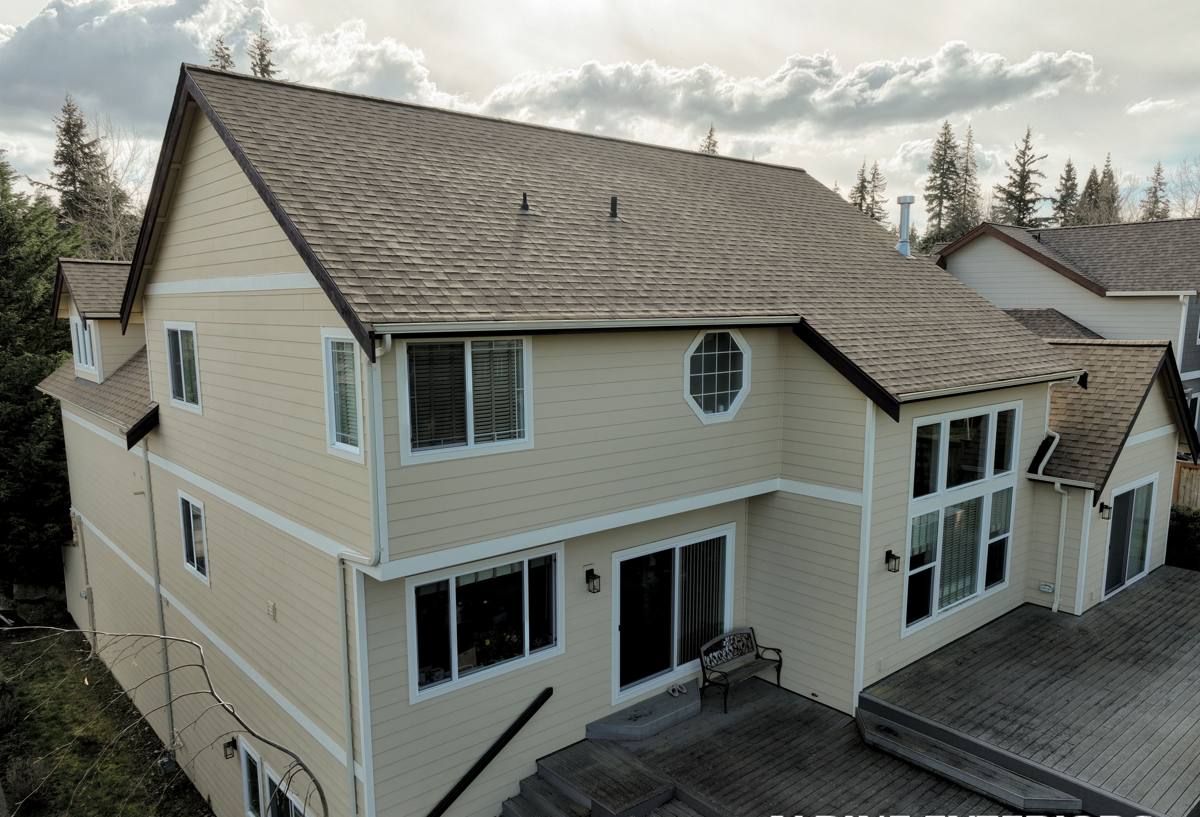
 Siding Replacement Built for Big Lake's Conditions
Big Lake sits in a pocket of Skagit County that gets more shade, more standing moisture, and more moss pressure than a lot of open, sun-exposed properties closer to town. Homes ringing the lake and tucked into the surrounding tree cover stay damp longer after a storm, and that changes how fast siding wears out. Add in the driving rain that blows through this part of Western Washington off the Puget Sound lowlands and the long moss season that never really ends here, and you've got a climate that punishes the wrong siding choice fast — and rewards the right one for decades.
We've replaced siding on enough homes around Mount Vernon and the outlying Skagit County communities to know that a "one-size-fits-all" siding job doesn't hold up out here. What works on a dry, open lot in eastern Washington is not what a shaded, lake-adjacent property in Big Lake needs. This page covers what actually matters for a siding replacement in this specific area — the failure patterns we see, what a correct install looks like, and why we've standardized on one product instead of offering a menu of options.
Why Siding Wears Out Faster Around Big Lake
Shade and Standing Moisture
Tree cover around the lake keeps siding wet longer after rain than it would stay on an open lot. Sun exposure is what dries siding out between storms — without it, moisture sits in seams, behind trim, and in any spot where the original installation left a gap. That extended dry time is often the single biggest factor in how long a siding system actually lasts, regardless of what it's made of.
Moss and Organic Growth
A long moss season is normal for this part of Skagit County, but shaded, moisture-holding properties like the ones around Big Lake see it worse and earlier in the year. Moss itself doesn't just sit on the surface — it holds water against the siding face, and on products that aren't dimensionally stable or properly sealed at the factory, that trapped moisture works its way into seams and fastener points over time.
Driving Rain and Wind-Driven Moisture
Storms moving through Skagit County frequently come with wind-driven rain rather than straight-down rain. That matters because wind-driven moisture gets pushed up under laps, into butt joints, and behind loose trim in a way vertical rain doesn't. A siding system and installation detail set that assumes calm, straight-down rain will underperform here.
What "Correct" Actually Means in a Siding Replacement
Siding replacement is not just pulling off old material and nailing up new boards. In a moisture-heavy, moss-prone area like Big Lake, the parts of the job that don't show up in a driveway photo are usually what determines whether the new siding lasts 10 years or 40. A correct replacement includes:
- Full tear-off and inspection of the wall sheathing underneath — not siding installed over existing damage
- Repair or replacement of any rotted sheathing, framing, or trim found during tear-off, priced honestly before work continues
- A properly lapped weather-resistive barrier (house wrap) installed shingle-style so water sheds outward, not inward
- Correct flashing at every window, door, deck ledger, and roofline transition — the single most common failure point we find on older homes
- Rain-screen or drainage gap detailing where the wall assembly calls for it, so moisture that does get behind the siding has somewhere to go
- Fastener placement, clearances, and caulking done to the manufacturer's actual installation spec — not "close enough"
Skip any one of these steps and it doesn't matter how good the siding product is. We've seen premium siding fail early because of bad flashing detail, and we've seen mid-grade siding outlast it because the water management underneath was done right. Both matter — but you can't buy your way out of bad installation with a better product.
Why We Only Install James Hardie Fiber Cement
We don't offer vinyl, LP SmartSide, primed wood, cedar, or other fiber cement brands as options on this job — not because there's no market for them, but because after years of replacing siding in exactly these conditions, James Hardie is what we're willing to put our name behind here. It's a non-combustible fiber cement product engineered specifically for climate zones like this one, with a factory-applied ColorPlus finish that doesn't rely on a field-painted coat to hold up against years of moss, moisture, and UV exposure.
Vinyl can warp and gap at the seams as it ages, giving wind-driven rain an entry point. Wood-based products need consistent paint maintenance to stay sealed against moisture — skip a cycle in a shaded, damp spot like Big Lake and the clock starts running. Fiber cement alternatives to Hardie exist, but Hardie's specific HZ5 product line is engineered for wet, freeze-prone climates, and its warranty structure and factory finish quality are what we've found to be the most consistent over a full install career. We'd rather install one product correctly, every time, than offer five options and hope the cheaper ones hold up.
HardiePlank vs. HardieShingle for This Area
Most Big Lake homes we work on use HardiePlank lap siding for the main wall field, sometimes paired with HardieShingle in gable ends or accent areas for a more textured look. Both are engineered the same way underneath — the choice is mostly aesthetic, though shingle profiles have more seams per square foot, which means more attention to flashing and lap detail during install.
Our Replacement Process
- On-site inspection. We walk the exterior, check for soft sheathing, moss buildup patterns, and existing flashing condition before quoting anything.
- Written scope and pricing. You get a clear breakdown of tear-off, any structural repair, materials, and install — no vague allowances.
- Tear-off and sheathing check. Old siding comes off, and we inspect the wall sheathing before anything new goes up. Any rot gets flagged and priced before we proceed.
- Water management install. House wrap, flashing, and drainage detailing go in first — this is the part of the job that determines long-term performance.
- Hardie install to spec. Fastening, clearances, and caulking follow the manufacturer's published installation guide, not shortcuts.
- Final walkthrough. We review the finished job with you before calling it done.
Cost Factors for a Big Lake Siding Replacement
Every home is different, but these are the main variables that move the price on a job in this area:
| Factor | Why It Matters Here |
|---|---|
| Sheathing/framing condition under old siding | Moisture-prone lots around the lake more often reveal hidden rot at tear-off |
| Wall square footage and number of stories | Determines material and labor volume |
| Trim, corner, and window detail complexity | More transitions mean more flashing work, which is labor-intensive but critical |
| Existing moisture barrier condition | Full replacement of house wrap adds cost but is often necessary on older homes |
| Siding profile (lap vs. shingle vs. panel) | Shingle and panel accents typically run more per square foot than standard lap |
| Access and site conditions | Tree cover, slope, and lake-adjacent lots can affect staging and scaffolding needs |
Signs Your Siding Needs Replacing, Not Just Patching
- Moss or mildew that returns within weeks of cleaning
- Soft, spongy, or visibly warped sections when pressed
- Paint or finish peeling in patches rather than evenly
- Visible gaps opening up at seams, corners, or butt joints
- Rising heating bills without another clear explanation
- Siding that feels cold and damp to the touch well after rain has stopped
A patch job can buy time on isolated damage, but once several of these show up together, it usually means the wall assembly underneath has been compromised for a while — patching just delays the real fix.
Why Hiring a Crew That Already Works This Area Matters
A contractor who mainly works drier, more open parts of Skagit County can still do competent general siding work, but they won't necessarily default to the drainage and flashing detail that a shaded, lake-adjacent property actually needs. Crews that regularly work Big Lake and the surrounding Mount Vernon area know which orientations catch the most wind-driven rain, which properties hold moss longest into the season, and where sheathing damage tends to hide on homes of a certain age in this area. That local pattern recognition doesn't replace a proper inspection, but it does mean fewer surprises and a scope of work that accounts for this specific climate from the start.
If your siding is showing moss that won't stay off, soft spots, or you're just planning ahead for a home in this area, we're happy to walk the exterior with you and give you a straight, no-pressure estimate — use the form below to get started.