 Mount Vernon
 Composite Decking Built for Big Lake's Wet, Wooded Conditions
Big Lake sits in a pocket of Skagit County where tree cover, lake moisture, and the Pacific Northwest's long wet season all combine against a deck. Homes here tend to sit on wooded or partially shaded lots close to the water, which means decks dry out slowly, collect organic debris, and stay damp for weeks at a stretch during fall and winter. If you've owned a wood deck out here for more than a few years, you already know the pattern: gray, splintering boards, moss creeping in along the shaded edges, and a maintenance list that never quite gets shorter.
Composite decking was built for exactly this kind of environment. It doesn't mean "no maintenance ever," but it does mean a deck that isn't fighting the climate every season. We install composite decking around Mount Vernon and the Big Lake area regularly enough to know which details actually matter here — not the marketing version, the real one.
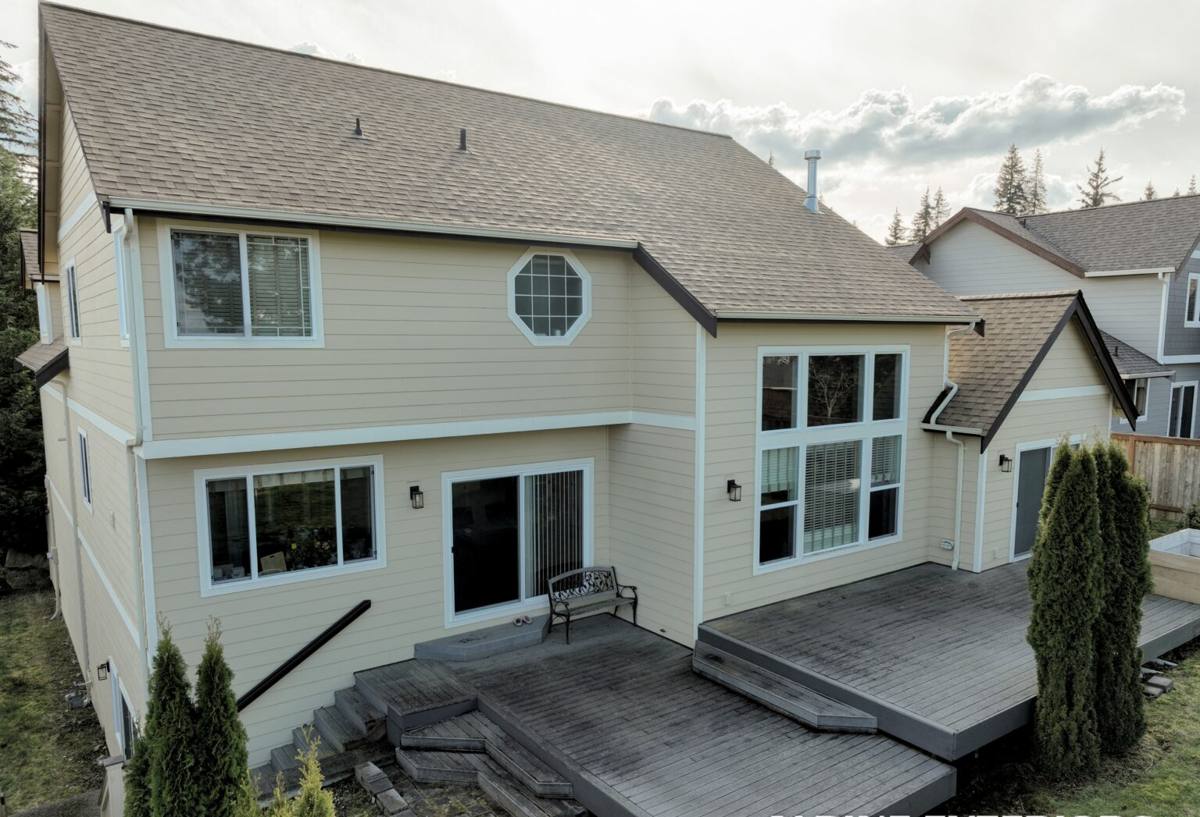
Why Big Lake's Climate Is Hard on a Deck
The greater Mount Vernon area gets a steady flow of marine-influenced air off the Salish Sea, and Big Lake adds its own local moisture on top of that. A few things stack up against a deck in this setting:
- Driving rain that gets pushed sideways by wind, soaking board edges, fastener heads, and ledger connections that a straight-down rain wouldn't reach.
- Shade from mature trees around many Big Lake lots, which slows drying time on decking surfaces for days after a storm passes.
- A long moss season that, in this part of Skagit County, can run from early fall through late spring — moss doesn't just look bad, it holds moisture against the deck surface and can make boards slick.
- Freeze-thaw cycling in the colder months, which is mild compared to inland climates but still enough to open up cracks in wood that's already absorbing water.
None of these factors are dramatic on their own. Combined and repeated year after year, they're what turns a wood deck into a repaint-or-replace decision inside a decade.
What Composite Decking Solves — and What It Doesn't
Composite decking is made from a blend of wood fiber and recycled plastic, and most modern boards are either fully capped or capped on the exposed faces with a protective polymer shell. That shell is the part that matters most for a lake-adjacent, moss-prone lot: it doesn't absorb water the way solid wood does, it doesn't need annual staining or sealing, and it resists mold and mildew growth far better than an uncoated wood surface.
What it doesn't do is make moss or algae impossible. Anything sitting outside in shade and moisture near Big Lake can grow a film of organic buildup over time — composite boards just don't let that buildup soak in and rot the material underneath. A seasonal rinse keeps a composite deck looking the way it did on install day; the same rinse on a wood deck is just slowing down decay that's already happening below the surface.
Material Comparison: Wood vs. Composite vs. PVC
| Material | Moisture Behavior | Maintenance | Typical Lifespan Here |
|---|---|---|---|
| Pressure-treated wood | Absorbs water; prone to cupping, splintering, and moss growth in shaded spots | Annual cleaning, periodic staining/sealing | 10-15 years before major repair or replacement |
| Capped composite | Sheds water at the surface; core resists rot even with repeated soaking | Occasional rinse/wash; no staining or sealing | 25-30+ years, backed by manufacturer warranty |
| PVC decking | Fully moisture-proof, cellular core | Lowest maintenance; can show more flex in cold temps | 25-30+ years, higher upfront cost |
We install composite most often on Big Lake homes because it's the best balance of upfront cost, moisture performance, and appearance for this climate. PVC is a reasonable option where budget allows and a slightly higher price is acceptable in exchange for essentially zero organic content in the board. We don't push wood decking as a primary recommendation on shaded, lake-adjacent lots — it's not that wood decking is bad everywhere, it's that this particular combination of shade and moisture works against it faster than most homeowners expect.
What a Correct Composite Deck Installation Involves
Framing and Joist Spacing
Composite boards generally need tighter joist spacing than solid wood — usually 16 inches on center, sometimes closer for angled or picture-frame layouts. Skipping this step is one of the most common corner-cutting mistakes we see on composite decks that develop bounce or sag within a few years.
Flashing and the Ledger Connection
Where a deck attaches to the house is the single most water-exposed connection on the whole structure. Correct flashing here — behind the siding, over the ledger board, sloped to shed water outward — matters more in a driving-rain climate than almost any other detail. This is also the point where a poor connection can let water track back into the house framing, which is a much bigger problem than anything happening on the deck surface itself.
Ventilation and Drainage Underneath
Composite decking needs airflow underneath it, especially on shaded, low-clearance lots common around Big Lake. Without it, moisture gets trapped between the joists and the underside of the boards, which can lead to mold on the framing even though the decking above looks fine. We build in proper ventilation gaps and, where the deck sits low to grade, address drainage so water isn't pooling under the structure after every storm.
Fastening and Board Layout
Hidden fastener systems are standard on composite decking now, and they matter for more than looks — exposed screw heads are a place water can sit and eventually work into the board core. We also plan board direction and expansion gaps around the actual shape of the lot, including any transitions near the shoreline or shaded tree line, so the deck doesn't develop uneven gaps as the material expands and contracts through the seasons.
Our Process for Big Lake Homeowners
- On-site evaluation — we look at sun/shade exposure, tree cover, proximity to the lake, existing structure condition, and drainage before recommending anything.
- Structural assessment — if you have an existing deck, we check the ledger connection, footings, and framing for rot or movement before deciding what can be reused versus what needs to be rebuilt.
- Material and color selection — we walk through composite board options based on your budget, sun exposure, and how the color will read against your home and surroundings.
- Permitting — depending on your deck's size and height, Skagit County may require a building permit; we handle that process rather than leaving it on you.
- Installation — framing, flashing, ventilation, and board work done in the order that actually protects the structure, not just the order that's fastest.
- Final walkthrough — we go over care basics specific to your lot's shade and moisture exposure before we consider the job done.
Why a Crew That Already Works Big Lake Matters
A lot of deck problems around Big Lake aren't material failures — they're installation choices that didn't account for the site. A crew that hasn't worked shaded, lake-adjacent lots in Skagit County might frame and flash a deck the same way they would on a dry, open lot across the state, and it'll hold up fine there. It won't hold up the same way here.
Working this area regularly means we already know which lots need extra ventilation clearance, where moss is going to be a persistent issue regardless of material, and how driving rain off the lake behaves against a house wall versus a more sheltered site. That's the kind of judgment that shows up years later as a deck that's still solid, not as anything you'd notice on install day.
Keeping Your New Deck Looking Right
Composite decking is low maintenance, not zero maintenance. A short seasonal routine keeps it performing the way it's designed to:
- Rinse or lightly scrub the surface a couple of times a year, more often in heavily shaded spots, to keep moss and algae from getting a foothold.
- Keep gutters and downspouts near the deck clear so runoff isn't dumping directly onto the decking surface.
- Sweep leaves and debris off the boards regularly during fall, especially in corners and against the house, where moisture sits longest.
- Check that the gap under railing posts and around the perimeter stays clear so airflow underneath isn't blocked over time.
- Address any furniture or planter feet that are trapping moisture against the board surface — move them periodically rather than leaving them in one spot for months.
Let's Look at Your Deck
If you're planning a new composite deck for a Big Lake property, or you're dealing with a wood deck that's finally lost the fight against moss and moisture, we're happy to come take a look. There's no pressure and no obligation — just a straightforward assessment and an honest recommendation based on how your specific lot sits with sun, shade, and water. Use the form below to request a free estimate.