 Mount Vernon
 Why Anacortes Roofs Take a Different Kind of Beating
Anacortes sits out on Fidalgo Island, surrounded by saltwater on most sides, which means homes here deal with a roofing environment that's noticeably harsher than what you'd see further inland in Skagit County. Salt-laden air, wind coming straight off the water, and a moss season that barely takes a break all work against a roof at the same time. When a storm rolls through, it's rarely just one problem — it's usually wind stress on top of moisture that was already working its way in.
Salt Air and Metal Components
Salt air speeds up corrosion on exposed metal — flashing, fasteners, gutter hardware, and any exposed roof vents. A fastener or flashing seam that would last decades in a dry inland climate can start showing rust and pinholing years earlier this close to the water. Once a fastener corrodes and loosens, or a flashing seam pits through, that's exactly where wind-driven rain finds its way in during a storm.
Wind-Driven Rain and Water Exposure
Because Anacortes is surrounded by open water, wind during a storm often comes with real force and drives rain sideways, not just straight down. That matters for roofing because standard shingle installations are designed to shed rain falling vertically. Wind-driven rain pushes water up and under shingle edges, into ridge vents, and along valleys — areas that look fine in dry weather but leak under the right wind angle.
Moss, Shade, and a Long Wet Season
Skagit County's marine climate keeps roofs damp for long stretches of the year, and mature tree cover common around Anacortes properties adds shade that slows drying even further. That combination is what makes moss such a persistent problem here — it's not a one-time cleanup, it's an ongoing condition of the climate. Moss holds moisture against roofing material, and over time it can lift shingle edges and hold water right where a storm-loosened seam is most vulnerable.
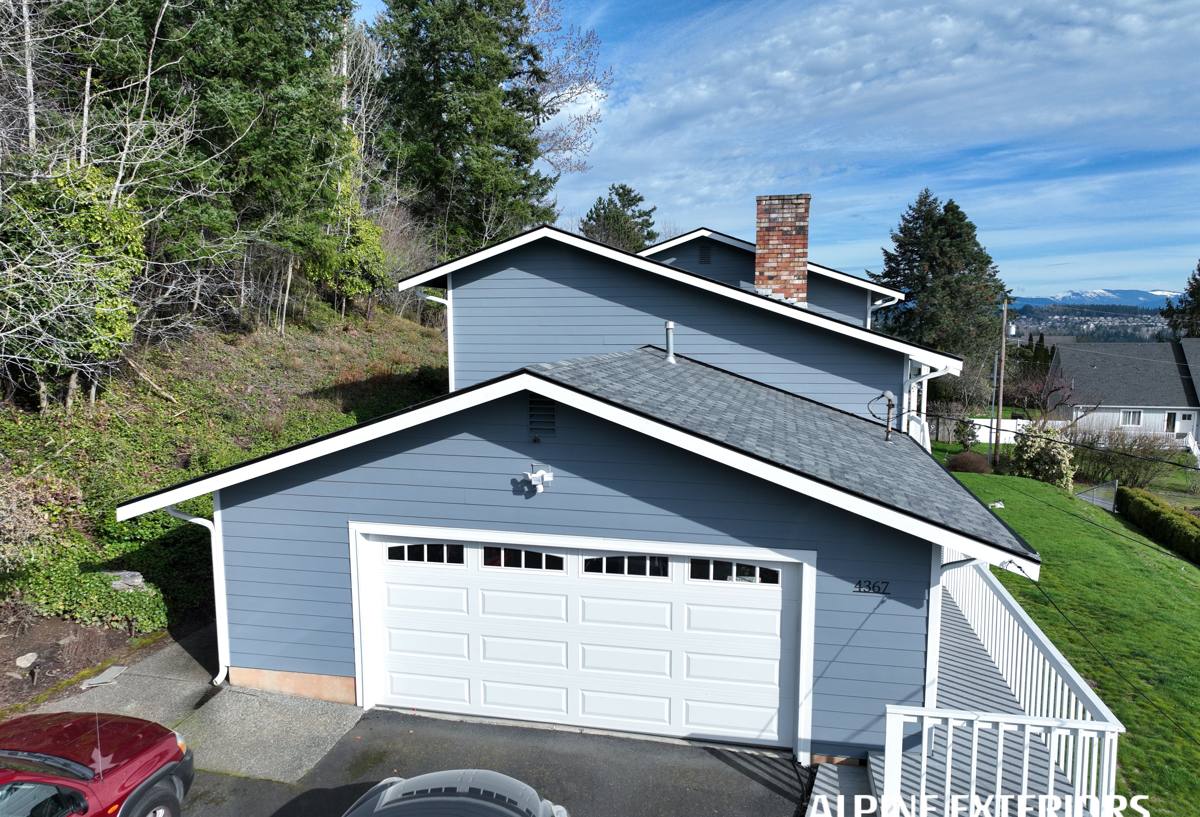
What Actually Counts as Storm Damage
Not every roof problem after a windstorm is storm damage in the insurance or repair sense, and not every case of storm damage is obvious from the ground. Part of doing this job right is being honest about which is which before any work — or any claim — moves forward.
- Missing, cracked, or curled shingles, especially in patterns that follow the direction wind came from
- Lifted or bent flashing around chimneys, vents, skylights, and roof valleys
- Granule loss showing up in gutters or downspouts after a storm
- Soft spots, staining, or new drips inside the attic or ceiling following heavy rain
- Debris impact marks from tree limbs or wind-blown material
- Gutter or downspout separation that lets water pool against the roofline or fascia
Some of this is easy to spot from the ground. Most of it isn't — flashing failures and lifted shingle tabs are usually only visible up close, which is why a proper storm damage assessment always includes an actual roof inspection, not just a look from the driveway.
What a Correct Storm Damage Repair Involves
A repair that actually holds up in this climate goes further than swapping out the shingles that are visibly missing. The goal is to fix the storm damage and remove the conditions that let water get in, not just patch the surface.
Start With a Real Inspection
Before any repair, we walk the roof (not just the ground-level view) to check flashing, valleys, penetrations, and the general condition of the roofing material around the damaged area. Storm damage is often worse — or different — than what triggered the call.
Address the Water Path, Not Just the Hole
Wind can tear a shingle off, but the underlayment beneath it is what actually keeps water out in the meantime. A correct repair checks that underlayment for damage or saturation, not just the shingle layer on top of it. If flashing around a vent or valley has failed, that gets resealed or replaced as part of the repair — patching shingles over failed flashing just hides the problem until the next storm.
Match Materials to Manufacturer Specs
Replacement shingles, flashing, and fasteners need to match the existing roofing system closely enough to maintain the manufacturer's warranty and shed water the way the original installation was designed to. Mismatched materials or improper fastening patterns are a common reason repairs fail early, especially under wind loads.
Our Process for Anacortes Storm Repair Calls
- Initial contact and description of the damage — we ask what happened, when, and what you've noticed so we can prioritize urgent issues like active leaks.
- On-site inspection — we get on the roof and check the full system, not just the obvious damage point.
- Written findings and repair plan — you get a clear explanation of what's damaged, what's causing it, and what the repair involves, in plain language.
- Documentation for insurance, if needed — photos and notes organized in a way that supports a claim, without exaggerating or downplaying what's actually there.
- Repair work — scheduled around weather windows, since wet or windy conditions aren't safe or effective for roof work.
- Cleanup and final check — debris removed, work area cleared, and a final look to confirm the repair is solid.
Repair or Replace? What Actually Drives That Decision
Not every storm-damaged roof needs full replacement, and not every roof can be reasonably patched forever. The honest answer depends on a handful of factors we walk through with you before recommending either direction.
| Factor | Leans Toward Repair | Leans Toward Replacement |
|---|---|---|
| Roof age | Under roughly 10-12 years, materials still in good general condition | Near or past expected lifespan for the material |
| Extent of damage | Isolated to one section or slope | Spread across multiple slopes or repeated storm events |
| Underlying moisture | Underlayment and deck are dry and sound | Deck or underlayment shows widespread saturation or rot |
| Repair history | First or second repair on this roof | Multiple prior repairs in the same areas |
| Material availability | Matching shingles or panels are still obtainable | Original material discontinued, creating a visible patchwork |
When a roof lands in the middle of that table, we say so plainly and lay out the trade-offs rather than defaulting to the more expensive option.
Working With Insurance on a Storm Claim
Storm damage claims move more smoothly when the documentation is clear and specific from the start. We take dated photos of the damage, note the likely cause, and describe the repair scope in terms that match how adjusters evaluate claims. We don't inflate a claim to cover unrelated wear, and we don't downplay real damage to make a job seem simpler than it is — both approaches tend to cause problems later, either with the insurer or with the roof itself.
Materials We Use and Why
Most Anacortes homes are roofed in asphalt composition shingles, with some metal roofing and older cedar shake still around, especially on longer-standing properties. For storm repairs, we match the existing material and installation method wherever possible, since mixing shingle profiles or metal gauges on the same roof creates uneven wear and can void warranty coverage.
Where we have a choice — such as flashing metal or fastener type — we lean toward corrosion-resistant options given the salt air exposure here. That's not a claim that other materials are defective; it's a practical trade-off based on how this specific coastal environment ages roofing hardware over time. Standard galvanized fasteners can hold up fine inland, but closer to the water, the added cost of a more corrosion-resistant fastener or flashing usually pays for itself by avoiding another repair call in a few years.
Why a Crew That Already Works Anacortes Matters
Storm repair work in this area comes with a few practicalities that a crew unfamiliar with the region can miss:
- Knowing which weather windows are realistic for safe roof access, since marine weather can change quickly and driving rain isn't a safe condition to work in
- Understanding that moss and algae growth here isn't a one-time issue and factoring that into how a repair is finished and treated
- Familiarity with permitting and inspection expectations for the City of Anacortes and Skagit County, so repairs that need sign-off don't stall
- Recognizing which storm damage patterns are common locally (wind-driven rain intrusion at valleys and flashing) versus less common inland issues
We're based in Mount Vernon and work throughout Skagit County, including Anacortes on a regular basis, so this isn't unfamiliar territory or a one-off trip out to the coast.
Maintenance Checklist to Protect Your Roof Between Storms
A lot of storm damage is worse than it needs to be because small issues went unnoticed beforehand. This is a reasonable seasonal check for Anacortes homeowners:
- Look at shingles from the ground with binoculars after any significant windstorm for missing or lifted tabs
- Check gutters and downspouts for granules, moss debris, or standing water after heavy rain
- Have moss growth addressed before it lifts shingle edges, rather than after
- Check attic spaces after storms for new staining, damp insulation, or daylight around vents
- Have flashing around chimneys, skylights, and vents checked every few years, since these are the first points of failure in wind-driven rain
- Keep overhanging branches trimmed back to reduce both impact risk and shading that extends moss season
If a recent storm has you wondering whether your roof took damage, or you've noticed a leak, staining, or missing shingles, we're glad to come take an honest look. The estimate is free, there's no pressure to move forward, and you'll get a straight answer about what's actually going on with your roof.