 Mount Vernon
 Roof Repair for Alger's Rural, Tree-Covered Properties
Alger sits along the I-5 corridor in northern Skagit County, tucked between timberland, small farms, and the Samish drainage. It's a different kind of roof problem than you'll find on a tight in-town lot in Mount Vernon. Alger properties tend to sit on larger, wooded parcels with more overhanging canopy, more shade, and less direct sun and wind to dry a roof out after a storm. That combination — shade, moisture, and organic debris — is exactly what accelerates moss growth, slows shingle drying, and shortens the life of flashing and fasteners. A roof repair out here needs to account for that setting, not just patch whatever's leaking today.
We're based out of Mount Vernon and work Alger regularly alongside the rest of Skagit County, so we're not learning the area's roofing quirks on your dime. We know what a shaded, moss-prone roof looks like five years after a rushed patch job, and we'd rather do the repair right the first time.
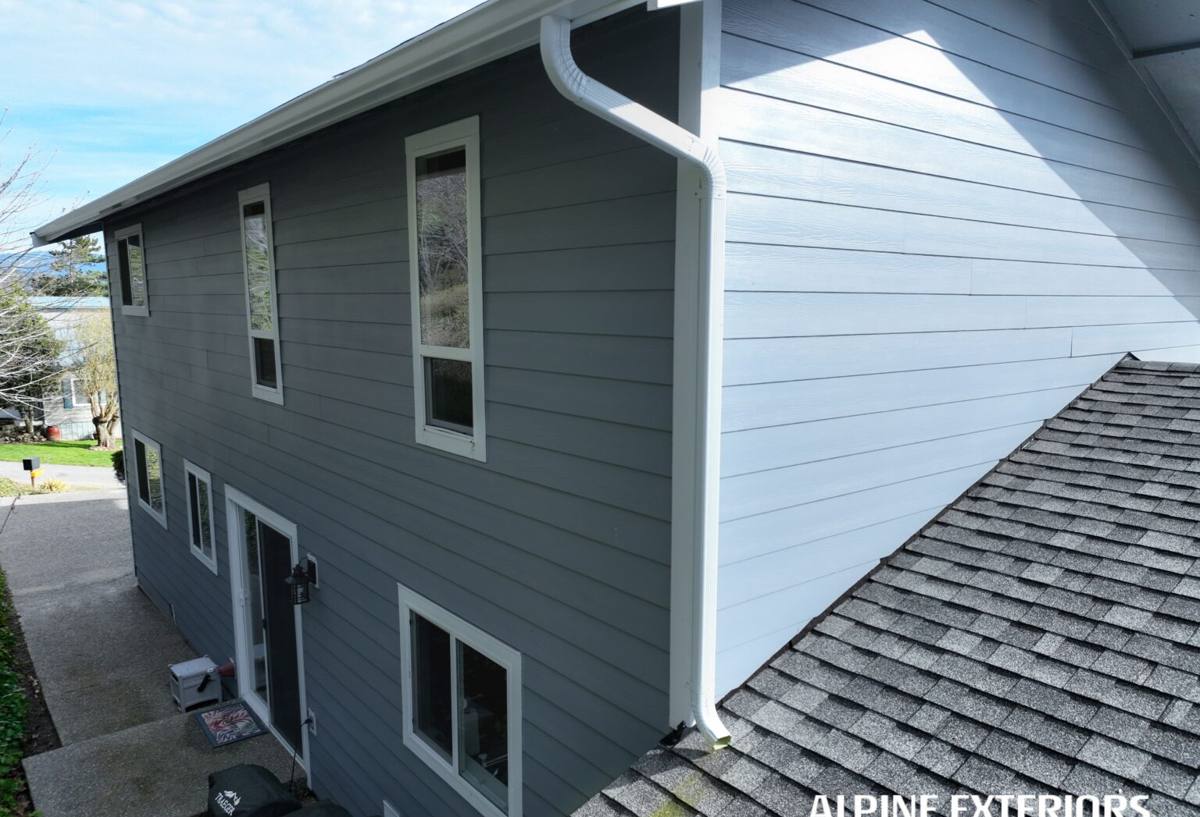
Why Alger Roofs Wear Differently Than In-Town Roofs
Moss and Organic Buildup
Wooded lots mean more leaf litter, needle drop, and shade — all of which keep roof surfaces damp longer after rain. Moss and algae take hold fastest in those cooler, shaded valleys and north-facing slopes, and once established, moss roots work under shingle tabs and lift them, giving wind-driven rain a path underneath. On a repair, we don't just patch the visible damage — we clear the moss and debris causing it, because leaving that in place means the same failure returns within a season or two.
Driving Rain and Wind Exposure
This part of Skagit County gets long stretches of steady, wind-driven rain off the water and through the valley. That kind of weather doesn't just test a roof's surface — it tests every seam, every flashing lap, and every fastener. Repairs that only address the shingle itself and ignore the flashing detail underneath tend to fail again in the next big blow.
Salt Air Influence
Being close enough to Samish Bay and the broader Salish Sea airshed, Alger roofs see some of the same salt-air exposure that coastal Skagit and Whatcom County properties deal with. Salt-laden moisture accelerates corrosion on exposed metal — flashing, fasteners, vent caps, gutter hardware — faster than it would inland. We factor that into the materials we use on a repair, favoring corrosion-resistant fasteners and flashing over anything that will rust out early and cause a repeat leak.
What a Correct Roof Repair Actually Involves
A roof repair isn't just sealing the spot where water is showing up inside the house. Interior stains and drips often show up several feet from the actual entry point, since water travels along the underlayment or framing before it finds a gap in the drywall or ceiling. A repair done right starts with tracing the leak to its real source, not just caulking the symptom.
- Identify the actual entry point — often at a flashing lap, penetration, or valley, not where the stain appears inside
- Remove and inspect the surrounding shingles, felt or synthetic underlayment, and decking for hidden rot or soft spots
- Clear moss, needles, and organic debris from the repair area and surrounding roof plane
- Replace damaged decking before anything goes back over it — patching over soft wood just hides the problem
- Re-flash penetrations, valleys, and wall-to-roof transitions with corrosion-resistant materials suited to salt-air exposure
- Match shingle or material color and profile as closely as possible so the repair doesn't stand out
- Check adjacent areas — vents, chimney flashing, gutters — for related wear that could cause the next leak
Common Repair Scenarios We See in Alger
Moss-Lifted Shingle Tabs
Once moss gets a foothold under a shingle edge, it lifts the tab just enough for wind-driven rain to get underneath. The fix isn't just re-sealing the tab — it's removing the moss root system, treating the area, and often replacing the shingle if the adhesive strip has already failed.
Valley and Flashing Leaks
Valleys collect the most water on any roof, and on a wooded lot they also collect the most debris. Debris dams water, which then backs up under the shingle edges. A repair here means clearing the valley, checking the flashing underneath for corrosion or gaps, and rebuilding the valley if the metal has failed.
Chimney and Vent Penetration Leaks
Every penetration through a roof — chimney, plumbing vent, bath fan — relies on flashing that seals against the surface below it. On older roofs, that flashing corrodes or the sealant around it dries out and cracks, especially with the salt-air exposure common in this part of the county. These leaks tend to get worse gradually, so catching them early keeps the repair small.
Gutter and Fascia Damage from Overflow
Wooded lots load gutters with debris faster than open lots. When gutters overflow, water runs down behind the fascia and can rot the roof edge and soffit over time. We check this area on every repair call, since it's easy to miss from the ground.
Repair vs. Replacement: How We Make That Call
Not every roof problem needs a full replacement, and we won't tell you it does just to sell a bigger job. But a repair only makes sense if the underlying roof structure and remaining material life can support it. Here's roughly how we think through that decision:
| Factor | Repair Usually Makes Sense | Replacement Is Usually the Better Call |
|---|---|---|
| Age of roof | Under roughly 15 years, or well-maintained | Near or past manufacturer's expected service life |
| Extent of damage | Isolated to one area, valley, or penetration | Multiple areas failing, widespread moss and granule loss |
| Decking condition | Solid, dry decking under the damaged area | Soft, rotted, or repeatedly wet decking |
| Shingle condition elsewhere | Remaining shingles still flexible, granules intact | Shingles brittle, curling, or granules washing off broadly |
| History | First repair call in this area of the roof | Same spot has already been patched more than once |
If we get on the roof and find the damage is more widespread than the visible leak suggests, we'll tell you plainly and explain why — not just push for a bigger job. Sometimes a repair really is the right, cost-effective answer, and we'd rather do that job well than talk you into something you don't need yet.
Our Process for an Alger Roof Repair Call
- Inspection: We get on the roof (weather permitting) and inspect the full roof plane, not just the reported leak area, since one visible leak often has company nearby.
- Diagnosis: We trace the actual water path and identify the true entry point, checking flashing, valleys, penetrations, and decking condition.
- Honest estimate: You get a clear explanation of what's wrong, what we recommend, and a straightforward price — no pressure, no scare tactics.
- Repair: We do the work to the standard we'd want on our own roof — proper flashing, matched materials, cleared debris — not a surface patch.
- Walkthrough: We show you what we found and what we fixed before we consider the job done.
Preventive Care Between Repairs
Given how much moss, needle drop, and debris a wooded Alger lot generates, a roof out here benefits from more frequent attention than a bare in-town roof. A little seasonal upkeep goes a long way toward avoiding the next repair call:
- Clear gutters and valleys of needles and debris at least twice a year, more often under heavy tree cover
- Trim back overhanging branches to reduce shade, debris load, and physical abrasion on the roof surface
- Treat moss growth early, before it lifts shingle tabs or spreads across a full roof plane
- Have flashing and penetrations checked periodically, especially on roofs over 10 years old
- Address small leaks promptly — hidden decking damage grows quietly and gets more expensive the longer it sits
Why a Crew That Already Works This Area Matters
Roofing crews that mostly work flatter, more exposed subdivisions can underestimate what a shaded, wooded Alger roof is actually dealing with. We work Mount Vernon and the surrounding Skagit County communities regularly, including the rural, tree-covered lots common around Alger, so we show up already understanding the moss pressure, the salt-air corrosion factor, and the debris load these roofs carry. That means fewer surprises during the inspection and a repair scoped to the actual conditions on your property, not a generic checklist.
We also know that access can be different out here — longer driveways, more tree cover to work around, sometimes less predictable footing on a wet roof under shade. Planning for that ahead of time keeps the job efficient and keeps us safe on your roof.
Get a Free, No-Pressure Estimate
If you're dealing with a leak, moss buildup, or damaged flashing on a home in or around Alger, we're happy to take a look and give you an honest read on what it needs. There's no cost and no pressure to move forward — just a clear explanation of what we find and what it would take to fix it right. Fill out the form below and we'll get in touch to schedule a time that works.